Enceladus, one of Saturn's small icy moons, is a fascinating object of study in our solar system. The moon is covered in a thick layer of ice, but in 2005, NASA's Cassini spacecraft made a groundbreaking discovery: plumes of water vapor and ice particles were erupting from its south pole. These plumes have been a subject of intense study ever since, as they contain organic molecules and evidence of hydrothermal activity, suggesting the possibility of a subsurface ocean beneath the icy crust.
One of the key factors behind the creation of Enceladus' plumes is tidal heating, a process caused by the gravitational pull of nearby celestial bodies. Enceladus is in a unique position relative to Saturn, as it is locked in a 1:2 resonance with another moon, Dione. This means that for every orbit Dione completes, Enceladus completes two. The resulting gravitational interaction causes the moon to flex and deform, generating heat in its interior.
Tidal Heating
Tidal heating is a common phenomenon in the solar system, occurring on other moons such as Jupiter's Io and Europa. The heating on Enceladus, however, is unique in that it is believed to be the primary driver of its hydrothermal activity and the creation of its plumes.
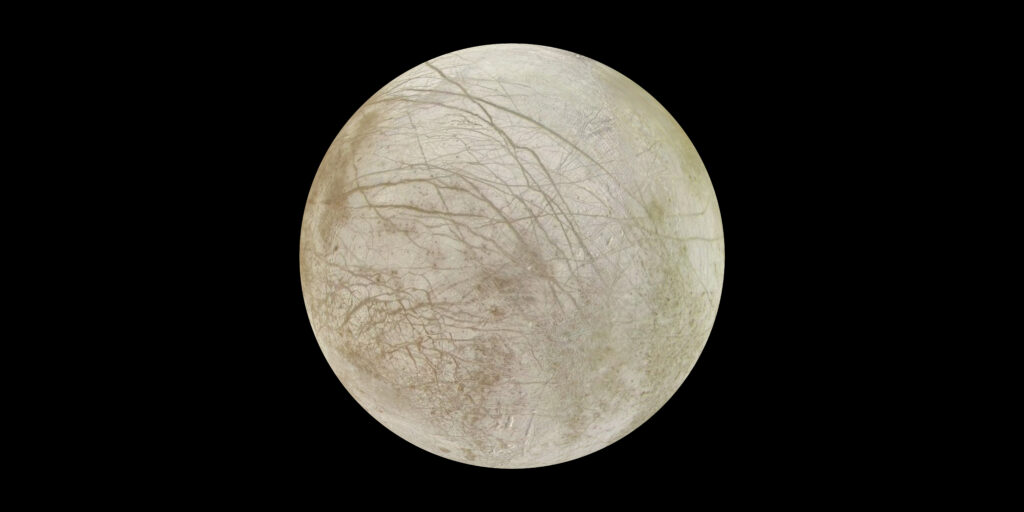
The heat generated by tidal heating on Enceladus is believed to melt the ice at its core, creating a subsurface ocean. This ocean is kept in a liquid state by the heat generated from the moon's core, as well as by the gravitational forces acting on it. The hydrothermal activity on Enceladus is driven by this subsurface ocean, which circulates through the moon's rocky core and interacts with the overlying ice.
The hydrothermal activity on Enceladus is responsible for the plumes seen by Cassini. The plumes are created when water from the subsurface ocean is heated by the hydrothermal vents and ejected through cracks in the icy crust. As the water reaches the surface, it turns to vapor, creating the visible plumes.
The signs of life
The plumes of Enceladus contain not only water vapor but also organic molecules, including methane, nitrogen, and carbon dioxide. The presence of these molecules has led scientists to speculate that there may be life on Enceladus, as similar organic molecules are the building blocks of life on Earth. While the plumes do not necessarily provide direct evidence of life, they do suggest that the conditions for life may exist on the moon.
The study of Enceladus' plumes has also led to new insights into the moon's geology and evolution. The constant heating and cooling caused by tidal heating has created a constantly shifting and cracking icy shell, leading to the creation of numerous ridges, cracks, and fissures on the surface. The study of these features has allowed scientists to better understand the geology and evolution of Enceladus, as well as the mechanisms behind the creation of its plumes.
In conclusion, the plumes of Enceladus are a fascinating subject of study for scientists and space enthusiasts alike. Tidal heating, driven by the gravitational interaction between Enceladus and other celestial bodies, is the primary driver of the moon's hydrothermal activity and the creation of its plumes. The study of these plumes has provided valuable insights into the potential for life on the moon, as well as the geology and evolution of the moon itself. As our understanding of Enceladus continues to evolve, it is clear that this small icy moon is a remarkable object of study in our solar system.