
- Storm Types: Storms form when warm and cold air masses collide, creating thunderstorms, hurricanes, tornadoes, blizzards, and hail through various atmospheric processes involving heat, moisture, and wind patterns.
- Climate Change Impact: Global warming is making storms more frequent and intense - supercell thunderstorms could increase 11%, major hurricanes have risen 15%, and warmer air creates more explosive weather events.
- Environmental Consequences: These increasingly severe storms affect entire ecosystems, not just human communities, making storm science essential for building resilient communities and environmental protection.
Have you ever noticed how suddenly the weather can change? Just a moment ago the sun was shining, and now dark clouds have covered the sky, thunder is rumbling, lightning flashes, and heavy rain begins to pour. These sudden shifts don’t just make us reach for an umbrella — they also make us wonder: where does all this power come from?
In May 2025, a rare supercell hovered over Poland, turning a quiet afternoon into chaos. That day, I stood under a kitchen window watching hail bounce off the pavement like marbles. It made me wonder: where does all this energy come from? It was a powerful reminder that nature can be both beautiful and terrifying.
Storms are not just unpredictable weather events — they are powerful processes within the atmosphere that can affect entire countries. But what exactly causes them? How do storms form, what types exist, and why do we hear about them more and more often? And finally — how are these forces of nature connected to climate change and ecology?
Let’s take a closer look.

What Is a Storm?
When I think of a storm, I immediately recall The Odyssey. In this ancient Greek epic, storms aren’t just bad weather — they’re signs of the gods’ wrath, a test of fate. One scene especially stands out, when Poseidon sends a furious storm upon Odysseus: “The storm came down like night… the sea surged and thundered.” Gives you chills, doesn’t it?
But now let’s take a look at storms from a scientific perspective. A storm isn’t just heavy rain or strong wind. It’s a state of the atmosphere where balance is broken — winds suddenly pick up, and heavy rain, snow, or hail begin to fall, sometimes all at once. This usually happens when warm and cold air masses collide, and the moisture in the air turns into precipitation — rain, ice, or snow.
To understand how exactly a storm begins, imagine a boiling kettle: as the water heats up, steam rises. The same thing happens in the atmosphere — warm, moist air rises, cools down, and forms clouds and thunderstorms.
This is how many scientists describe the key mechanism of thunderstorm formation. For instance, in the study The Climatology and Nature of Warm-Season Convective Cells in Cold-Frontal Environments over Germany (George Pacey, Stephan Pfahl, Lisa Schielicke, Kathrin Wapler), and in the Center for Science Education journal by UCAR, this visual and accessible analogy — comparing the rising of warm air to steam in a boiling kettle — is used to clearly explain how storms develop.
1. Thunderstorms – A Dance of Lightning and Clouds

Let’s talk about thunderstorms — how lightning and thunder are born.
It all starts with warm, humid air rising up into the sky. As it climbs higher, the air begins to cool and forms huge, dark clouds. The more heat and moisture in the air, the taller the clouds grow — and the more intense the storm becomes. Then comes nature’s grand performance: the sky lights up with a flash of lightning, thunder rumbles right after, and heavy rain comes pouring down. This isn’t just any rain — this is a full-blown thunderstorm.
Why it can be dangerous: A thunderstorm isn't just a dramatic display — it can be destructive. Heavy rain may lead to flooding, strong winds can uproot trees, and lightning strikes may cause power outages, fires, or short circuits.
Particularly concerning are supercell thunderstorms — the most severe and long-lasting type. A 2025 study using climate models found that in Central Europe alone, about 700 supercells occur each season, and due to global warming, that number could increase by 11%.
Fascinating fact: A single lightning bolt heats the surrounding air to 30,000°C — that’s about five times hotter than the surface of the Sun! This rapid heating causes the explosive expansion of air that we hear as thunder.
2. Hurricanes — When the Ocean Takes to the Sky

Next up on our list: the hurricane. It all starts over warm ocean waters. The hot sun heats the surface, causing water to evaporate and rise into the sky. Up in the atmosphere, this moist air sets off a chain reaction — like someone flipping the switch on a giant weather machine. And if the conditions are just right, all that swirling motion turns into a massive rotating storm. That’s how a hurricane is born — powerful, fast, and truly awe-inspiring.
How it all begins: Imagine warm ocean water as "fuel." The warmer the ocean, the more water evaporates. The air becomes saturated with moisture, rises, and starts to spin — forming a massive rotating system in the sky, like a whirlpool, only above us.
Why it’s so dangerous: Hurricane winds can exceed 200 km/h — strong enough to rip off roofs, flip cars, and bring down power lines. On top of that come torrential rains, flooding, and storm surges that can inundate entire coastal cities.
Why the different names: It’s the same phenomenon, but the name varies by region — “hurricane” in the Atlantic, “typhoon” in Asia, and “cyclone” in the Indian Ocean and around Australia.
Impact of global warming: Studies show that the number of Category 3–5 storms has increased by 15% in recent decades, along with more rainfall and longer storm duration due to rising global temperatures.
3. Tornado — a Twister You Don’t Want to Mess With

You probably know what a tornado looks like — movies often show it as a terrifying, destructive whirlwind. And yes, it really is a dramatic sight. But now, let’s take a look at it from a scientific point of view. A tornado is a spinning column of air shaped like a funnel that stretches from a thunderstorm down to the ground. Sometimes it’s as thin as a rope, and other times it’s as wide as a building. It usually starts with darkening skies and growing winds — and then, suddenly, a swirling tower of air, dust, and debris appears, racing across the land.
How it forms: Tornadoes are born inside very powerful thunderstorms, especially when winds at different altitudes blow in different directions and at different speeds. This creates a horizontal spinning effect that, under the right conditions, can tilt and intensify into a vertical, rotating vortex.
Why it’s dangerous: Tornadoes are among the most destructive weather events. In just a few seconds, they can uproot trees, flip cars, destroy homes, and knock down power lines. The force is immense and often leaves little time to react.
Fun fact: The United States experiences over 1,000 tornadoes every year, making it the country with the highest number in the world. Most of them occur in the area known as Tornado Alley — a central region of the U.S. where the conditions for tornado formation are ideal.
Dr. Grace Yan from Missouri S&T University studies how tornadoes form inside thunderstorms. One of the key processes she investigates is called the inverse energy cascade. Sounds complex? Let’s break it down.
Imagine a kitchen during a party. In the corner, some kids are playing — one gives a little push to another, who then bumps into the next, and suddenly the whole room is in motion. A small nudge turns into big chaos. That’s exactly what happens in a thunderstorm: tiny, almost invisible air swirls collide and merge, creating larger and more powerful flows. Once enough of these flows build up, they can form a spinning funnel — a tornado.
Scientists call this the inverse cascade of energy because the energy moves not from big to small, but from small to large. And according to recent research, this may explain why one storm passes quietly while another turns into a devastating tornado.
4. Blizzard — When Winter Hits Like a Whiplash
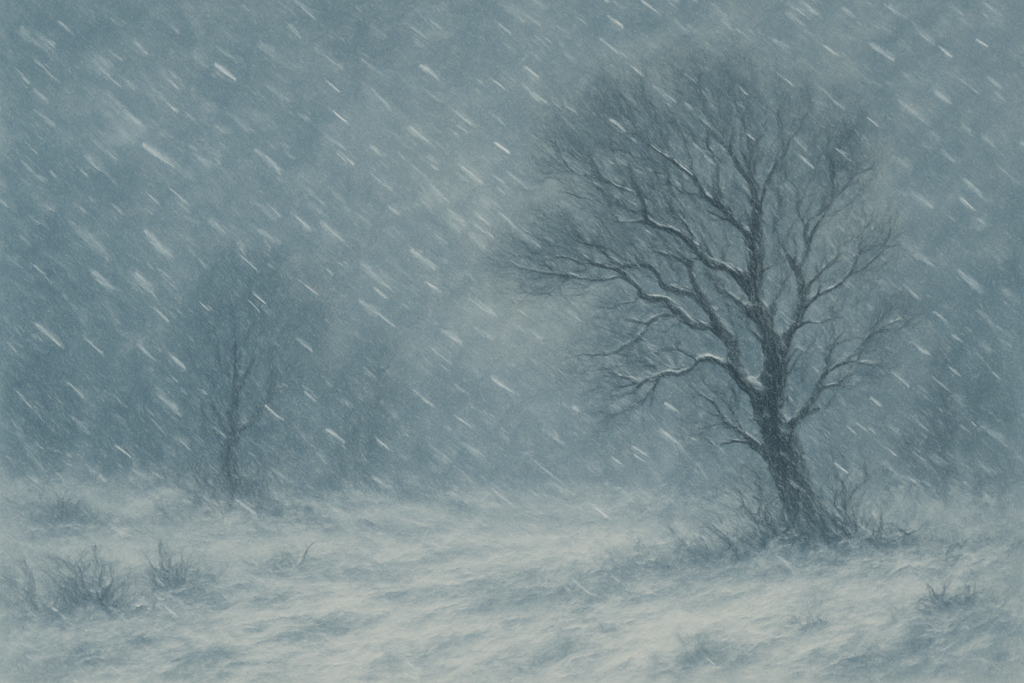
When I was a child in my home country, Ukraine, winter blizzards were nothing unusual. Snowdrifts, knee-deep snow, and howling winds all felt like a natural part of the season. But today, thanks to global warming, even regular snowfall has become a rare sight where I come from. So what exactly is a blizzard, and where does it come from? A blizzard isn’t just snow falling from the sky. It happens when strong winds lift snow off the ground and blow it forcefully across the area, swirling and sweeping everything in their path. In just a moment, the world turns into a white blur — you can barely see ahead, you lose the feel of the ground beneath your feet, and icy air stings your face.
Why it’s dangerous: Suddenly, you can barely see a few steps ahead. Roads disappear, it’s hard to walk, and even harder to stay warm. For travelers or anyone caught outside, it can be life-threatening.
But here’s the twist: Blizzards aren’t just about cold weather anymore. Climate change is making them worse. You might think warmer winters mean less snow — but it’s the opposite. According to National Geographic Education, warmer air holds more moisture, and when the cold snaps back, that moisture turns into heavy snowfall. So yes, in a warming world, it can snow more.
Now imagine this: One day it’s freezing but calm. You bundle up, go for a walk — all is quiet. The next day? Howling winds, swirling snow, and drifts up to your knees. It’s not a slow change — it’s like winter slammed the brakes, then hits the gas. Scientists call this sudden shift “weather whiplash.”
This isn’t just theory. In January 2025, parts of northern U.S. went from dry and freezing to a sudden, violent snowstorm. Warm, wet air rushed up from the south, crashed into the cold — and boom: hurricane-speed winds, blinding snow, and total chaos.
Climatologists are alarmed by how often this is happening. As climate change disrupts global weather patterns, winters are becoming less predictable — and more explosive. Instead of a steady cold season, we get bursts of extreme weather that hit fast and hard.
5. Hail — Ice Surprises from the Sky
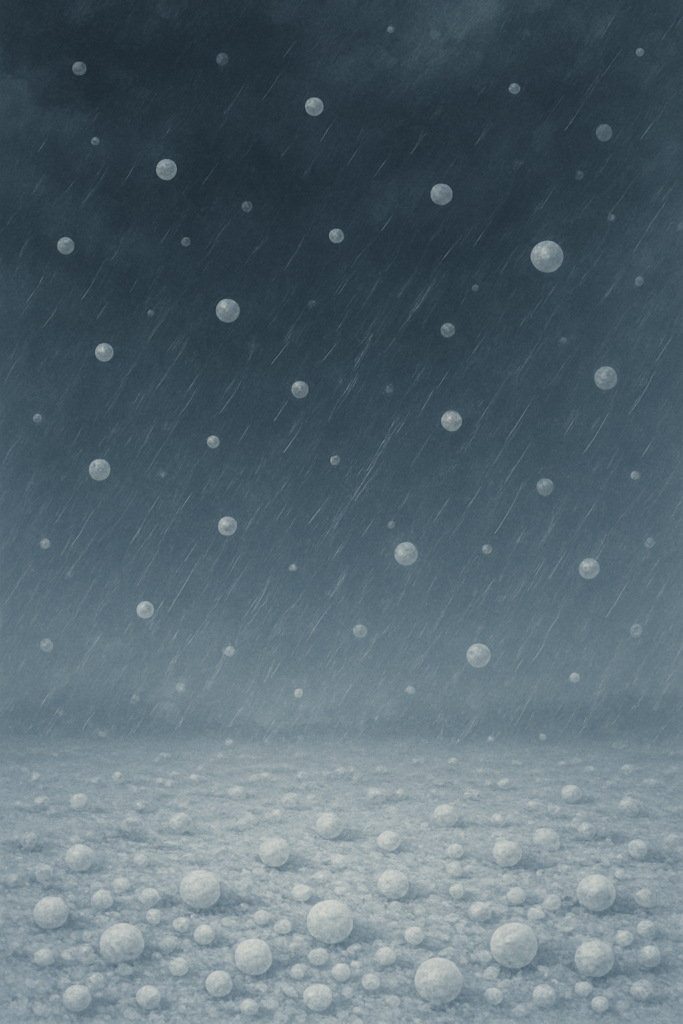
Have you ever been caught in a hailstorm? I have — and let me tell you, it was so sudden and intense that if Hollywood used hail more often in disaster movies, it could easily compete with tornadoes for the title of "most terrifying weather event." Imagine this: the sky darkens, a few raindrops fall… and then, out of nowhere, ice balls come crashing down from above!
Hail actually starts out as regular raindrops. Inside a storm cloud, powerful upward winds lift the drops high into the sky, where they freeze. Then they fall slightly, pick up more water, and get pushed back up again — freezing layer by layer. This cycle repeats until a solid ice ball forms. And when it gets too heavy to stay in the cloud… it falls to the ground. Sometimes right on your head. So next time, maybe bring an umbrella — or even a helmet.
Fun fact: The largest hailstone ever recorded was about the size of a volleyball! Imagine something like that falling from the sky — it can smash car roofs or break through plastic roofing with ease.
What scientists are saying: We’ve mentioned supercell thunderstorms before — powerful and long-lasting storms. According to Scientific American, large hail is becoming more frequent in these supercells due to climate change. A more unstable atmosphere gives hailstones more “room and time” to grow before falling.
Why Do Storms Happen? A Bit of Science — Explained Simply
Storms aren’t just random events. It all starts with the Sun, which heats different parts of the Earth unevenly. In some areas, the air is warm; in others, it’s cool. When these air masses meet and mix, a chain reaction begins in the atmosphere.
Here’s how it works:
- Heat + moisture = the energy needed to form clouds.
- Rising air = the beginning of a storm.
- Wind speed and direction = can create spinning motion — this is how tornadoes and hurricanes form.
To predict when a storm might hit, meteorologists — scientists who study the weather — use satellites, radars, and complex computer models.
But in recent years, new technology has become a powerful ally. For example, researchers at Texas A&M University have developed an AI model based on deep learning that not only helps forecast the damage caused by tornadoes, but also speeds up infrastructure recovery after a disaster.
Still, even with all this smart tech, nature can surprise us. A storm can arrive suddenly, change everything in minutes — and remind us that some forces are still beyond our control.
What Does This Have to Do with the Environment?
You’ve probably noticed: storms are becoming more frequent and more intense. But why is that?
- Oceans are getting warmer due to climate change — and warm water acts like fuel for hurricanes, helping them grow stronger.
- Sea levels are rising, so even regular storms can now cause devastating floods.
- And it’s not just people who suffer — animals, forests, farmland, and even nature reserves are also at risk.
In other words, storms aren’t just a weather issue anymore — they’re part of a much bigger environmental story. Understanding how storms form isn’t just a matter of curiosity. It’s a way to prepare for the future, protect nature and communities, and maybe even prevent the worst from happening.
Let’s Summarize
Storms are the result of the interaction between air, heat, and water. Behind every rumble of thunder lies fascinating science we can understand. And with that understanding comes a chance to take better care of our planet. So next time you hear thunder or see a dark cloud in the sky, remember: you're not just watching the weather — you're witnessing the atmosphere in action.
Now It’s Your Turn
- Have you ever experienced a storm that made you stop and think about nature's power?
- Which type of storm surprised you the most in this article — and why?
- Do you notice any changes in weather patterns where you live?
- How might understanding storms help us build safer and more resilient communities?
Reflect on these questions or discuss them with friends and family. Science starts with curiosity — and your curiosity matters. Check out the Recommended Films and Documentaries section below for deeper dives into storm science and climate change. Whether you're in the mood for real footage or dramatic storytelling, these resources offer valuable perspectives on how nature works — and how we can respond.
Recommended Films and Documentaries on Storms and Climate
- Twister (1996) – Universal Pictures
A cult classic disaster movie about storm chasers tracking violent tornadoes. Though fictional, it sparked widespread public interest in meteorology. - Before the Flood (2016) – National Geographic
A compelling documentary featuring Leonardo DiCaprio that explores the impact of climate change, including the rise in extreme weather events. - Earth’s Fury / Deadliest Weather (2017–2020) – The Weather Channel / Smithsonian Channel
A documentary series examining the most extreme and deadly weather phenomena on Earth — from tornadoes to blizzards. - Our Planet (2019) – Netflix
A visually stunning series narrated by David Attenborough, showcasing the fragility of ecosystems and the role of climate change, including storm intensification. - Supercell (2023) – Saban Films
A drama based on the science of supercell storms. Follows the story of a teenager uncovering his father’s meteorological legacy. Combines real storm footage with fictional storytelling. - The Perfect Storm (2000) – Warner Bros. Pictures
Based on a true story, this film portrays a massive storm created by the rare convergence of three weather systems. A dramatic look at the ocean’s fury.