
You light a candle. Almost immediately, your shoulders drop. Your breathing slows. Something quietly signals: everything is okay. But why does a tiny flame have this effect? The answer goes back 400,000 years - to when your ancestors' survival depended on never letting the fire go out.
Your Brain on Fire
When researchers sat people down and made them watch a flickering fire, something measurable happened.
- Blood pressure dropped significantly when watching flickering fire
- The effect worked with videos too - meaning it's hardwired into your brain, not just about warmth
- Heart rate variability improved, signaling activation of your "rest and digest" nervous system
Dr. Christopher Lynn at the University of Alabama ran these experiments across three studies with 226 adults. Fire-watching triggers a genuine relaxation response. And it's very, very old.
Think about what fire meant for early humans. Someone had to watch it all night, every night. Those who found it calming were the ones who stayed awake, kept the group warm, deterred predators, and made sure everyone survived until morning. That calm was a survival advantage.
The Tool That Made Us Human
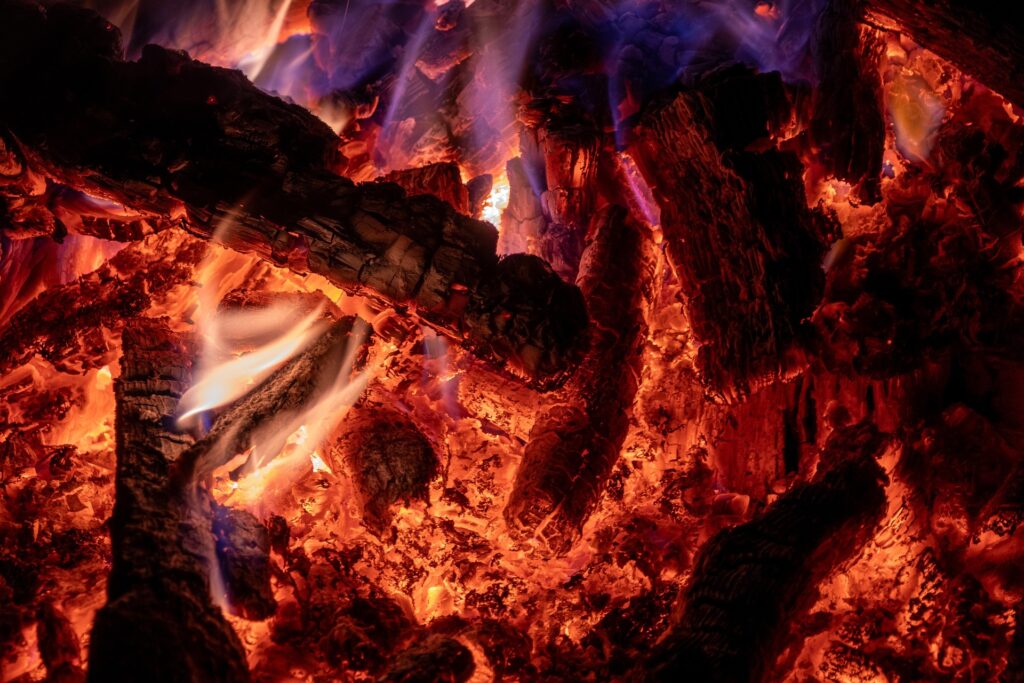
Fire didn't just help early humans survive. It changed what we became.
It extended the day into darkness. It made cold climates livable. It transformed raw food into something richer and easier to digest. And it created humanity's first proper gathering place - the hearth - where stories were told, skills passed on, and the bonds that hold communities together were built, night after night.
But controlling fire required something remarkable. You had to plan ahead such as gathering enough wood before nightfall. You had to override instinct - staying near something dangerous rather than running from it. You had to cooperate, take turns, teach children, share the load.
Researchers argue these demands helped shape the cognitive abilities that make humans unique.
Why We're Still Drawn to Flames
In societies where fire is part of everyday life - where children learn early how to use and control it - curiosity about fire often fades by about age seven. Once they understand it, fire becomes just another practical tool: familiar, ordinary, and no longer mysterious.
Most people in the modern world don’t grow up this way. We rarely have hands-on experience with fire, so the instinct to understand and master it never fully develops. Instead, it stays with us into adulthood as a quiet, persistent pull - the reason you find yourself watching a campfire longer than you planned.
That attraction is the lingering effect of a curiosity that was never fully satisfied.
Why Every Culture Lights Candles in Winter
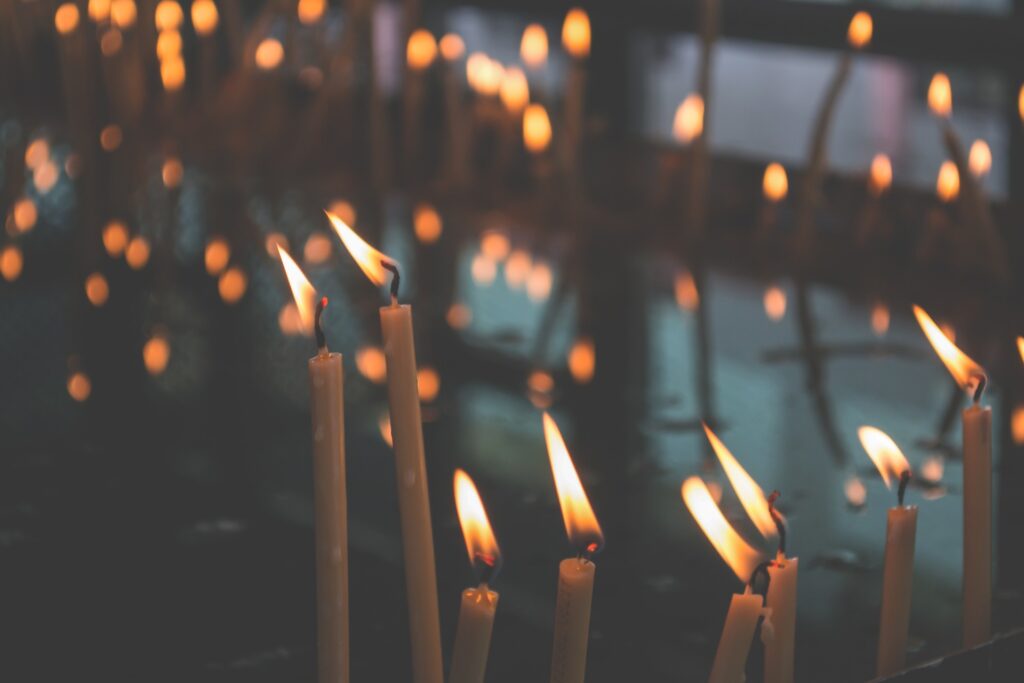
Cultures around the world, with no contact with each other, all independently invented winter light rituals.
- Hanukkah (Jewish): Eight nights of menorah candles during the darkest time
- Christmas/Advent (Christian): Candles marking the countdown to the solstice
- Diwali (Hindu): Festival of lights with thousands of oil lamps
- Yule (Pagan): The Yule log burning through winter solstice
- Lucia Day (Scandinavian): Crown of candles worn in December darkness
They all cluster around the darkest point of the year. And the instinct behind them is the same everywhere: light a flame, hold back the dark, signal that we are here and we are safe.
For our ancestors, the long winter nights meant real danger. Darkness meant vulnerability. Keeping a fire burning through those hours was a declaration as much as a practicality. Modern candles carry that same weight forward, even when we no longer need them for survival.
Your Ancient Brain in an Electric World
We can banish darkness with a switch now. We have central heating, electric light, and nothing lurking outside. And yet something happens when you light a candle that no light bulb can replicate.
That's why restaurants use candles. Why people light them for grief, for romance, for quiet evenings. Why nobody can quite look away from a bonfire.
We call it ambiance. What it actually is, is recognition - your nervous system responding to something it has understood for a very long time.
Because your brain doesn't care about LED bulbs. Your brain knows what a controlled flame means. It reads that flicker and feels relief on a level you can't consciously access - fire equals survival.
So light that candle. Let yourself relax into that ancient rhythm. Your body knows what it means, even if your mind has forgotten.
Want to Dive Deeper?
- Lynn, C. D. (2014). Hearth and Campfire Influences on Arterial Blood Pressure. Evolutionary Psychology - The study that measured blood pressure drops from watching flames
- Fessler, D. M. T. (2006). A Burning Desire: Steps Toward an Evolutionary Psychology of Fire Learning. Journal of Cognition and Culture - Explores why humans uniquely learned to control fire
- Twomey, T. (2013). The Cognitive Implications of Controlled Fire Use. Cambridge Archaeological Journal - How fire-management shaped human intelligence
- Gowlett, J. A. J. (2016). The discovery of fire by humans: a long and convoluted process. Philosophical Transactions of the Royal Society B - Comprehensive review of fire use in human evolution