
Imagine you are in space. You're floating at the observation window and you can see vast galaxies, stars, asteroids, everything swallowed by black and studded with light.
You see the beauty of the world, how small you are compared to the vast entirety . . . when you sneeze.
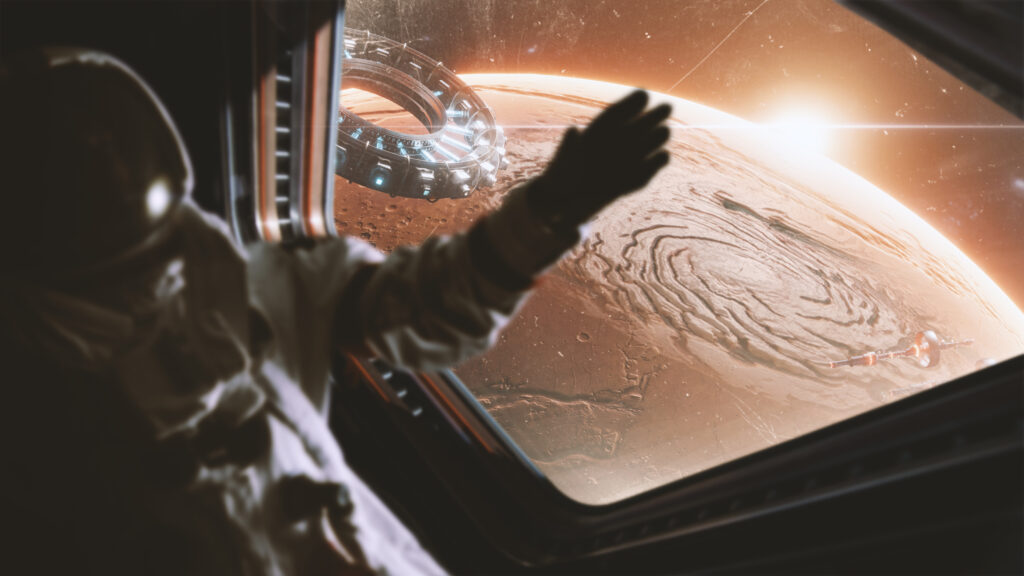
Stiffening, you float to your medical emergency kit and take out the antibiotics that were given to you. The ship's diagnostic flags an infection - but the antibiotics on board, the same ones that cleared this up back on Earth, aren't working. The bacteria have changed. And just like that, you have nothing.
So, you spend your next few evenings miserable and hoping for it to pass. But what if it's not the flu? What if it's a really serious infection? The type that can kill you if it is not treated. The worst part is that it's not a sci-fi dream. It is a realistic nightmare that NASA and SpaceX are actually preparing for.
So what's actually happening to them up there? The science is stranger than the scenario.
The Science
The science behind this isn't complicated. Bacteria are not that well-behaved, so when they go to space, they turn into little evolutionary monsters. This theory is supported by decades of real experiments.
Experiments conducted on ISS (International Space Station) have shown that the state of weightlessness, also known as microgravity, makes the bacteria’s already tough biofilms grow thicker and stickier, making them more resistant. Bacteria like Pseudomonas aeruginosa, a common hospital pathogen, have been shown to form thicker, stickier biofilms in microgravity.
Not only that, but cosmic radiation from space increases the mutation rates, which means that the time it takes to transform itself into more harmful bacteria shortens. Horizontal gene transfer, when bacteria swap DNA directly with each other, may also be more common in space, where microgravity changes how cells cluster and interact.
Effect on Astronauts
For the astronaut on the receiving end, the picture isn't pretty. Because of microgravity, the bodily fluids shift toward the upper body, which changes how drugs move through the system - a dose calibrated for Earth may be too weak, or hit the wrong tissues entirely. And because supply is limited on any spacecraft, there's no backup drug to try when the first one fails. In this case, a small infection is not just an inconvenience, it becomes a life-threatening emergency that calls for the mission to be aborted. It can be done for low orbit missions, but if a spacecraft is on the way to Mars, aborting it becomes impossible. This forces us to think of space medicine not as first care but as critical care.
But the risk doesn't stop with the crew onboard.
Contamination and Life
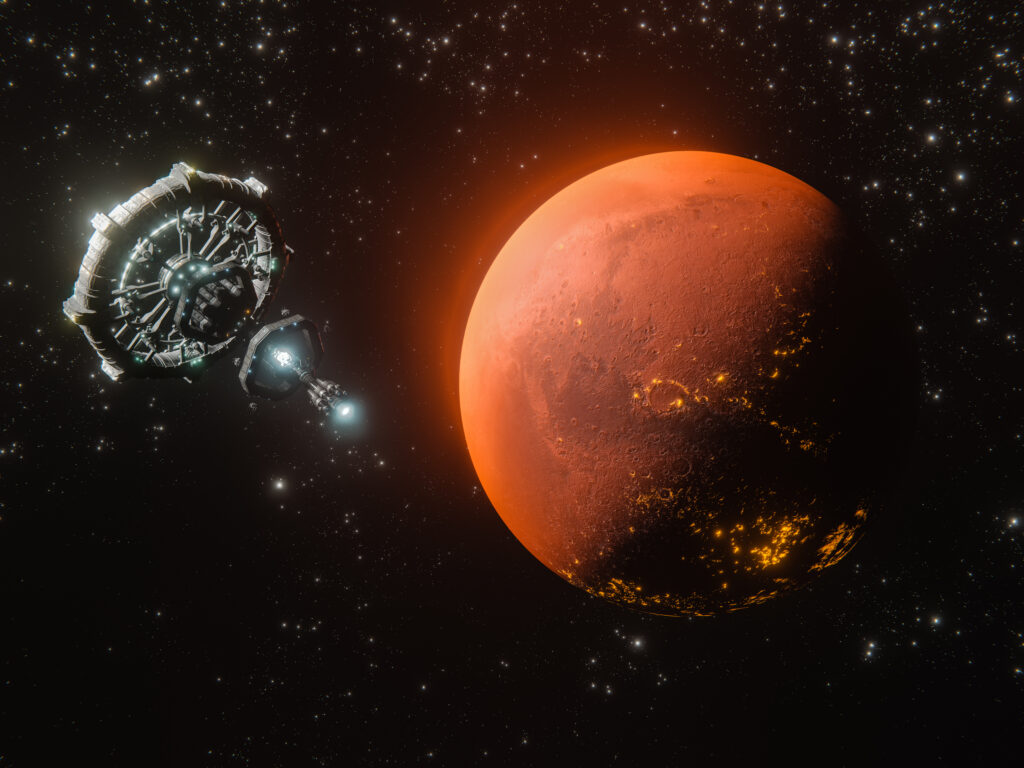
Step back even further - past the bacteria, past the astronaut - and think about what this means for life itself. On Earth. On Mars. Both.
Because when we talk about bacteria travelling through space, we're not just talking about one sick astronaut. We're talking about contamination - and there are two kinds worth knowing.
First is the Forward Contamination. Say life exists on Mars - even in microbial form. If our astronauts carry space-evolved resistant bacteria to Mars, and they do find some form of life, we might accidentally wipe out Martian life or even contaminate the search for it.
The second is Back Contamination, and it's arguably scarier: space-evolved bacteria hitching a ride back to Earth. It reminds me of one of my favorite sci-fi movies, The Andromeda Strain, in which a microorganism is carried back to earth after a space mission that causes deaths by clotting your blood instantly. Fiction, yes - but not as far-fetched as it used to be. The Andromeda Strain might not be fiction for much longer.
The Silver Lining: Is It Enough?
It's a grim picture, but there is a silver lining.
Naturally, bacteria are excellent hiders. It's less that they're hiding and more that those genes sit quietly in the background — no competitive advantage on Earth, so never selected. Space changes the equation - and in doing so, forces those genes to the surface. Researchers can then study them specifically, designing drugs to target exactly what space exposure revealed.
The key insight is this: only when bacteria express those stress-response genes can we target them.
So in a strange way, space turns bacterial adaptation into a roadmap for treatment. The illness points to the cure, and the bacteria's own stubbornness becomes the thing that undoes them.
The Dilemma
Before closing, there's one more dilemma worth sitting with. If such a bacterium does come back to Earth, then who decides when to quarantine Earth? If a returning Mars crew shows signs of a resistant infection, do you let them land or keep them in orbit for months of treatment? And what if a private space station, not a national agency, triggers a resistant outbreak that drifts back to Earth?
Astrobiology isn't just about rockets and radiation anymore - it's about keeping our own microscopic hitchhikers from becoming the little monsters who destroy everything.