
Scurvy was a puzzling disease for centuries. In historical cases, otherwise healthy individuals would experience lethargy, skin lesions, and spontaneous bleeding after extended periods without nutritious meals. While modern readers might think "Of course - without proper nutrition, the body's systems begin to fail," our current understanding of vitamin C's role in preventing scurvy wasn't always so clear. The disease was first described by Egyptians in 1550 B.C., but the crucial connection between fruits, vegetables, and scurvy wasn't formally established until the 1920s. This article explores scurvy's nature, its historical impact, and how it led to one of the first modern clinical trials.
Scurvy and Vitamin C
Scurvy develops from a deficiency of vitamin C in the body. This nutrient is water-soluble, meaning it dissolves in blood, where it's transported, used, and excreted. Since the body cannot store vitamin C long-term, it must be regularly consumed through diet. Rich sources include peppers, broccoli, citrus fruits, tomatoes, and potatoes.
Vitamin C serves multiple crucial functions: it aids in collagen formation, wound healing, amino acid synthesis, calcium and iron absorption, and acts as an antioxidant. When dietary vitamin C becomes depleted, scurvy symptoms typically appear within 1-3 months. These include fatigue, swollen limbs with skin bruising, gum disease, tooth loss, excessive bleeding from minor cuts, and reopening of previously healed wounds. Without treatment, the condition is fatal.
Early Days
While scurvy appeared throughout history - particularly during wars, famines (like the Great Potato Famine of 1845-1852), and the Gold Rush (1848-1855) - it's most commonly associated with maritime exploration from the 15th to 19th centuries. During the Age of Sail, scurvy claimed more sailors' lives than storms, shipwrecks, and other diseases combined.
The disease's progression at sea was particularly tragic. Ship captains often mistook early symptoms for laziness, punishing affected crew members with increased workloads and reduced food rations - a devastating combination that only accelerated the disease's progress.

In 1535, the French explorer Jacques Cartier, faced the Canadian winter while exploring the east coast. The combination of cold weather and a poor diet reduced his crew from 110 men to 10. The majority dying of scurvy.
During Vasco da Gama's 1497-1499 voyage from Lisbon, Portugal to India, scurvy claimed more than half of his initial 170-man crew.
First Modern Clinical Trial
James Lind (1716-1794), a Scottish Royal Navy surgeon, conducted what is now considered the first modern clinical trial in May 1747. Through studying historical documents, Lind suspected a dietary connection to scurvy. When the disease struck 80 of 350 sailors aboard the Salisbury after two months at sea, he seized the opportunity to test his theory.
Lind designed a controlled experiment comparing six treatments among twelve sick sailors. Each group received different dietary supplements alongside their standard rations:
- 1.1 liters of cider
- 25 ml of elixir vitriol (diluted sulfuric acid)
- 18 ml of vinegar (taken three times before meals)
- Half a pint of seawater
- Two oranges and one lemon
- A medicinal paste of garlic, mustard seed, dried radish root, and gum myrrh
The results that Lind obtained were remarkable, simply put: those who were treated with oranges and lemons made a complete recovery while the others got worse or died.
Lind documented his findings in "Treatise of the Scurvy" (1753), comprehensively compiling his observations with previous literature supporting the effectiveness of fruits and vegetables against scurvy. Despite the clarity of his results, it took 40 years for the Royal Navy to implement his recommendations - a delay somewhat understandable given the era's limited scientific understanding and communication capabilities.
A New Nutrient is Discovered
Until the 1920s Vitamin C was unknown to the world. Its existence was imagined by various researchers but is was Albert Szent-Györgyi, a Hungarian biochemist, who through different experiments discovered it, making it possible to put a face, or rather a molecule structure, to vitamin C.
Vitamin C remained unknown until the 1920s when Hungarian biochemist Albert Szent-Györgyi identified its molecular structure. He initially named it "hexuronic acid", a 6 carbon molecule, after isolating it from adrenal glands. Through experiments with guinea pigs, Szent-Györgyi demonstrated that animals fed boiled food (which destroys vitamin C) developed scurvy-like symptoms, while those receiving hexuronic acid supplements survived. This connection led him to rename the molecule "ascorbic acid" - from the Latin "a-" (away from) and "scorbic" (related to scurvy).
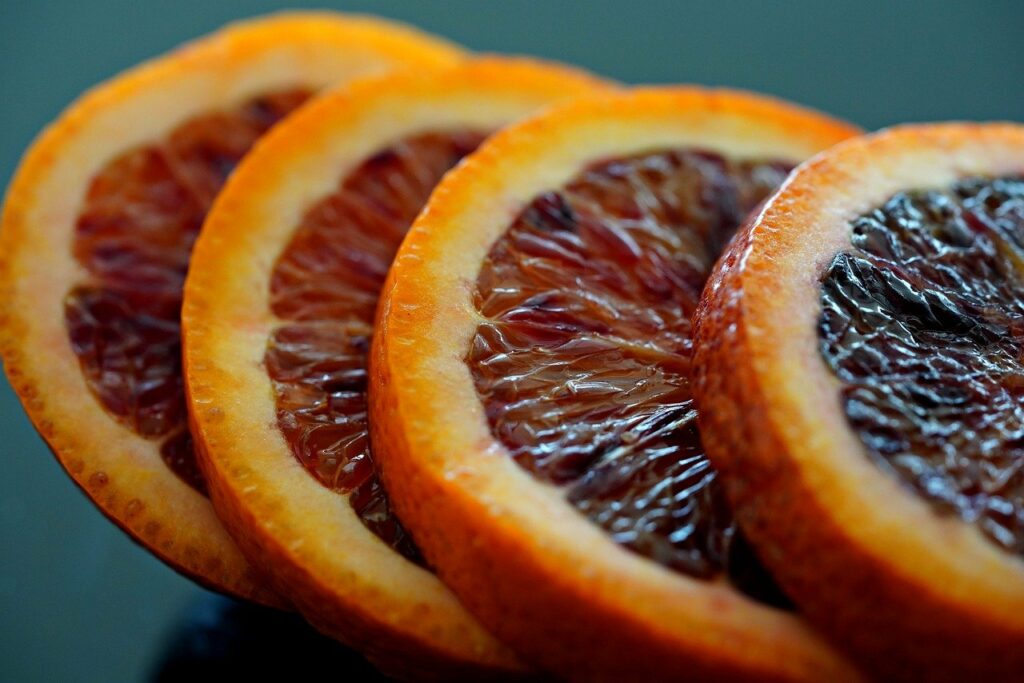
Our easy access to vitamin C today - whether through fresh produce or supplements - stands in stark contrast to historical challenges in obtaining and preserving these vital nutrients. Interestingly, our ancestors could synthesize vitamin C naturally until about 61 million years ago. While evolution may have deprived us of this ability, it has given us the pleasure of enjoying fresh fruits and vegetables - a trade-off that many would consider worthwhile.
RESOURCES
- https://pmc.ncbi.nlm.nih.gov/articles/PMC10296835/#:~:text=First%20described%20in%201550%20BC,not%20forgotten%20disease%20%5B1%5D.
- https://sailorsattic.wordpress.com/2019/01/15/scurvy-me-timbers/
- https://www.jameslindlibrary.org/articles/who-was-james-lind-and-what-exactly-did-he-achieve/
- https://www.cnrs-scrn.org/northern_mariner/vol20/tnm_20_57-70.pdf
- https://www.webmd.com/skin-problems-and-treatments/what-to-know-scurvy
- https://www.acs.org/education/whatischemistry/landmarks/szentgyorgyi.html#:~:text=Scurvy%20was%20among%20many%20diseases,the%20foundations%20of%20modern%20nutrition.
- https://www.sciencedirect.com/science/article/pii/S0738081X1200171X?via%3Dihub