






 Mathematics
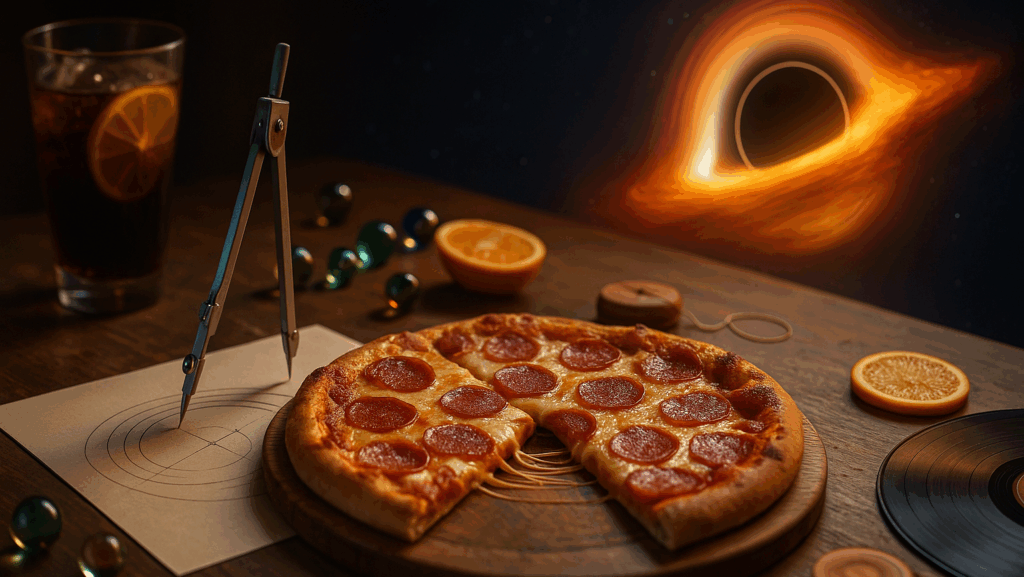
From Pizza to Black Holes: How Far Can You Follow Pi?
Numbers are supposed to be tame. They count apples, measure fence posts, keep score in football. But every so often, a number slips free from the pen, refuses…
Discover ideas, explanations and extraordinary stories from across the sciences — written by people who know their subjects.
Mathematics Numbers are supposed to be tame. They count apples, measure fence posts, keep score in football. But every so often, a number slips free from the pen, refuses…
 Medical Science
Organ transplants are arguably one of the most important human achievements in the field of medicine. The first ever successful heart transplant from a human donor to a…
 Medical Science
Cancer is one of the leading causes of death worldwide and there is a widespread belief today that it is entirely a byproduct of our modern lifestyles. While…
 Astrophysics
Albert Einstein's pioneering theories of Special and General Relativity have profoundly revolutionised our comprehension of the universe. Emerging from the same foundational principles of theoretical physics, these theories…
 Astrophysics
In the realm of astrodynamics, the solar system's celestial ballet entices researchers with its intricate gravitational interactions. Jupiter, the reigning gas giant, exhibits an orbit that defies simple…
 Astrophysics
Johannes Kepler's Third Law of Planetary Motion, also known as the "harmonic law," is a fundamental principle that relates the period of a planet's orbit to its distance…
 Astrophysics
Johannes Kepler's Second Law of Planetary Motion, also known as the "law of equal areas," is a fundamental principle that helps us understand the movement of planets in…
 Astrophysics
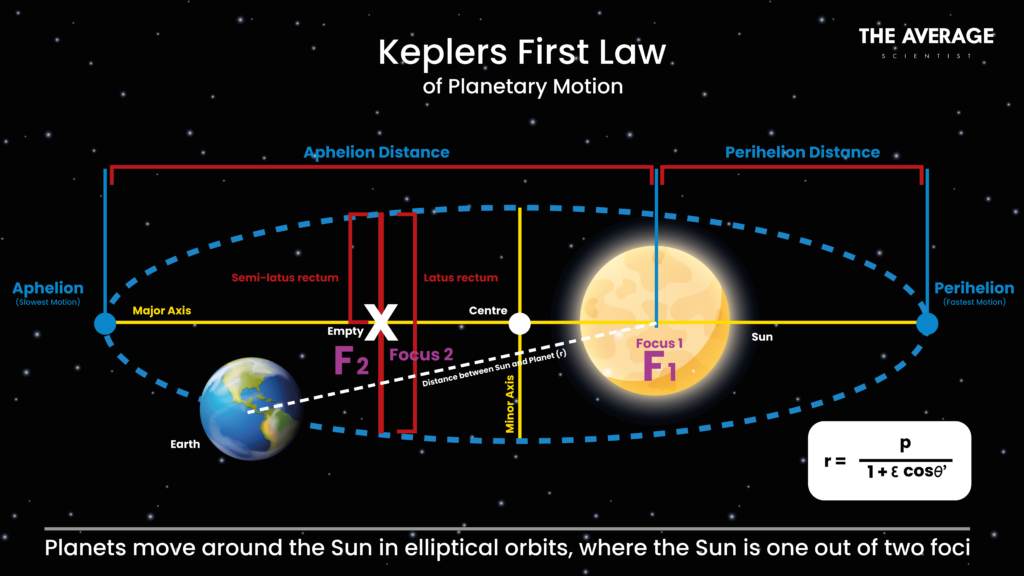
In the early 17th century, German mathematician and astronomer Johannes Kepler made ground-breaking discoveries about the motion of planets in our solar system. Among his...
 Astrophysics
Surely this is the most simple question imaginable? Everyone knows why it gets dark at night don't they? Actually, it's not quite as simple as you may think…
 Particle Physics
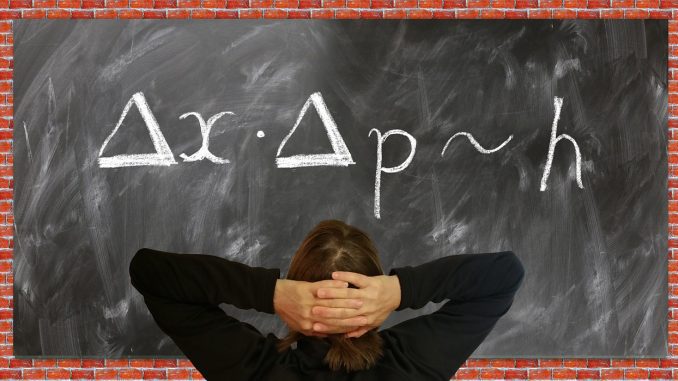
In this post we are going to examine and try to understand one of the more well established aspects of particle physics, the Heisenberg Uncertainty Principle...