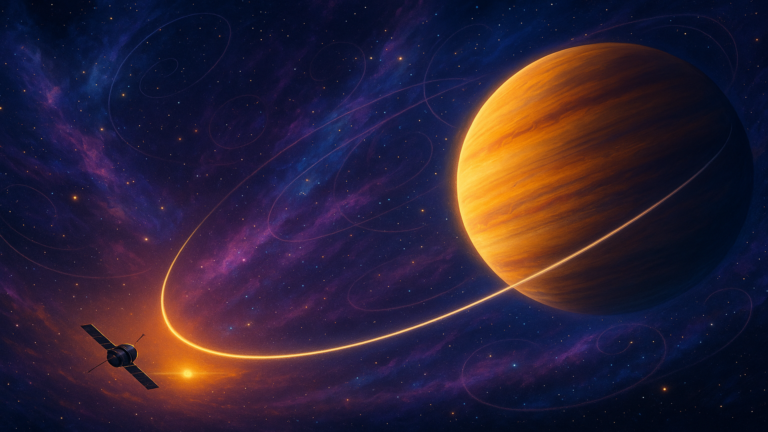
It’s the most wonderful time of the year again! Time to get the wish lists out and the stockings on the fireplace mantel. The holiday season has always been my favorite time of the year. From the chill in the air to the burning hot chocolate to my family’s annual rewatch of How the Grinch Stole Christmas, there’s something different about the world as the holidays approach. Now, as we all know, although noisy homes and bright lights both dim on the eve of December 24th, there is one man who doesn’t stop working: Santa Claus. He races around the world delivering presents and cheer to every household—a truly impossible feat unless he is secretly Superman. So, I’ve always wondered, how does Santa travel around the entire world in a single night? Do his reindeers have magical powers? Are cookies and milk the secret fuel to super speed?

Adobe Stock Images
While I don’t have a lot of experience riding a reindeer-drawn suspended sleigh or shimmying down chimneys, I have some theories of my own, and they all deal with the wibbly-wobbly space-time continuum.
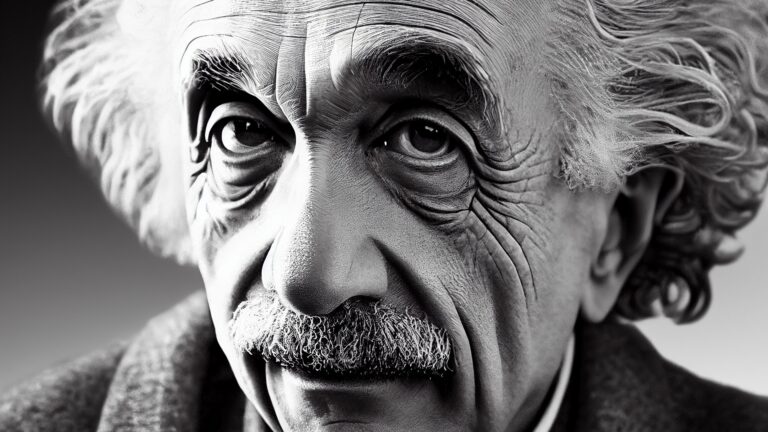
Albert Einstein’s Theory of Relativity
Without going into too much detail, Einstein’s Theory of Relativity can be split into two general parts: Special Relativity and General Relativity, both of which you can read more about here in another article.

Wikipedia: Time-Space Continuum
We know the three space dimensions as “up/down,” “light/right,” and “forward/backward” and can graph those onto three planes with ease (x, y, and z), but Einstein added a time dimension, resulting in what we consider the 4-D space-time continuum2. He essentially related mass and energy together, asserting that all our reference variables and the speed of light remain constant throughout the universe, aka:
E=mc2
Where “E” is energy, “m” is an object’s mass, and “c” is the speed of light5. There exists a mathematical relationship between time, space, energy, mass, and velocity that maintain the speed of light for all observers everywhere.
Fundamentally, if you move fast enough through space, your own observational experiences regarding space and time will differ from others’ observations, who are moving at different speeds in order to keep the speed of light constant. Broadly, the faster you move through space, the slower you move through time5.
So how does this idea apply to Santa? Well, what if Santa was moving so fast, time actually slows down for him?

Adobe Stock Images
This is an idea known as time dilation3. Perhaps, for every second we experience, Santa experiences three hours, which allows him to deliver all his presents in the roughly 36-hour period he gets.
What’s more, if he were moving close to the speed of light, he might experience a Lorentz-FitzGerald contraction.
Initially proposed and developed by physicists George FitzGerald and Hendrick Lorentz, Einstein refined the theory based on the constancy of speed of light. Basically, as objects operate at speeds approaching the speed of light, space contraction occurs as a consequential property of space-time1. To us, his sleigh might appear much smaller than its actual size, compressed in the direction of travel. I’d imagine his sleigh is at least five meters long to transport his mountain of gifts, but it might appear much smaller to our eyes.
Additionally, this contraction would compress the distance Santa needs to travel in the direction of motion. From our perspective, the distances between homes might appear shorter. As a result, Santa seems to cover large distances in less time than it would for us non-magical folk. However, this fact doesn’t practically affect how many stops he has to make— the distances only look “shortened” to us as outside observers.
But at this point, we know Santa can’t possibly be entirely human. In that case, he must be the world’s greatest physicist! Based on his understanding of relativistic effects, Santa might be able to utilize his magical abilities to “optimize” his travel, allowing him to make more efficient use of time and space. To us, his journey seems unbelievably fast, delivering gifts to millions of children across the globe in one night, but to him, it’s all physics, reindeer-rearing, and a sprinkle of Christmas magic.
REFERENCES
[1] Encyclopaedia Britannica, inc. (2021, June 1). Lorentz-FitzGerald contraction. Encyclopedia Britannica. https://www.britannica.com/science/Lorentz-FitzGerald-contraction
[2] Encyclopaedia Britannica, inc. (2024, November 5). special relativity. Encyclopedia Britannica. https://www.britannica.com/science/special-relativity
[3] Encyclopædia Britannica, inc. (2024, November 13). Time dilation. Encyclopædia Britannica. https://www.britannica.com/science/time-dilation
[4] Institute of Physics. (n.d.). Relativity | institute of physics. Relativity . https://www.iop.org/explore-physics/big-ideas-physics/relativity
[5] Jones, A. Z., & Robbins, D. (2016, March 26). Einstein’s special relativity. dummies. https://www.dummies.com/article/academics-the-arts/science/physics/einsteins-special-relativity-193336/