





What Causes Wind Direction
What causes wind direction - and why does the wind in some places almost always blow the same way? Why does it blow from the sea every morning along the coasts, descend into the valleys by evening in the mountains, and follow the same routes across deserts for years?
If you observe the wind long enough, a strange impression begins to emerge: as if it remembers the way. Sometimes it seems as though the wind has a memory.
What Shapes the “Memory” of the Wind
When it appears that the wind returns along the same paths, what we are actually observing is the result of a complex physical system at work. The atmosphere obeys strict laws of dynamics: the movement of air is determined by pressure distribution, temperature contrasts, the rotation of the Earth, and the shape of its surface. These factors operate continuously and create stable patterns of atmospheric circulation.
Topography as the Conductor of Airflows
The surface of the Earth plays a crucial role in shaping wind directions. Mountains, plains, valleys, and coastlines act as natural architects of atmospheric flows.
Mountain ranges often become powerful barriers to the atmosphere. When a stream of air encounters a mountain ridge, it cannot simply pass through it. Instead, the air is forced to rise upward, flow around the obstacle, or move along the slopes. This process creates stable circulation patterns known as orographic winds.
Valleys, in contrast, act as natural channels. They concentrate the movement of air, forming what are often called wind corridors. This is why in many mountainous regions the wind almost always blows along the valley rather than across it.
Mountain systems can also generate local circulation patterns. During the day, sun-warmed slopes create rising air currents, while at night cooling produces the opposite movement - cold air flows down into the valleys. These cycles can repeat daily, producing predictable wind regimes.

Temperature and Pressure - The Engine of the Atmosphere
Imagine two rooms: in one, a heater is running and the air is warm; in the other, the air is cooler. If a door between them is opened, the air will begin to move. Warm air rises, while colder and denser air moves in to take its place. A flow forms - like a small wind inside the house.
Earth’s atmosphere works in a similar way, but on a planetary scale. The primary source of energy for these processes is solar radiation. However, the Earth's surface does not heat evenly: equatorial regions receive far more energy than polar regions, and land warms and cools much faster than the ocean.
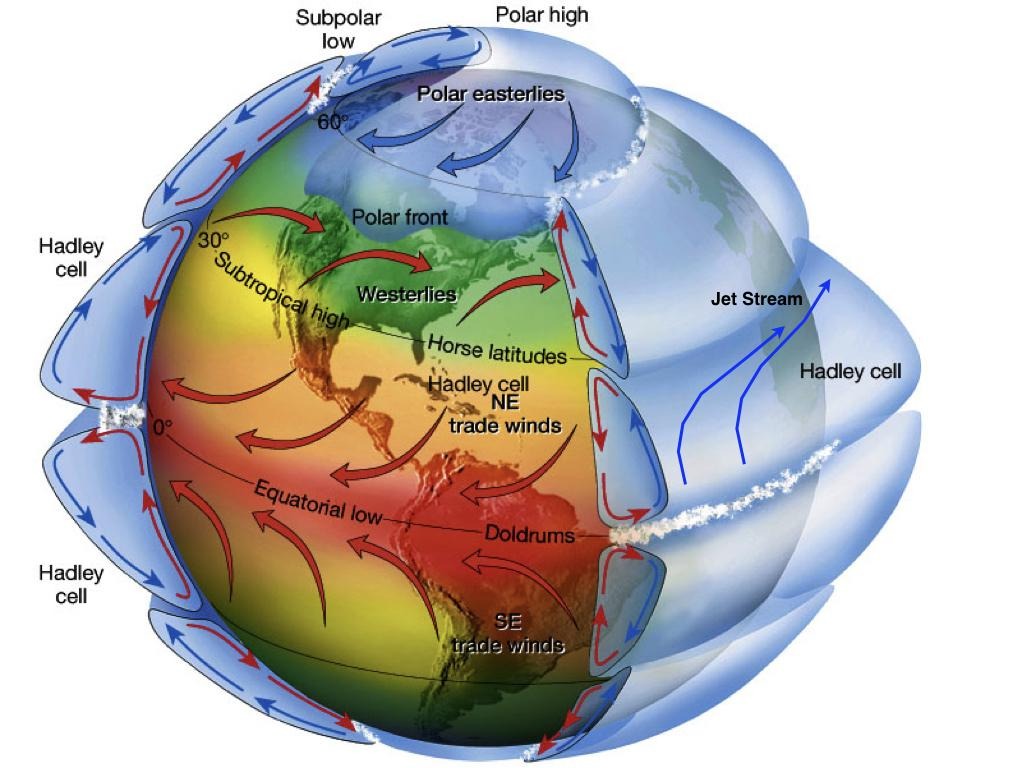
As a result, differences in temperature and atmospheric pressure arise. Where air is heated more strongly, it expands, becomes less dense, and rises, forming an area of low pressure. In cooler regions the air becomes denser, sinks downward, and creates areas of high pressure.
Air then begins to move from regions of high pressure toward regions of low pressure. This movement is what we call wind. These processes repeat continuously, forming stable cycles of atmospheric circulation.
Earth as a Vast Feedback System
However, the movement of air is determined not only by temperature and topography. The atmosphere does not exist in isolation: it continuously interacts with the oceans, the rotation of the planet, and global climatic processes. For this reason, wind is not simply a flow of air, but part of a vast interconnected system.
One of the key mechanisms within this system is the exchange of heat between the ocean and the atmosphere. The oceans slowly absorb solar energy and release it just as slowly, smoothing temperature contrasts across the planet. This process influences air temperature, the distribution of atmospheric pressure, and the stability of large climatic zones. Because of this constant interaction, the atmosphere does not merely move—it forms repeating patterns of circulation.
Another crucial factor is the rotation of the Earth. If the planet did not rotate, air flows would move much more directly from one region to another. But the Earth's rotation alters their paths. This phenomenon is known as the Coriolis effect: in the Northern Hemisphere moving air is deflected to the right, while in the Southern Hemisphere it is deflected to the left. As a result, winds do not simply move from warmer to colder regions but organize into large rotating systems that span entire oceans and continents.
From these processes emerge stable global wind belts: the trade winds in the tropics, the westerlies of the mid-latitudes, and the polar easterlies in high latitudes. These winds are neither random nor short-lived. They have existed for centuries, setting the rhythm of climate, precipitation, and seasonal change across many regions of the world.
The Gulf Stream - When Wind Moves the Oceans
When we think of wind, we usually imagine moving air. Yet wind also helps set the oceans in motion. One of the clearest examples is the Gulf Stream - a powerful current that carries warm tropical water from the Gulf of Mexico along the eastern coast of North America and across the Atlantic toward Europe.
This movement begins with the wind. Over the Atlantic, stable systems such as the trade winds and westerlies transfer energy to the ocean surface through friction. As the upper layers of water begin to move, Earth’s rotation and the shapes of the continents organize this motion into vast circular currents, or gyres. The Gulf Stream is one of the main branches of this great Atlantic circulation.
Scientists often describe it as a “river within the ocean.” As it flows northward, it releases heat into the atmosphere, warming the air above the sea. Winds then carry this warmth toward Europe, helping make Western Europe much milder than regions of North America at the same latitude.
But this relationship works both ways. Winds drive ocean currents, and warm currents in turn reshape the atmosphere by influencing temperature, pressure, and storm formation. In this sense, the Gulf Stream is part of the planet’s global breath - a living exchange between air, water, and heat.

Winds That Return Every Year
If we observe the atmosphere over long periods of time - not days, but decades or even centuries - it becomes clear that many winds behave in surprisingly predictable ways. They return in the same seasons, follow the same routes, and create stable climatic rhythms across the planet.
This is why meteorologists speak of wind systems rather than random air movements. Some of these systems are so stable that humans learned to use them long before the emergence of modern science.
Trade Winds - The Ancient Winds of the Oceans
One of the most stable wind systems on Earth is the trade winds. These winds blow in tropical latitudes almost continuously, moving from subtropical regions of high pressure toward the equator.
In the Northern Hemisphere the trade winds blow from the northeast toward the southwest, while in the Southern Hemisphere they blow from the southeast toward the northwest. Their stability is explained by the global circulation of the atmosphere known as the Hadley cell, in which warm air rises near the equator, moves toward the subtropics, and then descends, creating zones of high pressure.
For centuries the trade winds were a crucial factor in navigation. European explorers during the Age of Discovery used them as “aerial highways” across the Atlantic. Ships would sail southward to enter the zone of the trade winds and then cross the ocean using their steady direction.
Yet the importance of the trade winds goes far beyond the history of navigation. They play a major role in the Earth's climate system:
- transporting heat and moisture across tropical regions
- influencing cloud formation and precipitation
- driving ocean currents
For this reason, the trade winds can be considered among the most ancient and stable winds on the planet.
Monsoons - The Breathing of Continents
If the trade winds resemble steady flows, monsoons resemble the slow and powerful rhythm of the Earth's breathing.
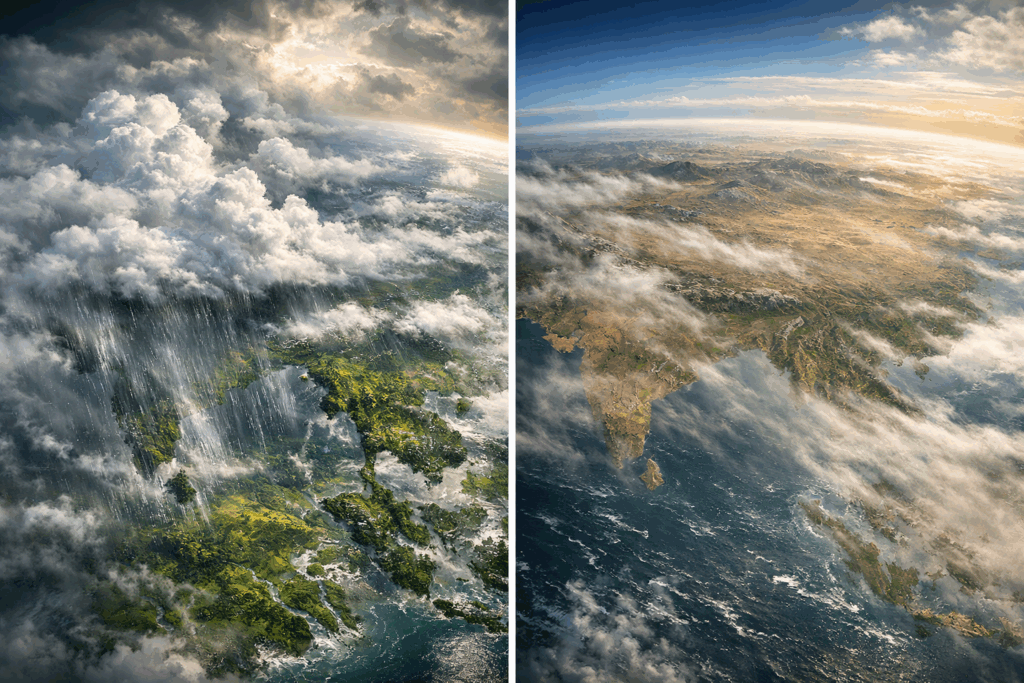
Monsoons are seasonal winds that change direction twice a year. During summer they carry moist air from the ocean onto the continent, bringing heavy rainfall. In winter the wind reverses direction, and air begins to move from land toward the ocean.
The main cause of this phenomenon is the difference in how land and water heat up. In summer, continents warm faster than the ocean. A low-pressure zone forms over land, and moist oceanic air begins to move inland. As it rises, the air cools and forms powerful rain systems. In winter the situation reverses: land cools faster than the ocean. A high-pressure area forms over the continent, and dry air begins to move toward the sea.
Monsoon circulation is particularly important for South and Southeast Asia. In some regions, up to 80–90% of annual precipitation is associated with monsoon rains.
For this reason, monsoons shape not only the climate but also the economy. Agriculture in countries such as India, Bangladesh, China, and others depends heavily on the timely arrival of seasonal winds. When the monsoon arrives late or weakens, it can lead to drought and serious economic consequences.
Breezes - Small Cycles of Memory
In addition to large atmospheric systems, there are also smaller, local wind cycles that repeat on a daily basis. One of the most familiar examples is the breeze. A breeze is a local wind that forms because land and water heat up at different rates.
A sea breeze develops during the day. Land warms faster than the sea, and the air above it rises, creating a zone of low pressure. Cooler air from the surface of the water begins to move toward the shore. As a result, a fresh daytime wind appears along coastlines, bringing cooler air inland.
At night the situation reverses. Land cools faster than water, and the pressure over land becomes higher. Air now begins to move in the opposite direction - from land toward the sea. This phenomenon is known as a land breeze.
These cycles can repeat every day for many years. They are well known to residents of coastal regions, as well as to fishermen and sailors who have long learned to use them for navigation. Breezes show that even at a small local scale, the atmosphere displays stable and repeating patterns.
How Wind Shapes Life on the Planet
When we think about wind, we usually imagine weather - a cool breeze, a powerful storm, or gusty autumn winds. But in reality, wind plays a much deeper role. Air currents transport heat, moisture, dust, seeds, and even living organisms across thousands of kilometers. Thanks to wind, ecosystems do not exist in isolation: forests, oceans, deserts, and continents constantly exchange matter and energy.
Bird Migration
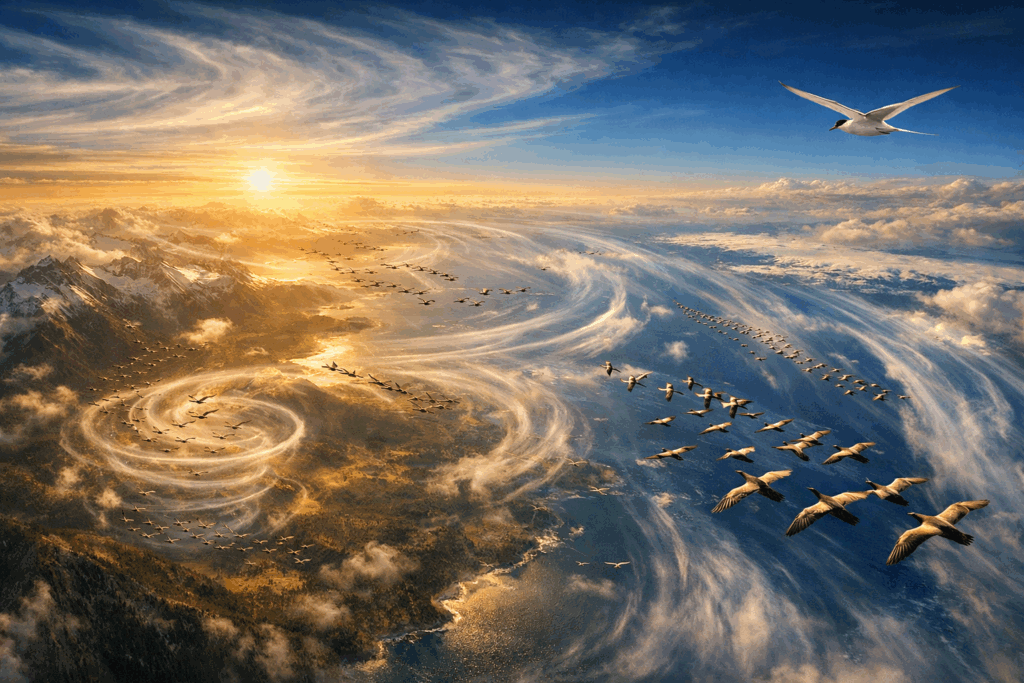
For many birds, wind becomes an invisible ally in their long journeys. Bird migration is one of the most remarkable natural processes. Some species travel thousands of kilometers each year, moving between breeding grounds and wintering areas. For example, the Arctic tern can fly more than 70,000 kilometers annually, traveling between the Arctic and Antarctica.
To endure such distances, birds actively use atmospheric currents. Tailwinds allow them to conserve a great deal of energy. Many species choose migration routes that align with prevailing air flows.
Some large birds—such as eagles, storks, and albatrosses - also take advantage of rising air currents and thermal updrafts created by the heating of the Earth's surface. By gliding on these currents, they can remain airborne for long periods with almost no wing movement.
In this way, wind becomes part of both the navigation strategy and the energy management of birds.
Seed Dispersal
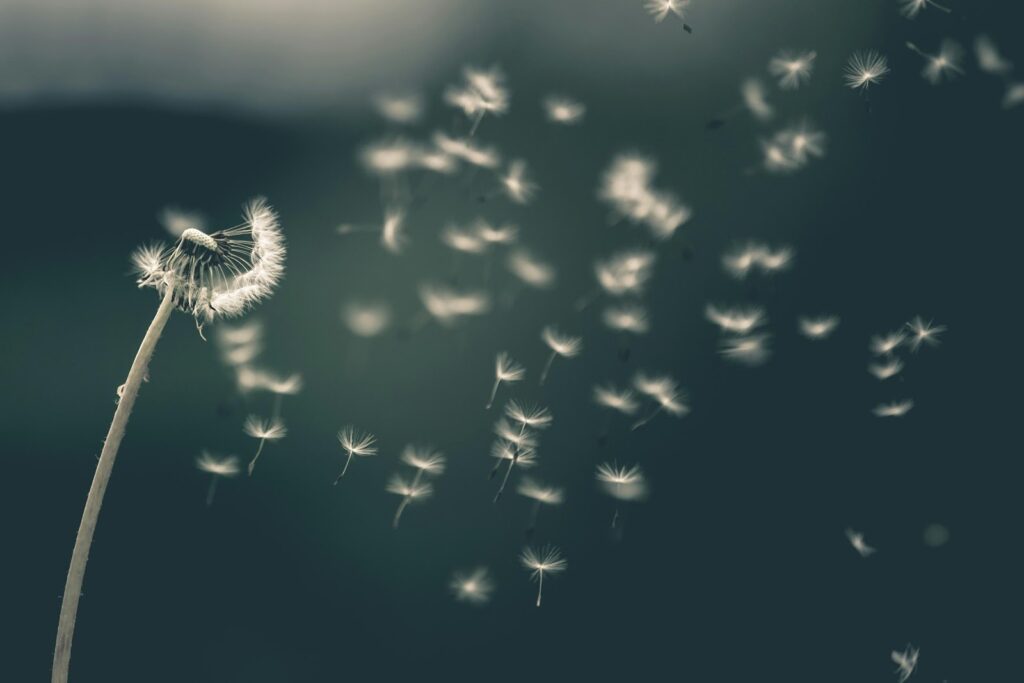
Wind also plays an important role in the life of plants. Many species use it as a means of dispersal. This process is known as anemochory - the dispersal of seeds by air.
Some plants have evolved remarkable adaptations that allow their seeds to travel long distances. The light “parachutes” of dandelions, the winged seeds of maple trees, or the fine fibers of poplar enable seeds to rise into the air and be carried far from their parent plants.
In some cases, wind can transport seeds tens or even hundreds of kilometers. Thanks to this mechanism, plants are able to colonize new territories after fires, volcanic eruptions, or glacial periods.
Through this process, new ecosystems emerge and damaged landscapes recover.
The Movement of Clouds and Moisture
One of the most important roles of wind is the transport of moisture across the planet. Water evaporates from the surface of the oceans, forming water vapor. But without atmospheric movement, much of this moisture would remain above the oceans. It is the winds that carry clouds over long distances - from oceans toward continents.
For example, moist air masses from the Atlantic can travel thousands of kilometers, bringing precipitation to Europe and Africa. Similarly, air flows from the Pacific Ocean influence the climate of North and South America.
This process plays a crucial role in the global water cycle. Without wind, large parts of the continents could become arid regions.
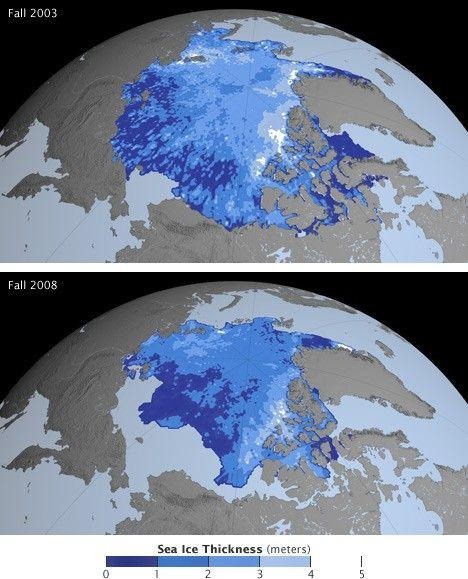
These images show that sea ice thinned from fall 2003 to fall 2008. Dark blue areas are thin ice, white areas are thick ice, gray regions are land, and light blue south of the ice pack represents open water.
Dust and Minerals
One of the most remarkable processes associated with wind is the transport of mineral dust between continents. Each year, powerful winds lift enormous amounts of dust from deserts. Tiny particles of sand and minerals can rise several kilometers into the atmosphere and travel across entire oceans.
One of the most famous examples is Saharan dust, which regularly crosses the Atlantic Ocean and reaches South America. Research shows that this dust contains large amounts of phosphorus, an essential nutrient for plant growth. When these particles settle in the Amazon Basin, they replenish nutrients in the soils of the tropical rainforest. In this way, a desert in Africa helps sustain the fertility of one of the most biologically rich ecosystems on Earth - the Amazon rainforest.
This example illustrates how closely connected the Earth's ecosystems truly are. Wind acts as a global transporter of resources, linking deserts, oceans, and tropical forests into a single system of life.
When the “Memory of the Wind” Changes
In recent decades, scientists have increasingly noted that the familiar routes of air currents are beginning to shift. The reason is climate change.
Changes in Atmospheric Circulation
Global warming affects the distribution of heat between the equator and the poles. This alters temperature gradients, which are the main driving force behind atmospheric circulation.
When these temperature contrasts change, the atmosphere responds by reorganizing major wind systems. Some winds become stronger, others weaken, and some shift their positions across the planet.
For example, research suggests that the Hadley cells, which help generate the trade winds, are gradually expanding. This means that subtropical wind zones are slowly moving toward the poles, altering climatic conditions in a number of regions.
Changes in Monsoon Systems
Monsoons are particularly sensitive to climatic changes.
Monsoon circulation depends on the temperature difference between land and ocean. If the oceans warm more quickly or if the distribution of heat in the atmosphere changes, this can affect both the strength and timing of seasonal winds.
In some regions, scientists are already observing:
- delays in the onset of monsoon rains
- increases in rainfall intensity
- longer periods of drought between rainy episodes
These changes can have serious consequences for agriculture and water resources, especially in countries of South and Southeast Asia.
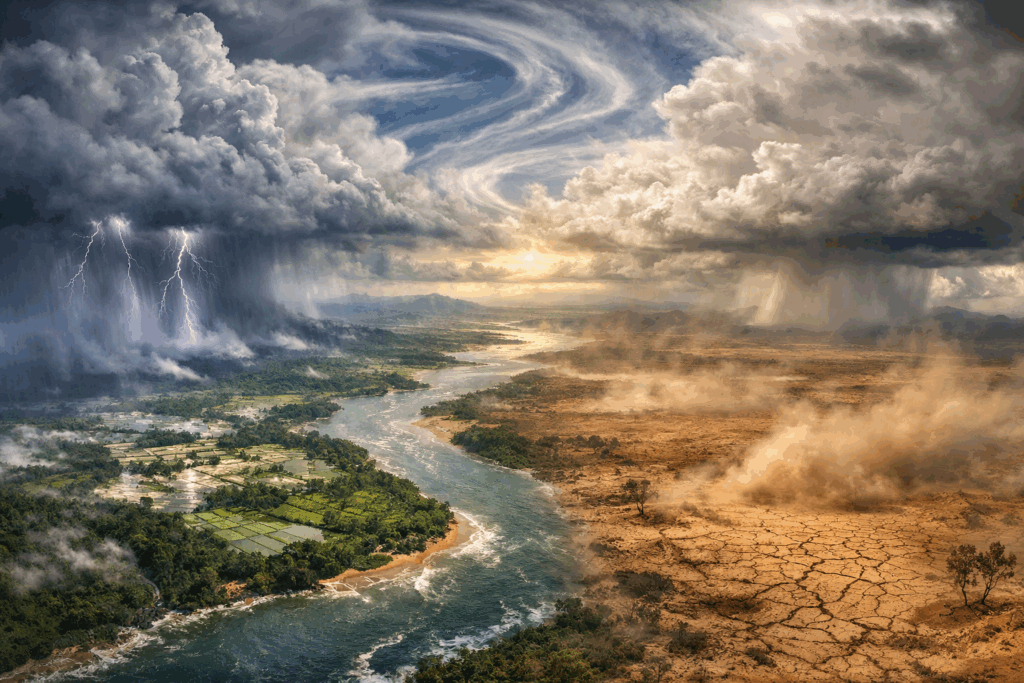
Shifts in the Trade Winds
The trade winds, long considered one of the most stable wind systems on the planet, are also showing signs of change.
Some climate models suggest that the strength of the trade winds may increase or decrease depending on ocean temperatures and the phases of large-scale climate oscillations such as El Niño and La Niña.
These changes influence not only the winds themselves but also ocean currents, the distribution of heat in the tropics, and global weather patterns.
Extreme Storms
One of the most visible consequences of atmospheric change is the growing intensity of extreme weather events. A warmer atmosphere can hold more water vapor, and warmer oceans provide additional energy for storm systems. As a result, some hurricanes, typhoons, and cyclones are becoming more powerful.
Although storms themselves remain a natural part of the Earth's climate system, changing environmental conditions can affect their frequency, trajectories, and intensity. In this sense, the “memory of the wind” is not fixed. It reflects the current state of the planet. As the climate changes, the routes of winds change as well. The atmosphere begins to draw a new map of air currents, in which old pathways may gradually shift or transform.
Landscapes Shaped by Wind
In places where strong winds blow for years or even centuries, trees begin to grow asymmetrically. Their branches develop mainly on the sheltered side, while the crown stretches in a single direction, like a flag streaming in the wind. Such plants are known as “flag trees”. By observing their shape, one can often determine the direction of the prevailing winds.
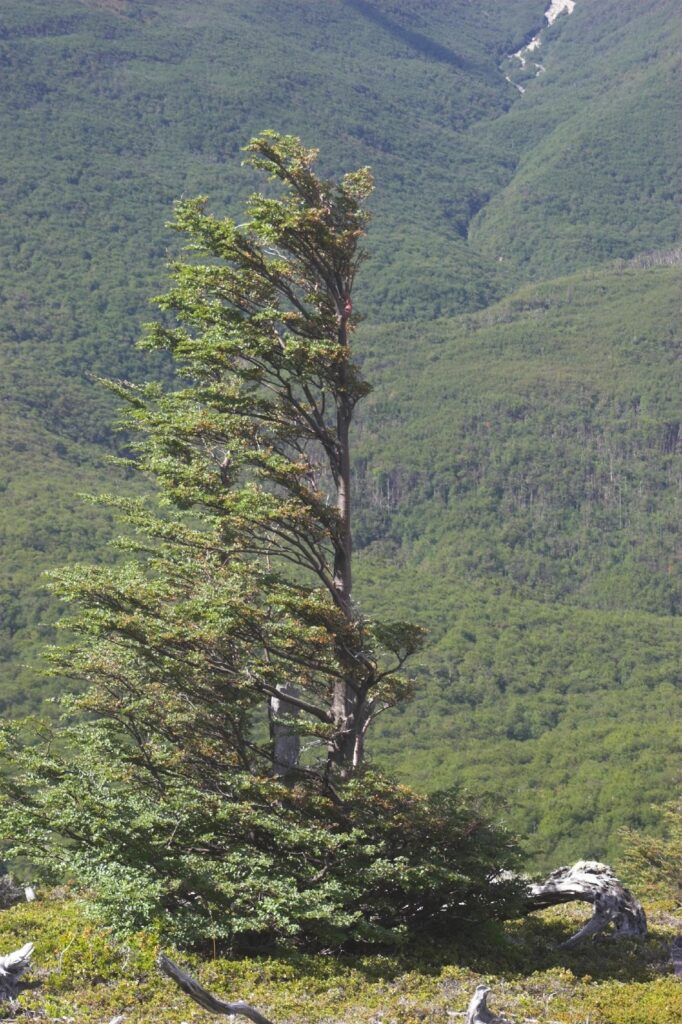
At the upper boundary of forests in mountainous regions, the influence of wind becomes even more severe. Here a special type of vegetation forms known as krummholz, or “crooked forests.” The trees remain low, twisted, and often grow almost horizontally, as if pressed to the ground. Their unusual shapes result from constant exposure to strong winds, cold temperatures, and particles of ice carried through the air.
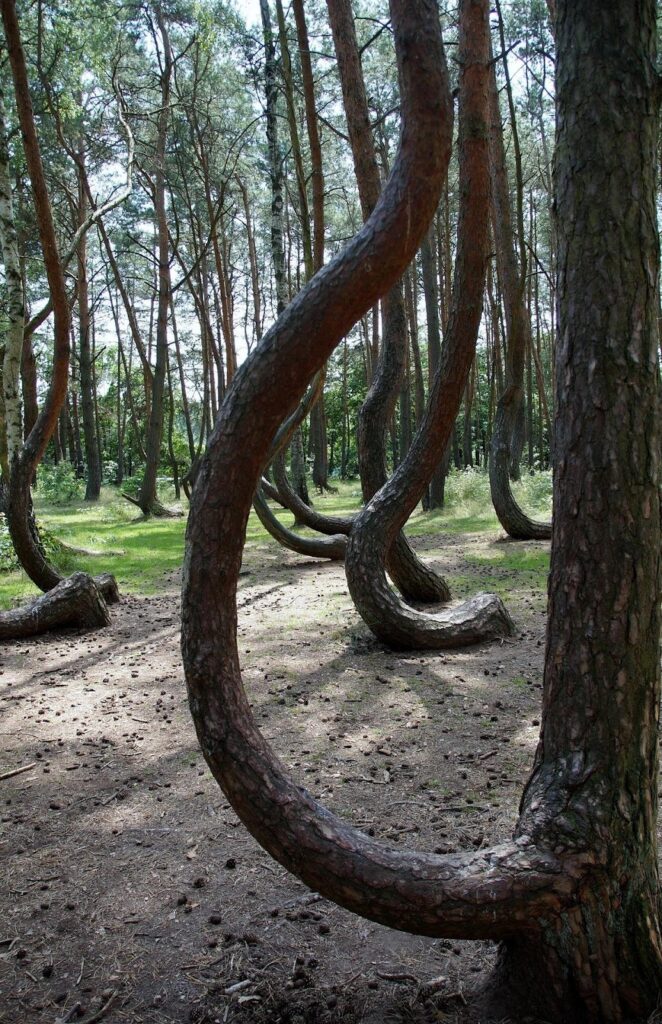
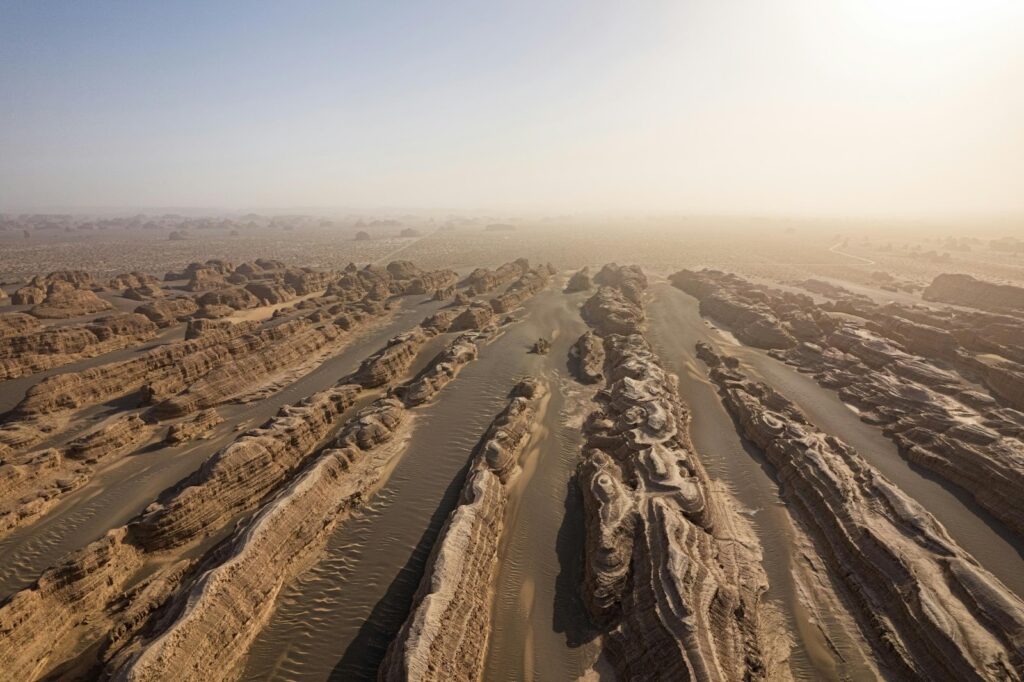
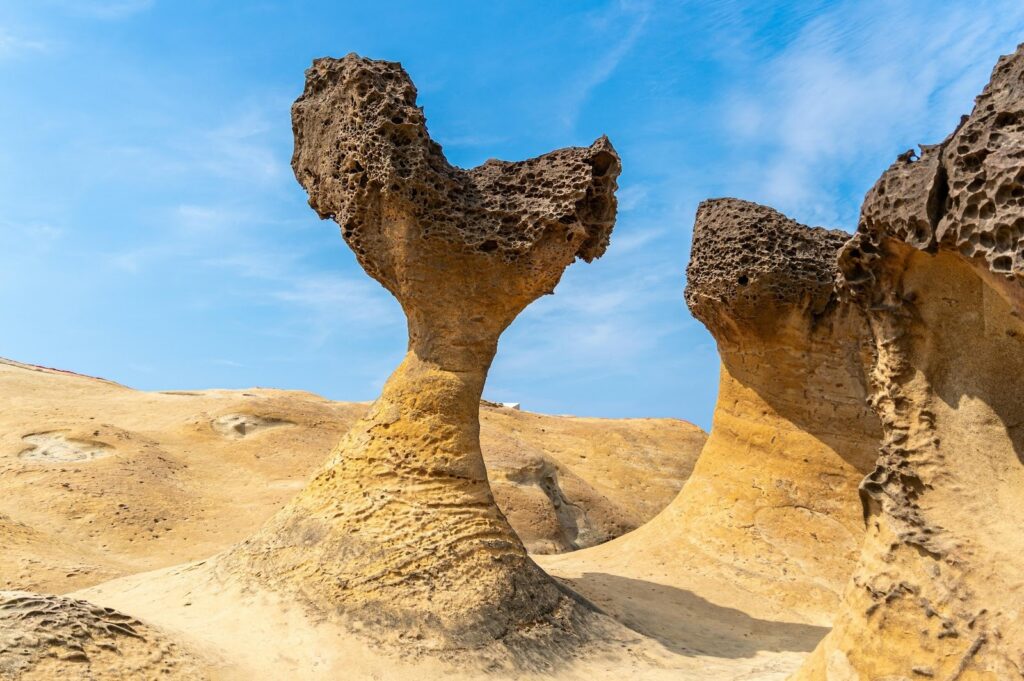
But wind shapes more than just plants. In deserts and open plains, it gradually grinds and sculpts stone. Air currents carrying sand act like natural sandpaper. Over time, remarkable landforms emerge: elongated ridges of rock known as yardangs, mushroom rocks, arches, and smooth, polished stone surfaces.
Conclusion - The Breath of the Planet
When we feel a gust of wind, it often seems sudden and random - a brief movement of air that appears and disappears. Yet in reality, every wind is part of a much longer story.
Wind carries within it the history of the planet. In its motion we can see the outlines of mountain ranges, the breathing of oceans, the rhythm of the seasons, and the energy of the Sun. Wind does not possess memory in the human sense, but its routes reflect patterns that the Earth itself has preserved for centuries.
Films That Capture the Spirit of the Wind
If you would like to explore the world of winds more deeply, these films offer beautiful and thought-provoking perspectives:
- Home (2009)
A visually stunning documentary about the Earth as a single interconnected system. The film reveals the delicate relationships between oceans, winds, and climate, showing how energy and heat move across the planet and how the atmosphere functions as one living whole. - Our Planet (Netflix, 2019)
In several episodes, the series beautifully illustrates how winds transport moisture across continents, guide the migration of birds, and connect the oceans with the atmosphere, shaping ecosystems across the globe. - The Wind Will Carry Us (1999), Abbas Kiarostami
A poetic and contemplative film in which wind becomes almost a philosophical presence — a symbol of time passing, the quiet breathing of the Earth, and the invisible forces that move through the natural world.