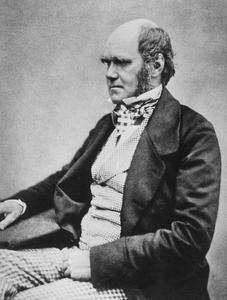
The theory of evolution has become foundational to modern biological sciences. Famously first proposed by Charles Darwin in his seminal 1859 manuscript On The Origin Of Species, our understanding of evolution has become more refined with time, particularly thanks to advances in the study of genetics and the myriad discoveries in the fossil record. Evolutionary biologists have been able to identify five key mechanisms which individually contribute to the process, and together provide the driving force for life on earth to adapt and diversify into, as Darwin put it, endless forms most beautiful.
Natural Selection
The most famous of these mechanisms, and the first to be identified by Darwin himself. He developed this idea as a contrast to ‘artificial selection’, a useful parallel with which to explain the concept.
In the case of artificial selection, humans selectively breed livestock and crops with desirable characteristics to produce offspring that share and amplify those characteristics. This includes for example; breeding dogs with incrementally shorter legs for chasing rabbits down warrens to produce the dachshund, cross-pollinating larger ears of corn to increase the yield of food, or in a case of particular interest to Darwin, the breeding of pigeons with particularly eye-catching plumage to produce flamboyant show-birds. The collective term for an organism’s gross characteristics (their anatomy, physiology, biochemistry etc.) is its phenotype.
Darwin wasn’t aware of DNA at the time he was developing his theory (That wouldn’t be discovered until around a decade after the publishing of Origin at the hands of Swiss chemist Friedrich Miescher), but he recognised that there was inheritance of characteristics from one generation to the next, and wondered whether such a system might apply in the wild as well as in domestic stock.
In natural selection, rather than the wants and needs of humans, it is environmental pressures that are the drivers of change. Weather conditions, terrain, availability of food and water, competition with other species and dozens of other factors. Those organisms that possess characteristics which allow them to live long enough to reproduce will pass those characteristics down to their offspring. It could be argued that each new generation is perfectly adapted to the environment of the previous one, as they are the sum of their parent’s phenotype. This does not guarantee that they will be able to survive in the environment they are born into, especially if it is changing at a higher than usual rate, as much of the world is today.
Evolution is not a predictive process. It cannot plan for future climate or environmental changes, so for organisms to survive, they must to some degree have a chance predisposition which prepares them for incoming changes. This is where the second mechanism of evolution comes in useful.
Mutation
In common parlance, the word mutation has negative connotations. We associate it with debilitating deformities or monsters from science fiction. In biological science, the word mutation is quite neutral, and refers to random changes in the DNA sequence of an organism.
All DNA is made of four nucleotide bases; adenine, cytosine, guanine and thymine, which form in the double helix of DNA in bonded pairs. Adenine always bonds to thymine, guanine always bonds to cytosine. Within a DNA sequence, different combinations of these base pairs code for different proteins which express as the characteristics seen in the living organism. Think of it like the binary code that is used as instructions for a computer system. The complete DNA sequence of an organism, the full set of instructions that tell its body how to form and function and express its phenotype, is called its genotype.
Offspring inherit their DNA from their parents; in the case of species that reproduce sexually like humans, 50% of each.
DNA molecules are fairly delicate structures, so this inheritance and crossing of genomes is rarely 100% efficient. Sometimes a place that we would expect to find one particular base is occupied by another. Sometimes sections of a genome can be inserted, removed, duplicated or even reversed. Errors in the sequence can occur in single base pairs or entire sections of varying sizes, meaning the instructions that the DNA provides change, and the phenotype of the organism develops in a different way to its parents. These are mutations, and they account in some part for variation between individuals. Despite sharing the same source DNA, siblings are not exact copies of one another or their parents, and even monozygotic ‘identical’ twins have their differences.
Contrary to the popular conception of mutations, they are not always negative.
Some mutations are so minor they might barely impact the function of an organism, like an extra stripe on a tiger’s back. However, depending on environmental pressures, these minor changes could either massively improve or massively reduce an organism’s ability to survive and reproduce. A slight colour change in the petals of a flower could attract huge numbers of pollinating insects, or repel them entirely.
The mutations that provide an advantage are positively selected for and over generations, assuming the environmental conditions remain favourable, will become part of a new phenotype. Organisms that possess mutations that put them at a disadvantage are less likely to reproduce and those mutations will be kept out of the gene pool. Indeed truly disastrous mutations almost universally lead to early death, or even failure to properly develop.
Non-random mating
Non-random mating could be considered an auxiliary mechanism to natural selection. In short it is additional pressures placed upon a population, sometimes from within, that favour particular characteristics and make certain individuals more or less likely to reproduce.
A potent area that illustrates this particularly well within animals is sexual selection. Many animals exhibit features or behaviours that signal their strength and virility. Famous examples include the vibrant feathers of a peacock’s train or the branching antlers of various deer species. Some animals fight in ritualised combat to prove their strength, while others build elaborate nests or decorative structures in their surroundings. Whatever the means of courtship may be, the goal is to demonstrate to a potential mate that you are healthy, and that your genotype will provide strong characteristics for potential offspring.
The energetic and nutritional demands of these characteristics are often very high. Deer must shed and regrow their antlers every year, and peacocks make very conspicuous targets for predators. This means that such displays and behaviours are considered ‘honest signals’. An animal can’t fake being healthy enough to grow and carry several kilos of bone on its head, or survive to adulthood with a multi-coloured cape affixed to its back.
The positive selection of these signalling characteristics means that they are often amplified within a species, becoming larger and more elaborate over time, although in recent decades human activity has begun to reverse this effect with their own forms of selective pressure.
Historically, large elephants with large tusks were more likely to breed than small elephants with small tusks. Large tusks are useful tools for combat, felling trees, digging for water in a drought, and are an attention-grabbing visual signal during the breeding season. However large tusks also make elephants targets for the ivory trade. With large-tusked elephants being hunted, it is now the smaller-tusked elephants who are living longer and producing more offspring, leading to a statistically noticeable decline in tusk and body size in new generations. A somewhat concerning example of evolutionary change being observed in real time.
Genetic Drift
While non-random mating pushes for the promotion of specific characteristics, genetic drift pulls in the opposite direction by throwing random chance into the equation. Where genes are the fragments of DNA that code for particular characteristics, the variations of those genes are called alleles. Perhaps the most widely used example is eye colour; we have a gene that codes for eye colour, and the different versions of that gene which express specific colours are the alleles. Genetic drift can thus be described as the change in frequency of particular alleles within a population over time.
When two organisms breed and the two halves of their genotype combine to form their offspring, there is an element of random chance as to which alleles will be inherited from which parent. Some alleles will be passed on, others will be left behind.
Over time, even without interference from non-random mating or natural selection, the roll of the dice will mean the frequency of certain alleles within a population will almost inevitably increase or decrease over time. If they increase, there will be an ever rising chance of those characteristics becoming widespread in a population, and if they decrease they will gradually disappear.
With each new generation, the chances of a common allele being passed on increase, while the odds for less common one decrease. Which alleles prosper or decline as a result of this random chance can result in significant changes to the genotype of a species, and thus their resultant phenotype, bringing about a new species. This singular path of change, where one species evolves directly into another, is known as anagenesis.
The homogenising effect of genetic drift would appear to push species towards a point of ever reducing diversity within their genome, if not for the other mechanisms acting on them. It is also part of an issue for endangered species known as the genetic bottleneck. When the population of a species is massively reduced, the genetic diversity within that species is reduced in kind. This means there are fewer allele variants available in the gene pool, reducing a species' ability to adapt to changing conditions. This can also lead to inbreeding, where closely related individuals reproduce, increasing the odds of shared recessive genes expressing as harmful physical and medical ailments.
Gene Flow
Finally gene flow, which is the movement of alleles into or out of populations. Though he didn’t know its true nature at the time, Darwin recognised gene flow in his observations of finches on the Galapagos Islands.
These small perching birds share a common ancestry, with genetic evidence suggesting a single ancestor arrived on the Galapagos some two to three million years ago. The islands have slightly different environmental conditions and food resources to one another, so over time the different populations of finches began to specialise. As mutations emerged that made them more suited to exploiting their surroundings, their genetic makeup gradually became more and more disparate from one another. One species became many, each with a distinct genotype and phenotype. When one species is divided and evolves on separate paths into multiple new species, that is known as cladogenesis, andit is far more common than anagenesis.
Gene flow can also occur in the opposite direction, with alleles being brought into a population from outside. This may be due to migration or a change in geographical boundaries allowing once separated populations to meet and reproduce. This can be a boost to a population that is struggling under a genetic bottleneck, as it adds much needed allele variety to the gene pool.
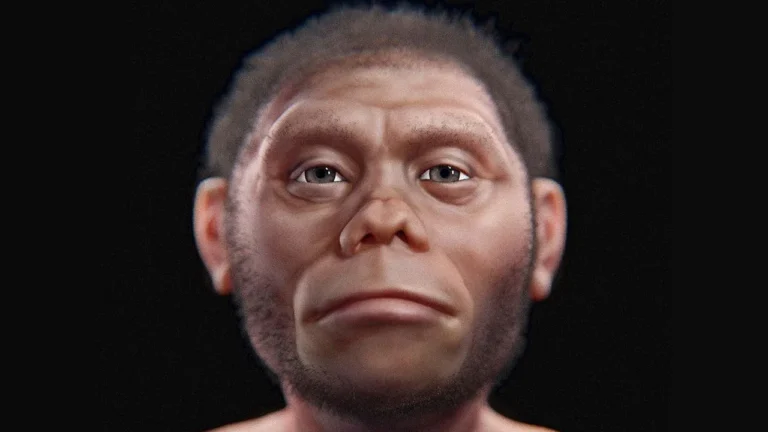
Interestingly, this can even happen between species, as it has with humans. Many people of European and East Asian descent have trace amounts of Neanderthal DNA in their cells. Neanderthals were a robust species of human that went extinct around 40,000 years ago, but their alleles continue in modern humans, even leaving an impact on our health & physiology. Check out our article on The Genetic Legacy Of Ancient Humans for more detail.
These five mechanisms working in tandem provide the framework upon which life on Earth has built its astonishing diversity over the past half a billion years, driving adaptation and variation in an ever changing world. With the expansion of human endeavour changing the face of the planet at a faster than normal rate, the five mechanisms of evolution are under increasing pressure to give living things a path to survival.
Further Reading
- Charles Darwin - On The Origin Of Species By Means Of Natural Selection https://www.gutenberg.org/files/1228/1228-h/1228-h.htm
- Adam G. Jones & Nicholas L. Ratterman - Mate choice & sexual selection: What have we learned since Darwin? https://www.pnas.org/doi/abs/10.1073/pnas.0901129106
- Shance C. Campbell-Staton et al - Ivory poaching & the rapid evolution of tusklessness in African elephants https://www.science.org/doi/10.1126/science.abe7389
- Eric Bender - Urban evolution: How species adapt to survive in cities https://knowablemagazine.org/content/article/living-world/2022/urban-evolution-species-adapt-survive-cities