- Emotional Boost: Houseplants reduce stress, improve mood, and create a calming, cozy atmosphere.
- Modest Air Benefits: They slightly improve air quality and humidity but can't replace ventilation.
- Deep Connection: Our draw to greenery is instinctive — even a single plant can make a big difference.
Chances are, you have at least one plant at home. Maybe it's an old dracaena in the kitchen or a cactus inherited from your grandmother. But have you ever wondered if this green companion is doing more for you than simply decorating your space?
How I Realized I Was Missing Nature
When I moved from a small, green-filled town to a massive metropolis, I didn’t immediately understand what was bothering me. Everything seemed exciting: new streets, the fast pace of the city, bright signs, glass, concrete, neon... But a sense of emptiness lingered. I had landed in a concrete jungle, where there was more asphalt than grass, and instead of rustling leaves, there was the constant roar of traffic.
At first, I couldn’t quite pinpoint the source of my discomfort. Only later—after a walk through a small urban park—did I feel how much easier it was to breathe, both literally and metaphorically. That’s when it hit me: my new life lacked greenery.
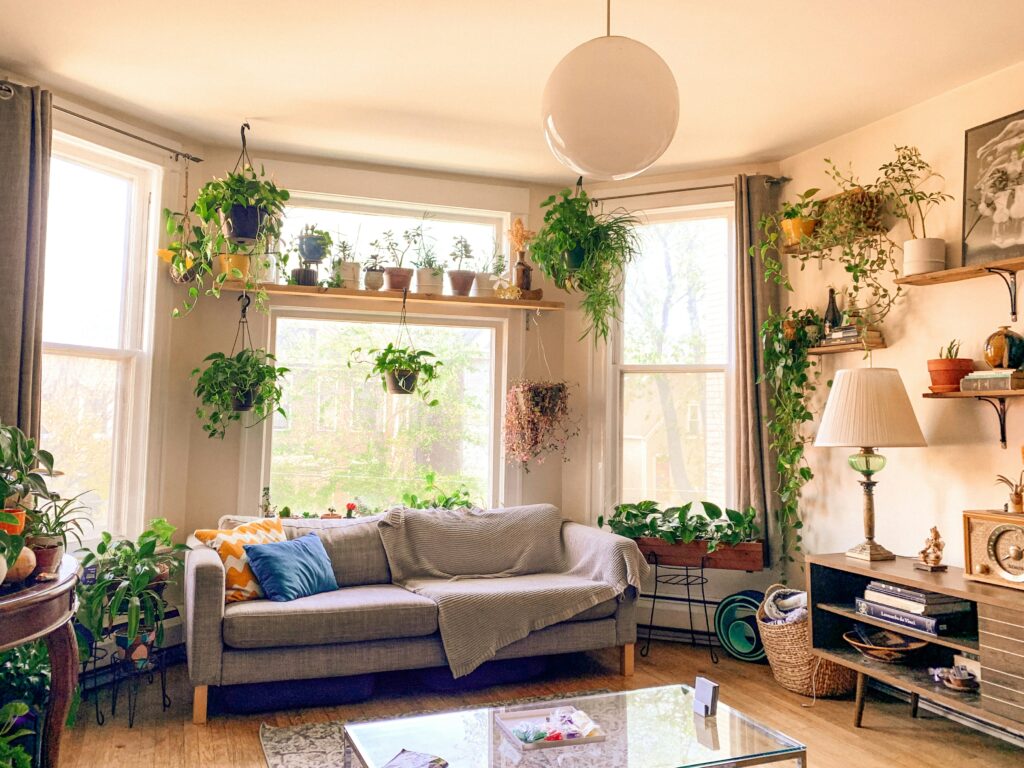
That moment marked the beginning of my journey toward “greening” the space around me. It all started with a small cactus by my computer — just because it looked cute and seemed low-maintenance. Then came another one — this time with a flower. And then came the avalanche: plants for the kitchen, the bedroom, even the bathroom. With each new “green neighbor,” it became a little easier to breathe — and the room a little cozier.
Why Do We Feel the Need to Surround Ourselves with Greenery?
Since ancient times, nature has been an inseparable part of human life. People settled near forests and rivers not only for survival but also because they felt a deep connection to the natural world. Soil and plants were associated with life, and in many cultures, a reverence for nature still lives on — from harvest festivals to tree worship traditions.
Today, we spend almost all our time indoors — studying, working, relaxing. And in this new “concrete” world, houseplants have become a way to bring a small piece of nature back into our lives — right on the windowsill. But do they really benefit us beyond being pleasant to look at? Or is this just another pretty tale from Instagram?
Are Houseplants More Than Just Decoration?
You’ve probably heard phrases like, “Get an aloe plant and you’ll sleep better,” or “A ficus can purify the air.” These kinds of tips are all over wellness articles, videos, and talk shows. And as is often the case, it all started with one scientific report. In 1989, NASA did indeed publish a study on the ability of certain plants to remove toxins from the air in sealed environments. Later came the book How to Grow Fresh Air, and from there it snowballed — bloggers, brands, marketers — everyone began talking about “filter plants.”
But here’s the question: how well does that actually work in real apartments and offices? Can plants really influence indoor air quality, well-being, and stress levels? Or are we just beautifully fooling ourselves?
In this article, we’ll sort through where the myths end and the science begins. Because plants do have some surprising benefits — though maybe not exactly the ones the marketing promises.
Photosynthesis: The Green Magic We Can’t Live Without
Before we dive into how plants affect the air in our homes, it’s worth understanding one truly amazing process — photosynthesis. It’s what makes plants so unique.
Imagine this: every plant is like a tiny factory powered by sunlight. And here’s what happens inside:
- The plant pulls in carbon dioxide (CO₂) from the air.
- Sunlight triggers a chemical reaction in the leaves — all thanks to chlorophyll, the green pigment.
- The result? Glucose (food for the plant) and oxygen (food for us, so to speak).
Put simply: plants “eat” sunlight and air — and “breathe out” oxygen. It’s nature’s own kind of alchemy! This process is the foundation of all life on Earth. Everything — from microbes to mammals — depends on green leaves capturing light and producing the oxygen we breathe. One large tree can generate enough oxygen in a day to support the breathing needs of four people. It’s not magic — it’s science. But it sure sounds magical, doesn’t it?
Why Should We Care?
At first glance, photosynthesis might seem like something straight out of a high school biology textbook. But in reality, it’s closely tied to our well-being. When you place a plant in your home or on your desk, you’re inviting in a miniature lab that not only pleases the eye but also:
- helps refresh the air,
- contributes to natural humidity,
- creates a sense of coziness and life in the room.
Sure, one plant can’t replace a walk in the forest. But it reminds us that nature is close — and quietly working for us, even when we don’t notice it.
What About Houseplants?
Now this is where things get especially interesting. The principles of photosynthesis are the same — whether we’re talking about the Amazon rainforest or your modest ficus on the windowsill. But the scale is completely different:
- There’s too much air and too few leaves in a typical room for a single plant to significantly “clean” the atmosphere.
- The oxygen plants produce quickly disperses into the room’s air volume.
- At night, photosynthesis stops altogether — it can’t happen without light. In fact, most plants switch to respiration at night, just like we do: they absorb oxygen and release CO₂. But the amounts are so tiny that there’s no need to worry — even if you fill your entire bedroom with geraniums.
There Are Exceptions!
Some plants do work at night — literally. Sansevieria (snake plant), aloe vera, orchids, and other succulents use CAM photosynthesis — a kind of botanical night shift. Unlike most plants that rest in the dark, these clever species open their pores only at night, quietly collecting carbon dioxide while the world sleeps. It’s their way of conserving water during the day, like desert dwellers hiding from the sun. Come morning, they use the stored CO₂ and sunlight to produce oxygen — all while keeping their moisture safely locked in. That’s why these “nocturnal breathers” are often recommended for bedrooms: they clean and refresh the air while you rest.
So, What’s the Point of All This?
Okay, one ficus won’t save the planet. But:
- Houseplants can absorb up to 20% of pollutants from the air around them — including substances like formaldehyde and toluene. And they do it silently, without electricity or filter changes.
- One mature tree can produce up to 120 kg of oxygen per year — enough to support the breathing of two people.
And What About Air Purification from Toxins?
This belief has a scientific origin — in 1989, NASA conducted a now-famous study that became something of a “green legend.”
What Exactly Did NASA Discover?
In a series of experiments conducted in sealed chambers, NASA scientists found that certain plants — such as spider plant (Chlorophytum), snake plant (Sansevieria), and golden pothos (Epipremnum aureum) — can indeed absorb harmful substances like:
- Formaldehyde (found in furniture, paints, and carpets)
- Benzene (emitted by household chemicals and plastics)
- Trichloroethylene (present in paints and adhesives)
It sounds like magic — green filters right in your living room! But, as with any scientific discovery, there are important caveats. Why is the reality a little less magical?
- Sealed Test Conditions: NASA conducted their experiments in completely isolated chambers — no drafts, no people, no pets. In other words, these conditions were nothing like your average apartment with an open window and a pot of soup simmering on the stove.
- Scale Is Not in Our Favor: Later, in 2019, a study by Drexel University concluded:
To make a meaningful difference in air quality in a real home, you’d need to place around 100 large plants per 10 square meters. Picture it: a literal jungle instead of a kitchen or bedroom. If you're lucky, your couch might still fit somewhere between the vines. - Simple Ventilation Works Better: Yes, really. An open window or a decent ventilation system removes harmful compounds dozens of times faster and more effectively than any plant. And, fortunately, they don’t need watering.
Plants Aren’t Magic Filters — But They Do Help
We're not saying that houseplants can completely purify your air like a powerful air purifier. But that doesn’t mean they’re useless. Scientific studies confirm: plants make a modest yet tangible contribution to improving indoor climate. Here’s how:
Plants as Natural Dust Traps
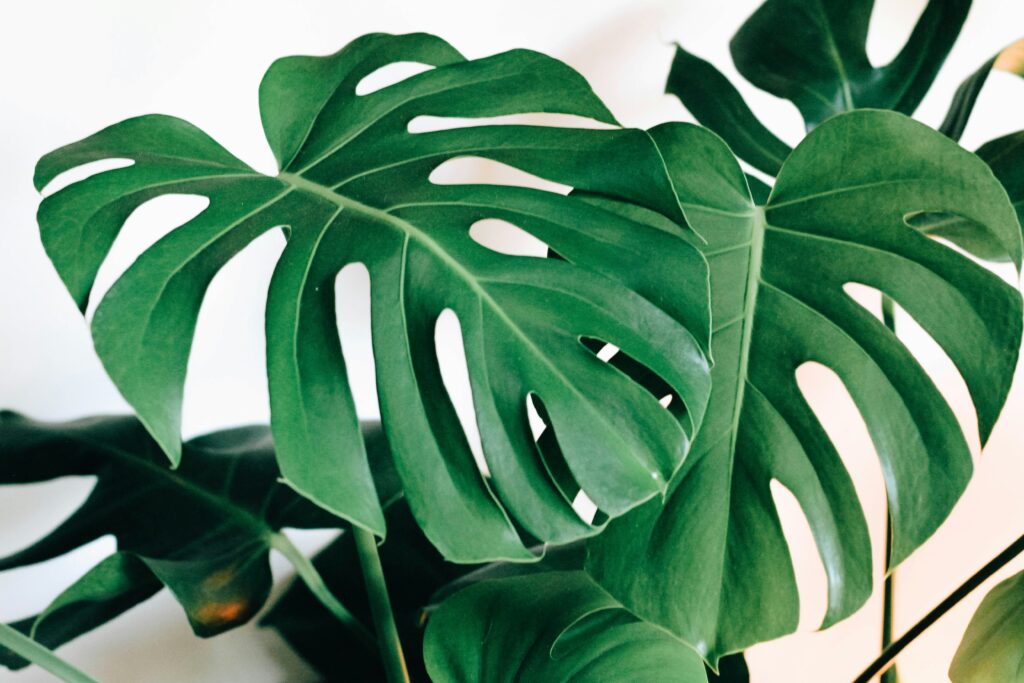
Some plants genuinely can trap dust and other fine particles from the air — and there’s a clear mechanism behind it. A study by Shao et al. (2019), conducted in China, showed: Leaves with tiny hairs, waxy coatings, or a rough surface capture significantly more dust than smooth ones. Plants that are especially good at this include those with:
- Broad leaves (like Monstera or Dieffenbachia)
- Velvety or hairy textures (like Fittonia)
- Waxy surfaces (like Sansevieria or Aloe vera)
These types of leaves can "trap" pollen, soot, and micro-particles that would otherwise end up in our lungs.
Try it yourself:
Place two similar plants on your windowsill — one with broad, waxy leaves (like a snake plant), and one with smooth leaves (like a ficus). After a week, wipe the leaves with a damp cloth — you’ll be surprised how much dust has collected!
Plants and Air Humidity
Yes, plants really can help humidify the air. They release moisture through tiny pores on their leaves in a process called transpiration. This added moisture in the air helps dust settle rather than swirl around the room. And it’s not just a guess. In a 2024 study by Jenny Berger, Emmanuel Essah, and Tijana Blanusa, researchers examined how plants affect humidity levels in offices with natural ventilation. They found that certain plants — especially Epipremnum (golden pothos) — are particularly effective at increasing air humidity, especially during hot and dry periods. While the effect may be modest, it is measurable — especially if there are several plants in the room.
Aesthetics and Comfort — It’s More Than Just Taste
It’s not just about “liking the color green.” Research shows that the visual presence of natural elements significantly reduces stress, particularly for urban dwellers. In one study, participants were shown 360-degree images of urban environments, forests, and parks. Those who viewed green landscapes recovered from stress more quickly — their heart rates dropped, and anxiety levels decreased. Another meta-analysis found that access to natural views — like trees, shrubs, and flowers — helped lower urban stress levels, improved mood, and increased feelings of safety and comfort.
So, What Can Plants Do — and What Can’t They?
| Can Do | Can’t Do |
| Trap dust and micro-particles | Significantly reduce all airborne toxins |
| Increase air humidity | Fully replace ventilation systems or air purifiers |
| Improve the visual and emotional vibe | Purify all indoor air from pollutants |
Green Therapists: How Plants Affect Our Mood and Recovery
Houseplants are more than just decoration. They can meaningfully impact our emotional state — and even our physical well-being. And this isn’t poetic exaggeration; it’s backed by science. Here’s what modern research confirms:
What Can Plants Actually Do?
Years of observation and laboratory experiments have shown that indoor plants can:
- Reduce stress and anxiety
- Increase concentration and productivity
- Improve overall well-being
- Support faster recovery from illness
- Foster a sense of connection with nature
What Does Science Say?
Study by Professor Tove Fjeld (Norway): Professor Tove Fjeld from the Agricultural University of Norway conducted a large-scale study in an office environment:
In spaces where plants were introduced, symptoms such as fatigue, headaches, dry skin, and coughing decreased by 25–40%. And 82% of participants said they wanted the plants to stay in the office permanently. This study shows that even a couple of potted plants on your desk can genuinely improve both the indoor climate and overall mood.
Texas A&M University Study (2025): Researchers Dr. Courtney Suess and Dr. Jay Maddock used virtual reality to simulate stressful scenarios and test how people respond to different hospital room environments. They discovered that hospital rooms with plants, green decor, and views of nature significantly improved relaxation and mental clarity in participants recovering from acute stress. The effect was especially strong in those who were already under high stress — the green elements helped them the most.
Why Does It Work?
Researchers explain this using the Stress Recovery Theory and Psychoevolutionary Theory, which suggest that our brains interpret natural environments as “safe zones.” Being surrounded by greenery lowers activation of the sympathetic nervous system, which leads to:
- Fewer anxious thoughts
- More even breathing
- Steadier heart rate
- A sense of calm
What About the Future?
Science is constantly evolving: The startup Neoplants is working on creating “plants of the future” — genetically modified plants (Neo P1) that can absorb volatile organic compounds (VOCs) dozens of times more effectively than regular houseplants. The project is still in the testing phase, but it shows promising potential.
Let’s Sum It Up
| Common Myth | What Science Says |
| Plants completely purify the air | They do clean the air — but only on a limited scale |
| They can replace ventilation | No. Ventilation is much more effective |
| Plants are just pretty accessories | Not true. They improve indoor climate and well-being |
So, Should You Get Some Green Roommates?
There was a time when I thought houseplants were just about aesthetics. Pretty, green, and nothing more. Now I know: every plant in my home is a small island of calm. They don’t just please the eye — they breathe life into the space, giving the rhythm of the day a gentle, almost imperceptible softness. When I care for them — watering, repotting, noticing new leaves — I feel like I return to myself, if only for a moment.
It’s not just decoration. It’s a way to reconnect — with breath, with mindfulness, with the nature inside and around us. So if you’re still unsure — start with one. Maybe a little cactus, like I once did. And then who knows? You just might transform your apartment into a little green oasis in the heart of the city.
Want to Read More?
For deeper understanding:
- How to Grow Fresh Air: 50 Houseplants That Purify Your Home or Office — B.C. Wolverton
- The Nature Fix: Why Nature Makes Us Happier, Healthier, and More Creative — Florence Williams
- Plant Therapy: How Indoor Plants Can Heal Your Life — Ambra Edwards
- Wild at Home: How to Style and Care for Beautiful Plants — Hilton Carter
- The Nature of Things: The Power of Plants (CBC, Canada)
- Planet Earth II (BBC)