






 Astrophysics
What do we know about the strange mystery of Dark Matter?
Dark matter is one of the most intriguing mysteries in modern astrophysics. It is a hypothetical form of matter that does not emit, absorb, or reflect light or…
Discover ideas, explanations and extraordinary stories from across the sciences — written by people who know their subjects.
Astrophysics Dark matter is one of the most intriguing mysteries in modern astrophysics. It is a hypothetical form of matter that does not emit, absorb, or reflect light or…
 Astrophysics
Johannes Kepler's Third Law of Planetary Motion, also known as the "harmonic law," is a fundamental principle that relates the period of a planet's orbit to its distance…
 Astrophysics
Johannes Kepler's Second Law of Planetary Motion, also known as the "law of equal areas," is a fundamental principle that helps us understand the movement of planets in…
 Astrophysics
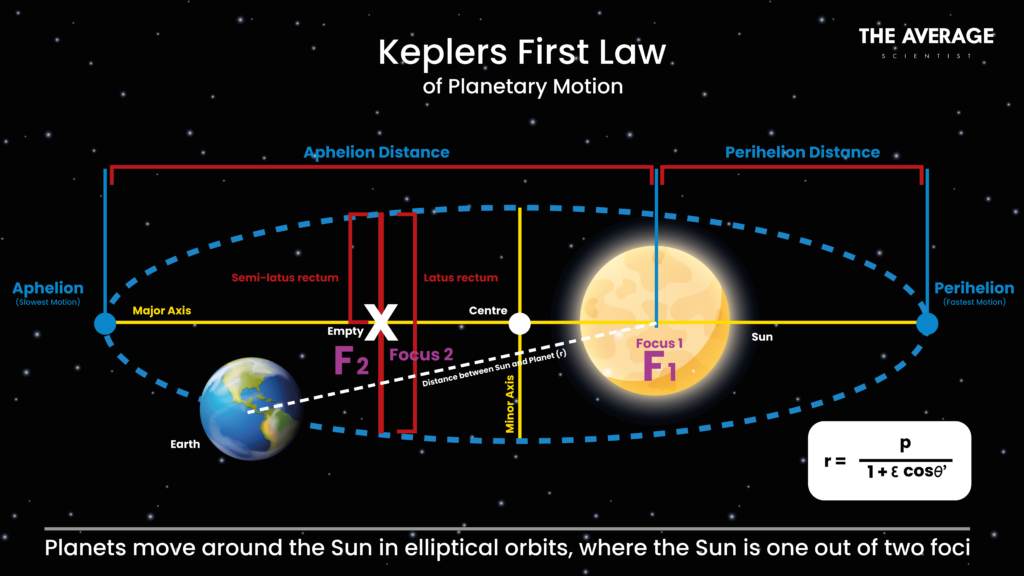
In the early 17th century, German mathematician and astronomer Johannes Kepler made ground-breaking discoveries about the motion of planets in our solar system. Among his...
 Astrophysics
Enceladus, one of Saturn's small icy moons, is a fascinating object of study in our solar system. The moon is covered in a thick layer of ice, but…
 Astrophysics
Ian & Martin discuss the possibility of life beyond Earth in the Solar System and the wider Universe. What are we doing to search for life and how…
 Astrophysics
It’s probably fair to assume that when we talk about the big bang theory more people will think about Sheldon Cooper and his friends in their Pasadena apartment…
 Physics
This has to be one of the most asked questions of all time. How many of us can honestly say we understand why the sky is blue? Why…
 Astrophysics
A detailed look at The Drake Equation. What is it? Is it useful? What conclusions can we draw from it and how can you try it for yourself...
 Astrophysics
Many people don't understand just how much energy there is in regular matter. The nucleus of any atom (atoms make up all matter) is an oven of intense…
 Astrophysics
Surely this is the most simple question imaginable? Everyone knows why it gets dark at night don't they? Actually, it's not quite as simple as you may think…
 Astrophysics
We live on a spherical ball of rock hurtling through space at approximately 67,000mph. Have you ever considered why our planet is spherical though? The answer is simpler…