






Law of Areas Explained: Kepler’s Second Law in Action

Johannes Kepler’s Second Law of Planetary Motion, also known as the “law of equal areas,” is a fundamental principle that helps us understand the movement of planets in our solar…
Reading Time – 9 minutes
Difficulty Level – Challenging

The Law of Orbits: Kepler’s First Law Made Simple
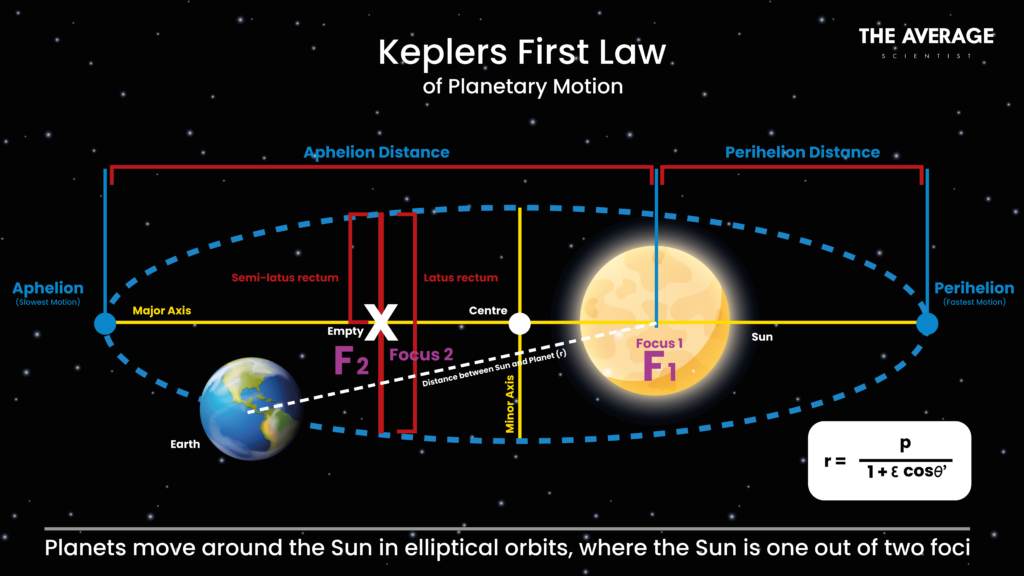
In the early 17th century, German mathematician and astronomer Johannes Kepler made ground-breaking discoveries about the motion of planets in our solar system. Among his…
Reading Time – 8 minutes
Difficulty Level – Challenging
Tidal Heating and Hydrothermal Activity: The Science Behind Enceladus

Enceladus, one of Saturn’s small icy moons, is a fascinating object of study in our solar system. The moon is covered in a thick layer of ice, but in 2005, NASA’s Cassini spacecraft…
Reading Time – 5 minutes
Difficulty Level 2/5
TAS Podcast – Is there life in the Universe?

Ian & Martin discuss the possibility of life beyond Earth in the Solar System and the wider Universe. What are we doing to search for life and how might life have adapted to thrive elsewhere in the cosmos…
Listening Time – 57 minutes
Difficulty Level 1/5

What is The Big Bang Theory?
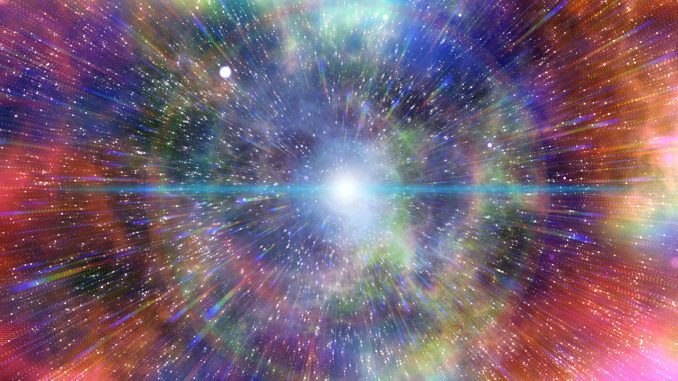
It’s probably fair to assume that when we talk about the big bang theory more people will think about Sheldon Cooper and his friends in their Pasadena apartment than an actual piece of real-world science…
Reading Time – 11 minutes
Difficulty Level 1/5
How To Understand The Famous Drake Equation. Are We All Alone In The Universe?

A detailed look at The Drake Equation. What is it? Is it useful? What conclusions can we draw from it and how can you try it for yourself…
Reading Time – 6 minutes
Difficulty Level 2/5
Do You Know Why It Gets Dark At Night?

Surely this is the most simple question imaginable? Everyone knows why it gets dark at night don’t they?
Actually, it’s not quite as simple as you may think and it took modern science over 200 years and…
Reading Time – 10 minutes
Difficulty Level 4/5
What is the James Webb Space Telescope?
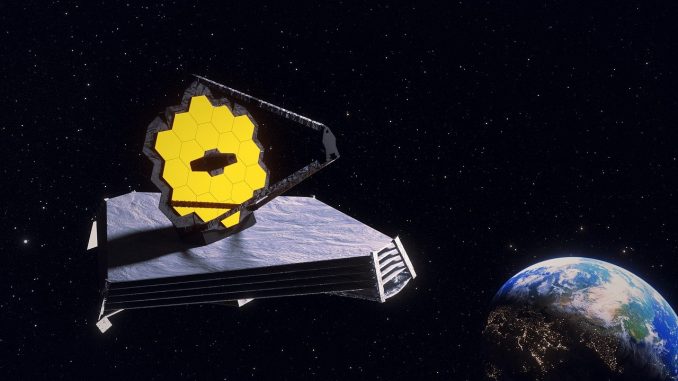
You may have heard about the James Webb Space Telescope (JWST). In this post we are going to try and understand what it is and why NASA have spent 20 years and 10 billion dollars developing it.
It is named after…
Reading Time – 5 minutes
Difficulty Level 1/5
What Is Gravitational Lensing And Why Is It Important?
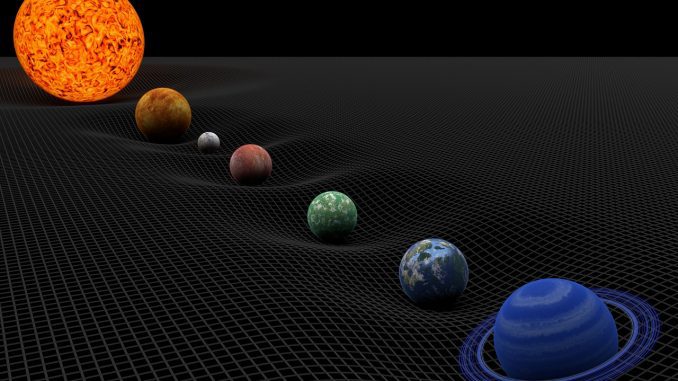
To summarise in a single sentence, gravitational lensing is the observable effect of photons of light travelling in straight lines through curved spacetime and producing…
Reading Time – 7 minutes
Difficulty Level 2/5