The Power of Plants We Underestimate
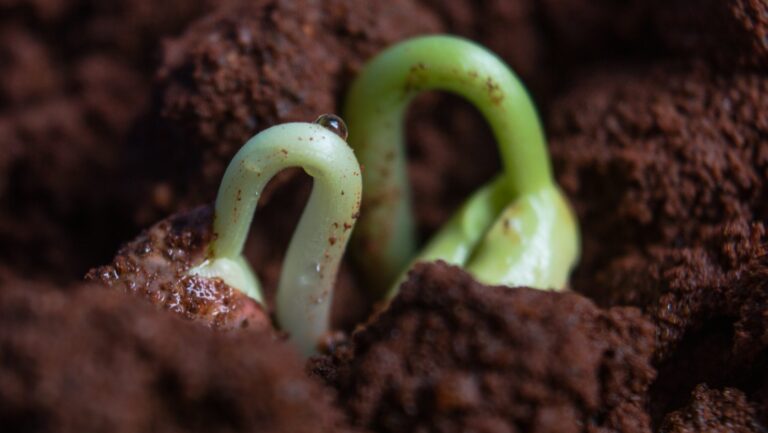
From a crack in the gray, dry asphalt, a tiny green sprout suddenly emerges. At first, it is barely visible, like a timid attempt of nature to assert itself in the kingdom of concrete. But after a few days, against the backdrop of cold grayness, a bright yellow dandelion blooms. Its flower shines like a small sun, breaking the monotony of the human-made world.
This image is familiar to all of us. We see it, walk past it, sometimes without even thinking: how can such a fragile plant overcome a layer of asphalt, whose weight exceeds its own by hundreds of times? Why is it the dandelion, and not another plant, that most often becomes a symbol of nature’s persistence?
The answer lies not only in biology but also in the way we are used to perceiving the plant world. More often than not, we treat plants as a passive backdrop to our lives — decorations to the human story. But the dandelion breaking through the asphalt is a reminder of the hidden force that lives in every stem, every root, and every seed. This force is neither loud nor aggressive; it manifests itself in constancy, perseverance, and the ability to adapt. And it is precisely this “quiet power” of plants that remains one of the most underestimated forces of nature — both in the scientific sense and in the symbolic one.
The Biological Basis of the Dandelion’s Strength
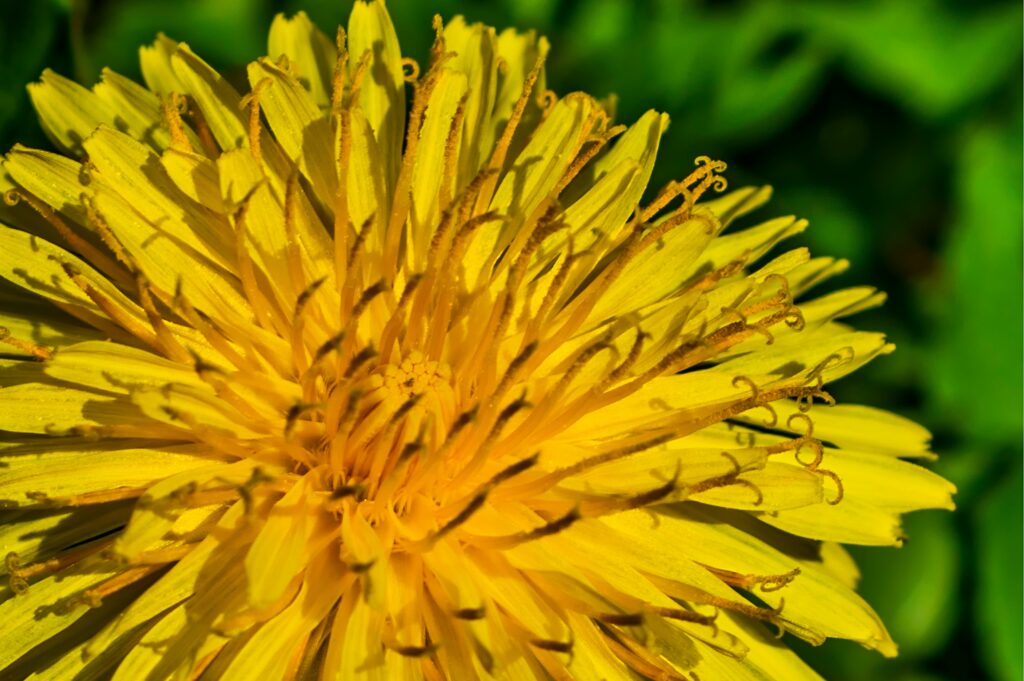
The dandelion’s resilience is not a miracle but a matter of biology. Its power is the result of millions of years of evolution, which has refined every detail for survival in the harshest of conditions.
Root system
At its core lies a deep taproot that penetrates firmly into the soil. According to A comprehensive review of the benefits of Taraxacum officinale (Di Napoli et al., 2021), the dandelion root usually extends 15–30 cm, but in some cases can reach 60–100 cm. This root acts both as an anchor and as a wedge. It locks the plant into the ground, while at the same time directing upward pressure on the soil and any obstacles above. As the root expands, it slowly pries open the space around it, loosening even compacted layers of earth or asphalt.
Growth physiology
But the secret of the dandelion’s force is not only underground. At the very tips of the plant, in its growth zones, another engine is at work. Here, cells divide rapidly and then expand as they fill with water, creating what is known as turgor pressure. This pressure acts as the plant’s growth engine, pushing tissues forward through soil or cracks. Research by Beauzamy et al. (Flowers under pressure: ins and outs of turgor regulation, 2014) shows that turgor pressure in some plants can reach 2 MPa (≈20 atmospheres) — equal to, or even higher than, the pressure in a car tire. Such immense force is generated not by muscles or levers, but purely through osmotic processes inside living cells. What appears to us as “just growth” is, in truth, a silent collective effort — millions of tiny hydraulic cylinders working together.
The phenomenon of plant pressure
This osmotic engine is also evident in what scientists call root pressure. By drawing water into cells due to concentration differences, plants build internal pressure that drives water and nutrients upward. According to the review Root Pressure – an overview (ScienceDirect), root pressure can reach around 0.2 MPa — about the same as in a car tire, or the pressure a diver would feel 20 meters underwater. Such force is more than enough to move fluids through the plant’s vascular system and to exert mechanical stress on the soil.
What seems like a miracle when a dandelion splits asphalt or cement is, in fact, the natural outcome of biomechanics. The plant does not rely on the brute force of a hammer, but on persistence. Millions of cells, pressing patiently and continuously, generate the pressure needed to move even the hardest materials. It is not the power of impact, but the quiet insistence of life itself.
The Ecological Power of a “Weed”
Often dismissed as nothing more than a weed, the dandelion is in fact a quiet architect of ecosystems, playing roles far more vital than we usually recognize.
First to greet the spring
When winter loosens its grip and food is still scarce in nature, dandelions appear as one of the very first blossoms. Their bright yellow heads act as the season’s opening banquet, offering nectar and pollen to bees, bumblebees, and countless other pollinators. These early meals are not just convenient — they are often the difference between survival and starvation. Without the dandelion’s timely bloom, many insects would face the risk of collapse before spring has even begun.
Masters of endurance and adaptation
Where most plants falter, the dandelion thrives: along polluted roadsides, in depleted soils, and even in the cracks of city concrete. Each seed, carried by its delicate parachute of white filaments, is a tiny explorer drifting for kilometers until it finds a place to land. This ingenious design allows dandelions to spread quickly, colonizing new territories with ease. And as they take root in wastelands or disturbed grounds, they do more than simply survive — they prepare the soil and pave the way for biodiversity to return.
Dandelions as Living Sensors
Far from being just a stubborn roadside weed, the dandelion is an active participant in its environment — a plant that listens, absorbs, and records the world around it. Its tissues take in substances from both soil and air, turning the dandelion into a natural bioindicator of pollution.
Modern science has confirmed what this humble flower has long suggested. In a study by Cakaj et al. (Common weeds as heavy metal bioindicators, 2023), researchers in Poznań, Poland, collected dandelions from different parts of the city. The results were striking: levels of lead, zinc, and other heavy metals in the plants directly mirrored their proximity to highways and industrial zones. In other words, the dandelion carried in its cells a living map of the city’s pollution.
Other research has gone even further, exploring how this process works. Vural et al. (2024) discovered that different parts of the plant accumulate elements unevenly: roots often hold the highest concentrations, but significant amounts travel upward into leaves and flowers. This matters because dandelions are sometimes used in traditional medicine and even as food. The plant, therefore, not only signals the state of the ecosystem but also warns us of potential risks to human health.

In this way, the dandelion becomes more than a survivor in harsh conditions. It transforms into a living sensor — a small, unassuming flower that silently records the story of our environment, offering scientists a delicate but powerful tool to trace the hidden imprints of pollution.
Symbolism and Cultural Meaning
The strength of the dandelion extends far beyond the realm of botany. It has taken root not only in the soil but also in human imagination, becoming a symbol of resilience, hope, and simplicity. Each culture assigns it a slightly different meaning, yet they all share a positive interpretation: the golden blossom is seen as a little sun, while the white, fluffy sphere is like a cloud carrying dreams into the sky.
In literature and art, the dandelion has repeatedly appeared as a central image. Ray Bradbury, in his famous novel Dandelion Wine, transformed each flower into a metaphor for summer, memory, and the simple joys of life. His “wine” is not a drink but a symbol of preserved sunlight and warmth, something that can be opened even in the coldest winter days. In Western poetry, the dandelion often conveys both fragility and endurance: in Elizabeth Bishop’s work it appears as a reminder of the fleeting moment, yet also of nature’s inevitable return. In children’s literature, such as Jane Yolen’s stories, it is described as the flower “that is not afraid of asphalt,” able to overcome the grayness of the city.
In Ukrainian folklore, the dandelion carries more than one name, each reflecting a different side of the plant. One of the most common is kulybaba, a word derived from kuly (“ball”) and baba (a colloquial term for something soft, round, or tender). Literally, it means “little fluffy ball.” This name refers not to the golden bloom but to the white puffball of seeds that scatters with the slightest breath of wind. The very sound of the word conveys a sense of lightness and tenderness, evoking children’s games and the custom of making wishes by blowing the seeds into the air.

Another popular name is sonechko, meaning “little sun.” Here the focus shifts to the bright yellow flower, which lights up meadows and courtyards in early spring, symbolizing warmth, renewal, and the return of life after winter. In folk songs, charms, and seasonal games, the dandelion thus appears both as a sun on earth and as a bridge to the sky, carrying human hopes into the wind.
Thus, from American prose to Ukrainian folk songs, the dandelion emerges not merely as a plant but as a cultural image that unites different traditions and acquires new layers of meaning depending on the context.
Folk Culture and Medicine
In folk culture and medicine, the dandelion was never seen as a mere weed — it was a pharmacy at one’s feet, where every part of the plant had its own use.
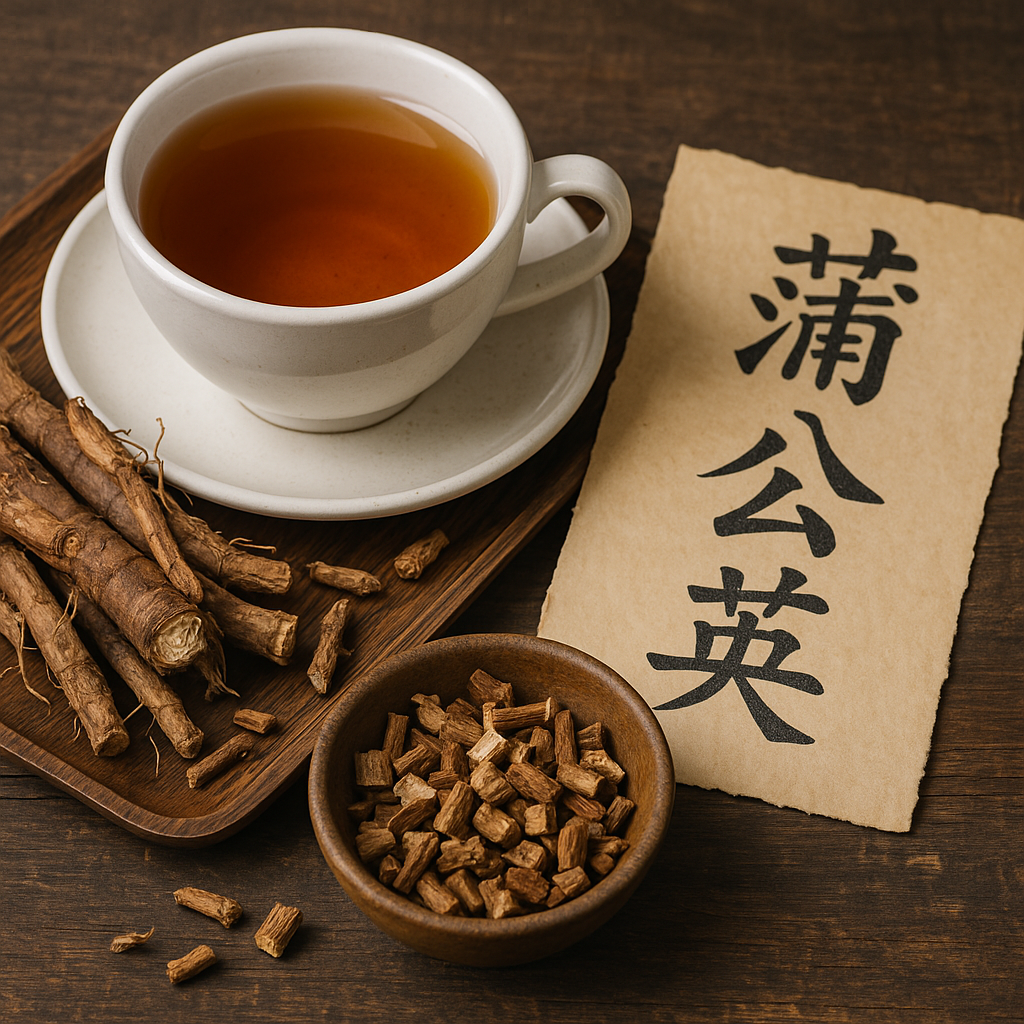
The roots were valued both in Europe and Asia, where people brewed decoctions from dried and ground roots as a natural liver tonic and a remedy against blood stagnation. In Chinese traditional medicine (pu gong ying, 蒲公英), they were prescribed to reduce inflammation and cleanse the body. Today, pharmacological studies confirm these practices: Yan et al. (2024) demonstrated that dandelion extracts show strong antioxidant activity and even protect DNA from damage.
The leaves, appearing fresh and green after winter, became a vital source of vitamins. In France and Italy, they were eaten raw in spring salads, believed to “purify the blood” and restore strength after months of scarce food. Modern analyses support this folk wisdom, noting their richness in vitamins A, C, and K, as well as minerals like potassium and calcium (Di Napoli et al., 2021).
Finally, the flowers were not only admired but also transformed into remedies and delicacies. From their golden heads people prepared infusions and the famous “dandelion wine,” a rustic drink in villages across England and Eastern Europe. In Poland, dandelion blossoms were traditionally boiled into a thick, honey-like syrup known as miód z mlecza. Families kept it in their kitchens as a fragrant sweetener for tea or as a home remedy for coughs and colds — a tradition that still survives in many households today.

Thus, across cultures the dandelion became both medicine and symbol — a plant that fed, healed, and carried with it the wisdom of using what nature generously offers.
Philosophical Context
The dandelion is a vivid embodiment of what philosophers sometimes call the “weak force.” Its roots and stems do not strike like a hammer or carve like a chisel. Instead, their strength lies in quiet persistence: each day they push ever so slightly, widening the space around them, until even hard stone or asphalt yields. This vision echoes the wisdom of the East. Laozi once wrote: “The soft and weak overcome the hard and strong.” The dandelion lives this truth—bending in the wind but never breaking, yielding in form yet advancing in purpose. Western thought offers a parallel. Spinoza described perseverantia—perseverance—as the very essence of existence. The dandelion’s steady insistence on growth, its refusal to surrender even in hostile ground, mirrors this idea. It shows that genuine strength is not found in violence or speed, but in the ability to endure, to adapt, and to remain true to the direction of life itself.
What We Can Learn from Plants
A dandelion breaking through asphalt is more than a botanical curiosity—it is a lesson in resilience. Its strength lies not in sudden force but in quiet persistence, reminding us that even the hardest barriers can yield to patient, steady pressure. Nature, too, shows that no concrete is eternal, always reclaiming its space, urging us to live in harmony rather than resistance. In society we find our own “dandelions”—people who seem fragile yet transform the world through perseverance. Like the flower, their power is subtle but enduring, teaching us that sometimes the quietest strength is the most decisive.
“Wow Facts” About the Dandelion

Behind its modest appearance, the dandelion hides some truly astonishing secrets. What seems like an ordinary flower by the roadside turns out to be a champion of survival, adaptability, and cultural symbolism. Here are just a few surprising facts that show why this plant is far from ordinary:
- Record-breaking fertility. A single dandelion can produce up to 5,000 seeds in one year—and more than 15,000 over its lifetime.
- A cultural symbol of resilience. In Japan, there is a saying: 「タンポポのような人」—“a person like a dandelion.” It describes someone who survives hardship and remains cheerful despite difficulties.
- Genetic flexibility. Many dandelion populations reproduce through apomixis, meaning seeds develop without pollination, producing clones of the parent plant—an evolutionary shortcut to resilience.
Myths and Truths About the Dandelion
Around the humble dandelion, many myths have taken root—some reducing it to a pesky weed, others underestimating its strength and value. Yet when we look closer, these ideas unravel, revealing surprising truths that may just change the way you see this bright little flower.
| Myths | Truths |
| 1. The dandelion is just a useless weed. | In reality, it plays a vital role in ecosystems: it feeds bees in early spring and is used in salads, teas, and syrups in many cultures. |
| 2. The dandelion has a very short life. | While each flower lasts only a few days, the plant itself is perennial and can live for years, blooming season after season. |
| 3. All dandelions are the same. | There are around 250 species of the genus Taraxacum, differing in structure, ecology, and medicinal properties. One of them, Taraxacum kok-saghyz, is even cultivated for producing natural rubber from its roots. |
If You Want to Learn More
I’d like to leave you with a few recommendations for books and films that dive deeper into this subject and can enrich your understanding. After all, science is always more fascinating when explored from multiple perspectives.
Books:
- Ray Bradbury – Dandelion Wine (1957)
A literary classic in which the dandelion becomes a metaphor for childhood, memory, and the joy of simple things. A wonderful cultural reference to the symbolism of the plant. - Peter Thomas – Plants Can’t Sit Still (2016)
A popular science book for both children and adults that shows how plants “move” and overcome obstacles — offering a vivid explanation of the phenomenon of growth. - Stefano Mancuso – The Revolutionary Genius of Plants (2018)
A book by a renowned neurobiologist of plants, exploring how they adapt, “think,” and survive, even in extreme conditions.
Films:
- The Private Life of Plants (BBC, 1995, David Attenborough)
A classic documentary series revealing the hidden mechanisms of plant life, including their remarkable strength and resilience. - The Secret Life of Plants (1979, based on the book by Peter Tompkins & Christopher Bird)
A documentary exploring the “invisible” life of plants and their surprising abilities, both mechanical and ecological. - Nature: What Plants Talk About (2013, PBS)
A documentary about plant communication and their fascinating survival strategies.