Everyone loves a good family mystery. Who were your great-great-grandparents? Where did your ancestors come from? These questions drive millions of people to genealogy websites every year. But anthropologists look at family trees differently - they see them as maps revealing how entire cultures organize themselves, pass down power, and decide who belongs.
Your family tree isn't just a collection of names and dates. It's a window into cultural rules you probably never noticed you were following.
Welcome to the world of Kinship.
What Is Kinship, Anyway?
When anthropologists talk about kinship, they mean more than just biology. Kinship is the web of relationships that a society recognizes as "family." These relationships determine crucial things:
- Who inherits property
- Who's responsible for raising children
- Who you can marry
- Who you can't marry
Here's the fascinating part: different cultures draw these family boundaries in wildly different ways.
In your culture, your father's brother and your mother's brother are both just "uncle." But in many societies, these are completely different relationships with different responsibilities. Your mother's brother might have more authority over you than your own father does.
The Father of Kinship Studies
This insight came from Lewis Henry Morgan (1818-1881), an American lawyer who became fascinated by the Iroquois people in upstate New York in the 1840s. Morgan noticed that the Iroquois used kinship terms completely differently than European Americans did. They called multiple people "mother" and "father" - not because they were confused, but because their culture organized family relationships differently.
Morgan's groundbreaking work, Systems of Consanguinity and Affinity of the Human Family (published in 1871), showed the world that kinship is culturally constructed, not just a natural fact of biology. He became known as the father of kinship studies.
Learn more about Lewis Henry Morgan
How Families Are Organized Around the World
Every society has rules for tracing family lines. Anthropologists call these descent systems, and they come in three main flavors:
The Three Main Descent Systems
1. Patrilineal Descent (through the father's line)
- You belong to your dad's family
- You inherit through him
- Your children will belong to his clan
- Common in: Many parts of Africa, Asia, and the Middle East
2. Matrilineal Descent (through the mother's line)
- You belong to your mom's family and lineage group
- Property and family membership pass from mothers to children
- Often inheritance goes from uncles to nephews rather than fathers to sons
- Common in: Some Indigenous American groups, parts of Africa and the Pacific
3. Bilateral Descent (equally through both parents)
- You're equally related to both your mom's and dad's families
- You inherit from both sides
- You belong equally to both
- Common in: North America, Europe
A Revolutionary Discovery in the Trobriand Islands
Why does this matter? In the early 1900s, a brilliant Polish anthropologist named Bronisław Malinowski (1884-1942) spent years living in the Trobriand Islands of Papua New Guinea. He is considered the founder of Social Anthropology. What he discovered challenged everything Western scholars assumed about family.
The Trobriand Islanders were matrilineal. Here's what that meant:
- Children belonged to their mother's clan, not their father's
- A boy's most important male authority figure wasn't his dad—it was his mother's brother (his uncle)
- The uncle handled discipline, property, and family authority
- The father had a warm, playful relationship with his children precisely because he wasn't the authority figure
"The mother's brother represents the principle of discipline, authority and executive power within the family." ~ Bronisław Malinowski
Malinowski's work proved that what seems "natural" about family in one culture is actually a cultural choice, and other cultures make completely different choices that work just as well.
Learn more about Malinowski's fieldwork
Family Structures Vary Too

These descent rules shape family structures. While the nuclear family (parents plus children) appears in most societies, it's not always the basic unit.
George Peter Murdock (1897-1985), an American anthropologist, created a massive database of over 1,200 societies in the mid-1900s and found that family structures vary enormously based on:
- How people make a living
- Who controls resources
- What the culture values
Think about it:
- If you're farming land that's been in the family for generations → keeping everyone together in an extended household makes sense
- If you're moving to a new city for a job → a smaller nuclear family is more practical
Culture and economics shape family structure together.
The Symbols That Hold Families Together
Kinship isn't just about rules - it's about meaning and symbols. How do we know who's family? We use names, rituals, and symbols to mark those connections.
Kinship as a Language
Claude Lévi-Strauss (1908-2009), a French anthropologist, revolutionized how we think about kinship in the mid-20th century. He argued that kinship systems work like language—they're structured systems that create meaning. Just as words symbolize ideas, kinship terms and practices symbolize relationships and obligations.
Consider these symbols in your own life:
- Sharing a family surname connects you to ancestors you've never met
- A wedding ring symbolizes a marriage bond
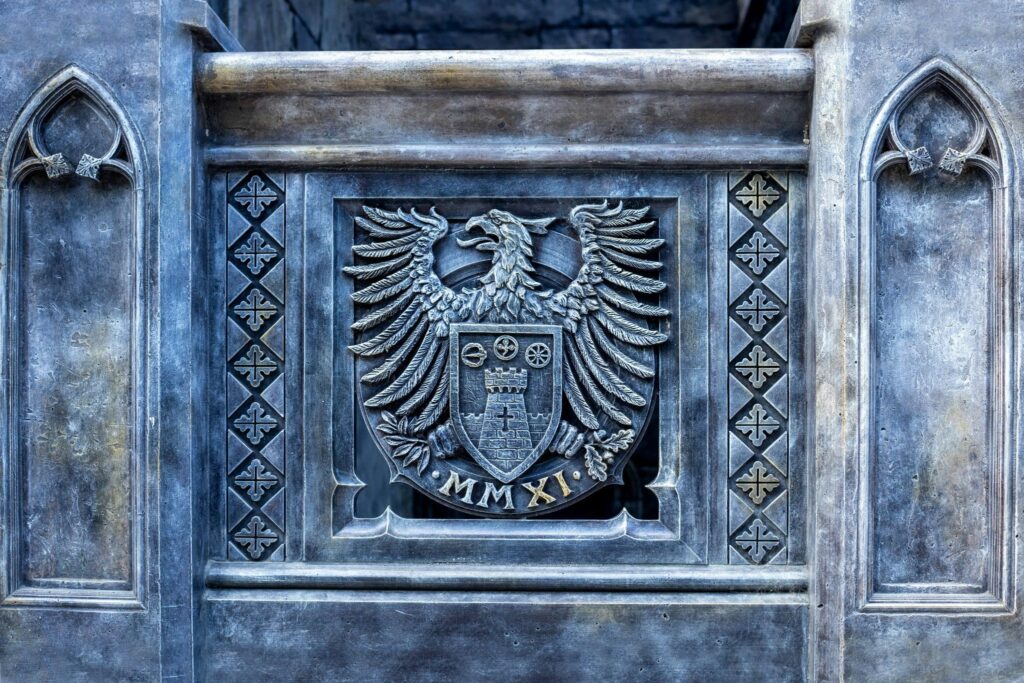
- Family crests or coats of arms represent belonging to a lineage
- Naming children after grandparents keeps memory and connection alive
- Religious ceremonies (baptisms, bar mitzvahs, quinceañeras) formally welcome children into kinship networks
Lévi-Strauss also proposed something called exchange theory: marriage rules are fundamentally about creating alliances between groups. When two families arrange a marriage, they're not just joining two people—they're creating a bond between social groups. This happens whether it's a medieval European royal marriage uniting kingdoms or neighboring villages in rural India creating trade partnerships through marriage alliances.
The Anthropologist's Map: Kinship Diagrams
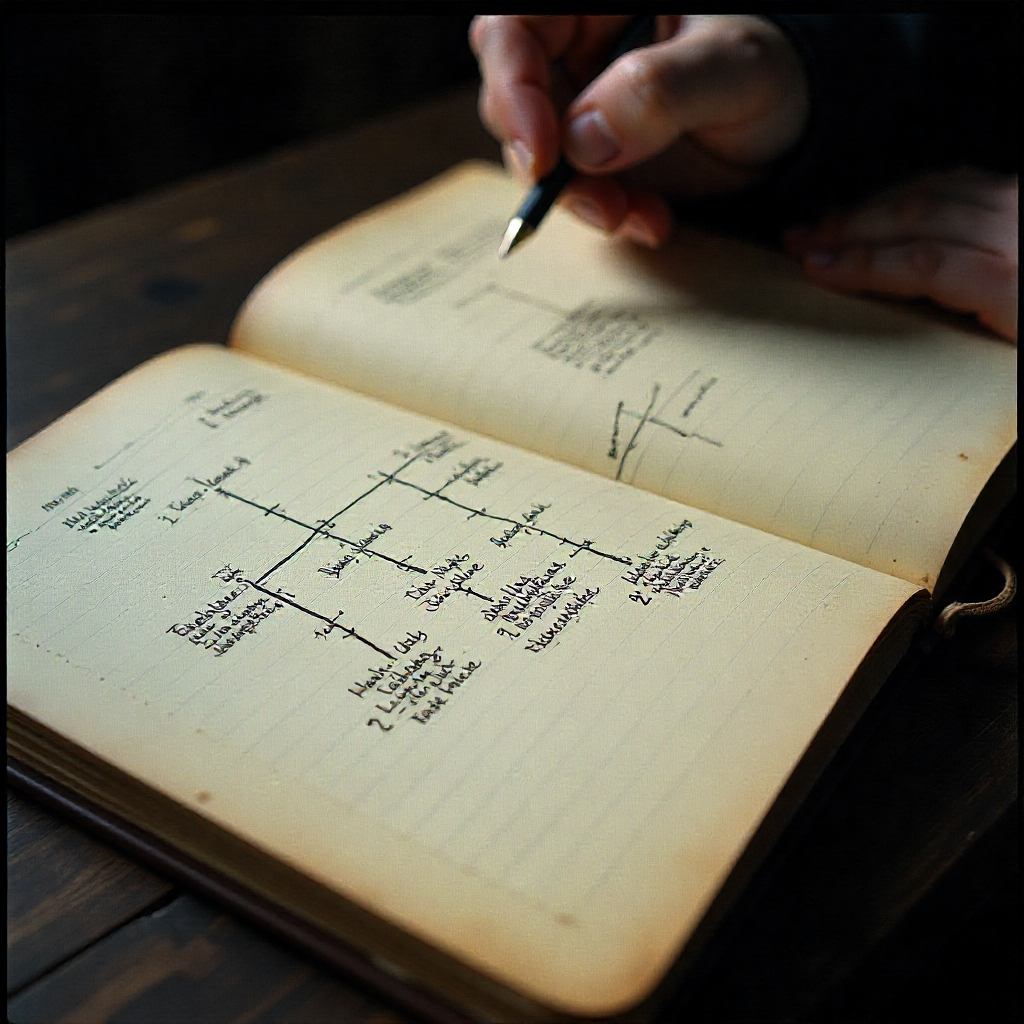
Anthropologists developed their own symbol system to map relationships: kinship diagrams. These simple drawings reveal complex social patterns across generations.
Basic Symbols:
- △ = Male
- ○ = Female
- = = Marriage/partnership
- | = Parent-child connection (vertical line down from couple)
- ═ = Siblings (horizontal line connecting them)
Simple Example:
△ = ○
|
-----
| |
△ ○
This shows a married couple (top) with two children: a son and daughter (bottom).
A Three-Generation Family:
△ = ○
|
-----------
| |
△ = ○ ○ = △
| |
----- -----
| | | |
○ △ △ ○
This shows grandparents at the top, their two children (who are married), and four grandchildren at the bottom.
What looks like basic geometry actually maps complex social relationships. Anthropologists use these diagrams to compare kinship patterns across cultures and spot inheritance patterns, marriage rules, and family alliances.
Marriage Rules: Who You Can (and Can't) Marry
Every culture has rules about marriage. These fall into two main categories:
Exogamy: Marry Out
Exogamy means you must marry outside your group. You can't marry your sibling, and in many societies, you can't marry anyone in your clan - even if you're not biologically related.
Examples:
- Indigenous Australian Aboriginal groups have complex rules about which clans can intermarry
- Many cultures prohibit marriage between people with the same surname or lineage
- Catholic prohibition on marrying close relatives
Endogamy: Marry In
Endogamy means you must (or should) marry within your group. This might mean marrying within:
- Your religion
- Your social class
- Your ethnic group
- Your village or community
Examples:
- Traditional caste endogamy in India
- Royal families marrying other royals
- Religious communities preferring in-group marriage
Why These Rules Exist
In 1889, Edward Burnett Tylor (1832-1917), one of anthropology's founders, proposed a simple but powerful idea:
"Marry out or be killed out."
Exogamy forces groups to create connections with outsiders through marriage. These connections:
- Build alliances
- Promote trade
- Reduce warfare
- Keep groups from becoming too isolated
Think of it practically: If your sister marries someone from the neighboring village, your family now has relatives there. You're much less likely to raid each other's crops or fight over resources when you're related by marriage. Marriage becomes diplomacy.
The Universal Taboo: Incest
Of course, there's one nearly universal exogamy rule: the incest taboo. Anthropologist Robin Fox (1934-present) studied why virtually all societies prohibit sexual relationships between close family members (though they define "close" differently).
The taboo serves both:
- Biological purposes — avoiding genetic problems from inbreeding
- Social purposes — preventing destructive conflicts within families
What counts as incest varies widely:
- Marrying your first cousin is forbidden in some places
- Marrying your first cousin is preferred in others (to keep property in the family)
- But every society has some version of this rule
What This Means for You
Now look at your own family with an anthropologist's eye. You're following cultural rules you probably never consciously learned:
✓ You likely recognize both your mother's and father's relatives as equally "family" (bilateral descent)
✓ You probably use the same terms for both uncles, both aunts, and both sets of grandparents
✓ You might have been named after a grandparent, connecting you symbolically to the past
✓ You probably have ideas about appropriate and inappropriate marriages, even if you've never articulated them
✓ Your family gatherings, holidays, and rituals create and reinforce kinship bonds
Your Family Tree Tells a Bigger Story
Your genealogy reveals:
- Migration patterns — Why did your ancestors move from one place to another?
- Cultural contact — Did your ancestors marry across ethnic or religious lines?
- Historical events — Family stories often contain details about wars, epidemics, or economic changes
- Social mobility — How did your family's class or status change over generations?
When you trace your genealogy, you're not just finding individual ancestors. You're uncovering the cultural rules and historical forces that shaped how your family formed, moved, and survived.
The Future of Kinship
In recent decades, anthropologists have expanded kinship studies to reflect contemporary realities. Researchers now examine:
- How reproductive technologies like IVF and surrogacy create new questions about genetic versus social parenthood
- Chosen families and LGBTQ+ kinship networks
- How adoption creates kinship across biological lines
- DNA testing services like Ancestry.com and 23andMe that sometimes confirm cultural kinship and sometimes reveal surprises
These emerging areas show that kinship continues to evolve as societies change. The cultural construction of family is as dynamic today as it was when Lewis Henry Morgan first studied the Iroquois over 170 years ago.
Explore modern kinship research
Every Family Tree Tells a Cultural Story
Kinship is one of humanity's most creative inventions.
Your own family structure - who you call family, how you trace descent, who you can marry, which relatives matter most - follows cultural rules you may never have noticed. These rules aren't natural or inevitable. They're cultural solutions to universal human questions:
- How do we organize ourselves?
- How do we raise children?
- How do we pass down resources and knowledge?
The next time you look at your family tree, remember: you're not just seeing individuals. You're seeing culture in action, patterns that connect you to the deepest structures of human society. That's the power of kinship - it's where individual lives and cultural rules meet.
Try It Yourself: Map Your Own Kinship Network
Draw a simple kinship diagram of three generations of your family using the symbols above:
- Use triangles (△) for males, circles (○) for females
- Use an equals sign (=) to connect married couples
- Use vertical lines (|) to connect parents to children
Now ask yourself:
- Which relatives do you interact with most?
- Do you see your mother's and father's families equally?
- Are there naming patterns in your family?
- What cultural or ethnic groups are represented?
You've just done what anthropologists do - made the familiar strange and uncovered the cultural patterns in your own life.