A desert comes alive within days.
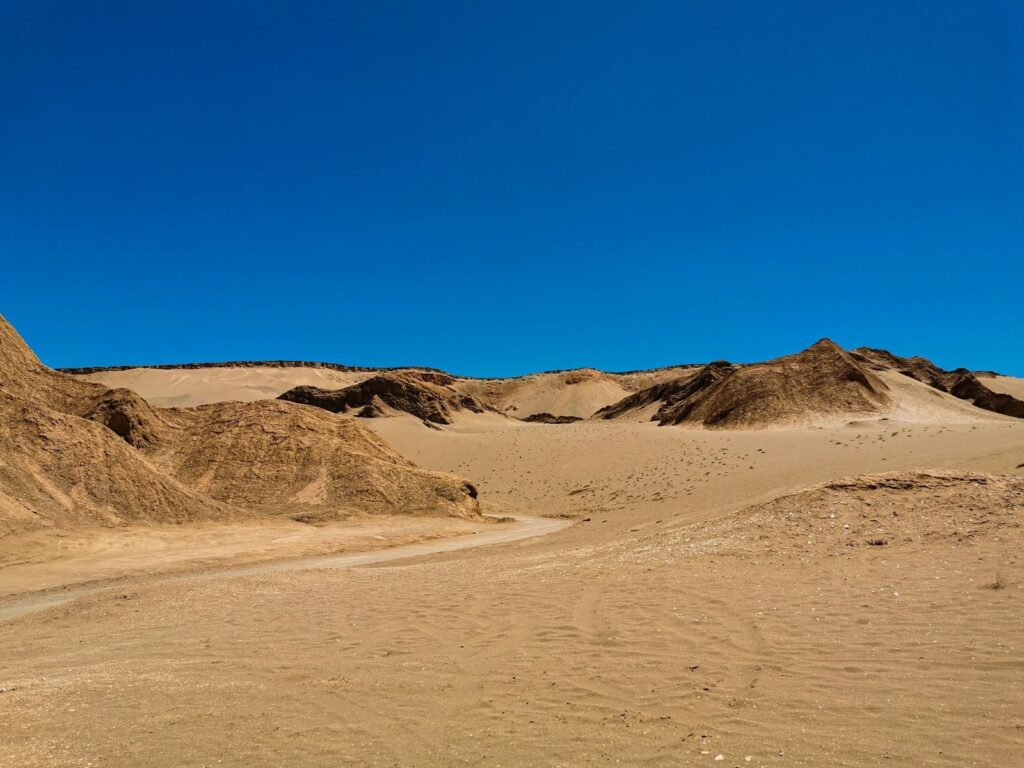
A desert appears to embody emptiness: sun-scorched soil, sand, stones, and an almost complete absence of visible life. At first glance, such landscapes seem lifeless - as if nature has come to a halt here. For this reason, deserts are often perceived as barren territories, incapable of sustaining complex forms of life.
Yet this impression is deceptive. After a rare rainfall, some deserts become covered with flowers, grasses, and insects within just a few days. Where a dry plain stood moments before, color and movement suddenly emerge. This raises a compelling question: how can something that appears lifeless for most of the year suddenly burst into bloom?
The answer lies in hidden survival mechanisms shaped by evolution. Desert flowering is not a miracle, but the result of finely tuned biological adaptation.
1. Hidden Life Beneath the Sand
The absence of greenery does not mean the absence of life. In deserts, the most important processes take place beneath the soil surface. Within its upper layers lies a reserve of organisms capable of surviving prolonged periods of drought.
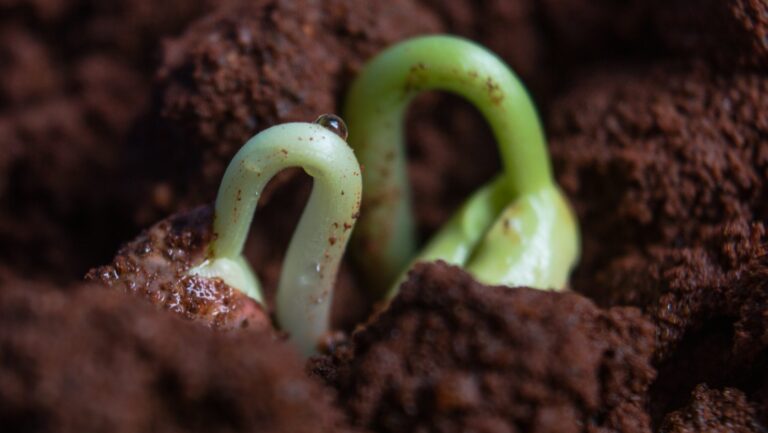
Most desert plants exist in the form of seeds that can remain in the soil for years, even decades. They persist in a state of dormancy — a condition of physiological rest. Metabolic activity is minimal, and protective seed coats shield the embryo from heat and ultraviolet radiation.
Germination occurs only when a specific combination of favorable conditions is met. Brief moisture is not enough: seeds respond to the duration of hydration, temperature, and light exposure. This mechanism prevents a “false start” — growth that could not be completed.
In this sense, soil functions as a kind of natural archive. Seeds, spores, and microorganisms remain preserved until environmental conditions become suitable. Research in seed ecology (Baskin & Baskin, 2014) demonstrates that dormancy and the formation of a soil seed bank are key mechanisms enabling plant survival in unpredictable and arid regions.
2. What Is a “Blooming Desert”?
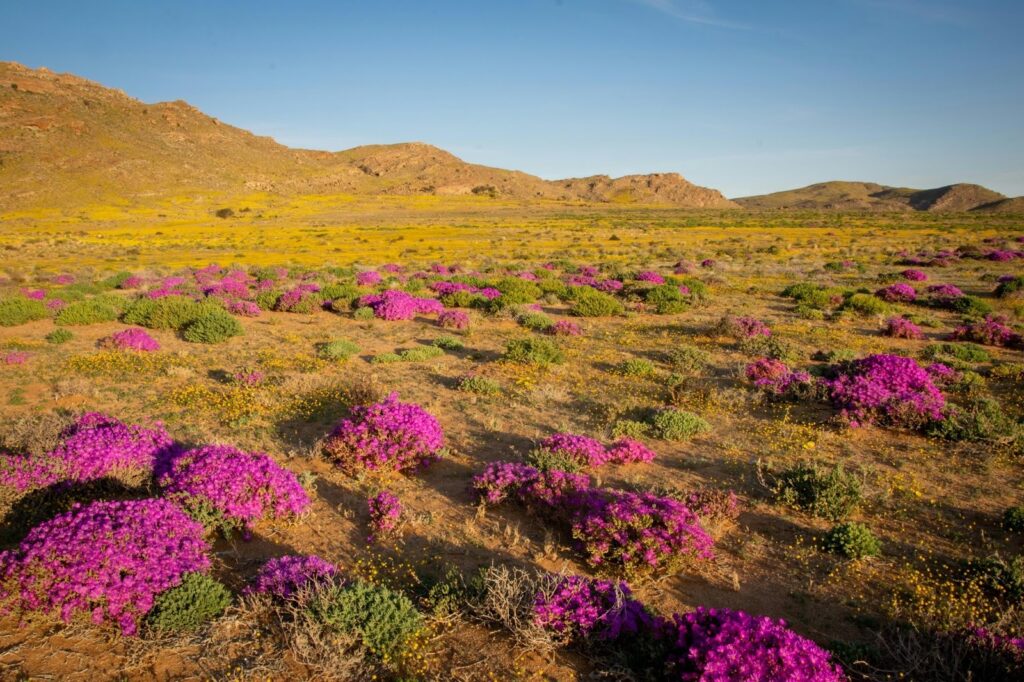
When sufficient rainfall occurs, it triggers a phenomenon that ecologists call ephemeral flowering. This is a sharp but short-lived surge of biological activity: plants germinate rapidly, flower, and produce seeds within a compressed time frame.
Desert rainfall is highly unpredictable. Not only the amount of water matters, but also its distribution over time. Several consecutive moist days create fundamentally different conditions from a brief downpour. Research shows that large-scale blooms occur in years of unusually high precipitation and may cover extensive areas.
From an ecological perspective, this period represents a sudden increase in productivity. Biomass accumulates, pollinators and small animals become active, and within a short time the system generates the resources necessary to sustain life during prolonged dry periods.
3. Rain as a Biological Signal
In the desert, life runs on a stopwatch rather than a calendar. The moment the soil receives moisture, plants launch an accelerated program in which every stage is shortened to the absolute minimum. Germination starts almost immediately after hydration—seeds don’t wait for a “better time,” because that time may never come. Flowering can follow with startling speed, and in some species the reproductive phase begins just 7–10 days after rainfall. Seed formation is pushed through as fast as possible, often before the ground has fully dried, because slow growth is a luxury desert plants cannot afford.
Water vanishes quickly: it is pulled down by roots, lifted away by hot air, and burned off by the sun. The next rainfall might arrive in months—or not for years. So desert flora invests less in the long life of any single plant and more in rapid reproduction and a renewed seed reserve, as if each brief wet window could be the only chance a generation gets.
Yet even with that urgency, seeds do not sprout recklessly. They are held in dormancy by a set of protective “locks” that prevent germination at the wrong moment. Moisture is the main switch: as long as the soil stays dry, seeds conserve resources even if other cues seem encouraging. Temperature works as a safety filter - extreme heat or sharp day - night swings can signal that conditions are still too risky for seedlings. Light acts like a message from the surface: many species respond only to particular light levels, which helps a seed “judge” whether it is close enough to break through. And burial depth adds one more layer of control, protecting seeds from overheating and predators while also delaying sprouting until rainfall or erosion brings them into a more favorable zone.
Only when these cues converge - enough moisture, a workable temperature range, the right light signal, and a position in the soil that gives the shoot a real chance - do the locks release. This same explosive drive to grow appears elsewhere in the plant world — dandelions can even push through asphalt when conditions align. Then the hidden seed bank turns from stored potential into active growth, and the desert’s quiet patience becomes a sudden burst of life.

4. An Ecosystem in Fast Forward
Plant germination triggers a reaction throughout the entire system. Pollinating insects appear, followed by birds and small animals. Within just a few weeks, a complete ecological cycle unfolds:
biomass production → pollination → seed dispersal → energy transfer through food webs.

Although this period is brief, it is during this time that seed reserves are replenished, animal populations are sustained, and organic matter accumulates in the soil. These processes ensure the long-term resilience of desert communities.
5. Examples of Blooming Deserts
This phenomenon occurs in different regions around the world.
The Atacama (Chile) — one of the driest deserts on Earth — becomes covered with vibrant flowers after rare rainfall events, demonstrating the longevity of its soil seed banks.
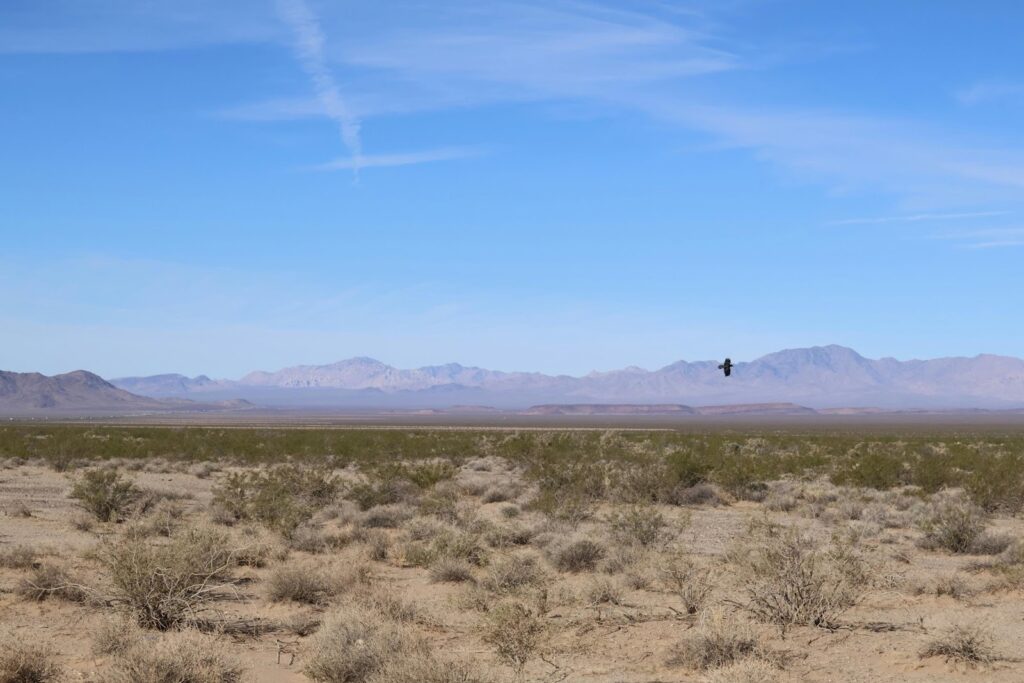
The Mojave and Sonoran Deserts (USA) are known for “superblooms” that follow wet winters. The landscape transforms dramatically, illustrating the system’s capacity to respond rapidly to changing conditions.
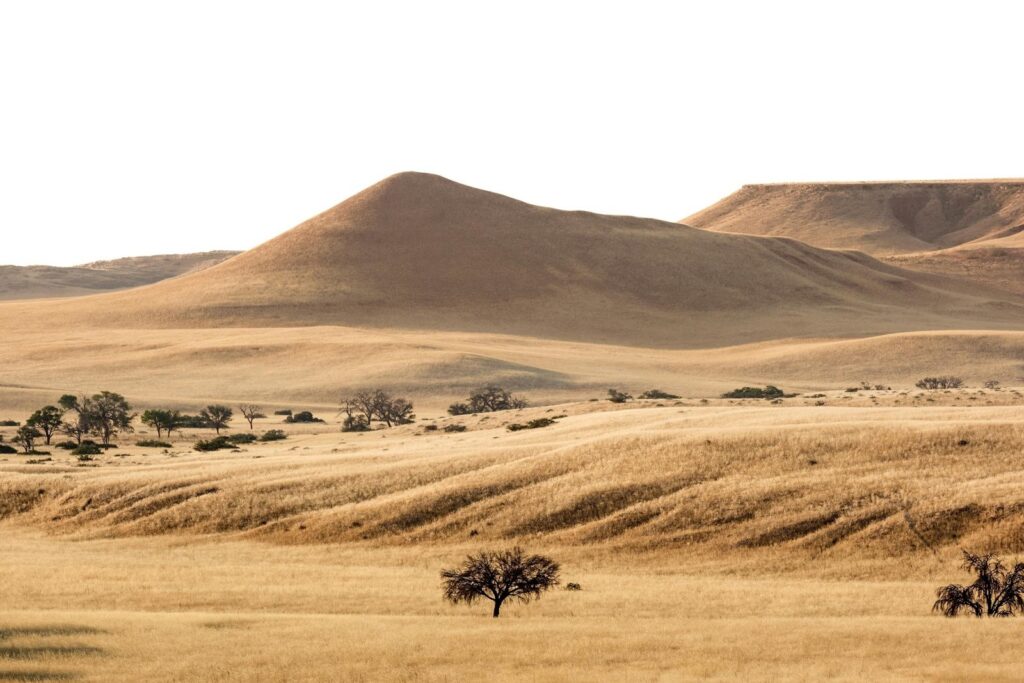
The Namib (Africa) receives moisture not only from rainfall but also from coastal fog. Even minimal hydration can sustain periodic bursts of plant and insect activity.
In all cases, desert blooming reveals that the apparent barrenness of the landscape does not reflect its true biological potential.
6. Seeds That “Remember” for Decades
One of the most fascinating phenomena in desert biology is the ability of seeds to remain viable for decades — and sometimes much longer. Seeds of certain species can lie dormant in dry soil for many years, like “sleeping archives,” waiting for the perfect moment to awaken.
Scientists studying long-term seed banks have found that seed longevity varies greatly among species. However, in many desert plants, it clearly exceeds ordinary seasonal cycles. Some species form persistent seed banks in which seeds remain viable for more than five years, and in some cases up to 40 years or more before germinating.
There is also an almost cinematic example: one of the world’s most famous experiments on seed longevity — the Beal seed experiment, initiated in 1879 — demonstrated that some species can retain germination capacity for over a century after long-term burial in soil. This classic long-term study illustrates the maximum potential for seed survival over time.
Another independent example comes directly from the desert. In the Mojave Desert, scientists studied the rare perennial Arctomecon californica (Las Vegas bearpoppy) and conducted a 15-year field experiment, periodically extracting seeds from the soil and testing their “awakening.” Unlike the Beal experiment, the significance here lies not in a record-breaking century-long survival, but in a practical ecological insight: only a small fraction of seeds (about 5%) “wake up” each year. As a result, the species’ seed bank can persist for approximately 20 years even without new seed production - meaning the plant is capable of truly “waiting out” long gaps between favorable rainy seasons.
This means that the seed reserve in desert soil is not merely a short-term backup for a single rainy year, but an investment in the future. Even if the following decades prove unproductive, these “guardian seeds” can wait for their opportunity until sufficient rainfall arrives. Such a remarkable trait transforms time into a resource - almost a living component of the survival strategy of desert flora.
7. Without a Brain, but with a Code: How a Seed Chooses the Right Moment
A seed resembles a miniature capsule carrying instructions for survival. It does not think like an animal - yet it behaves as if it knows how to wait and choose the right moment. Inside, a chemical “control panel” is at work: some signals keep the seed dormant, while others initiate growth.
The key “switches” are phytohormones — chemical signaling substances in plants. They function as an internal regulatory system: some maintain dormancy, others trigger germination. When the balance between these signals shifts — for example, in response to moisture and temperature - the seed moves from a waiting state into active growth.
However, hormones represent only the first level of control. Inside the seed operates an additional network of signaling mechanisms. These processes help “double-check” environmental conditions: Is there enough moisture? Is the temperature stable? Is the soil drying too quickly? If the signals suggest uncertainty, growth is postponed.
8. Blooming Deserts and Mars
Blooming deserts are of interest to scientists not only for their beauty — they represent a model of the “edge of life,” where everything depends on rare and unpredictable pulses of moisture. For this reason, some terrestrial deserts are used as Martian analogues.
For example, the Atacama — one of the driest deserts on Earth, located in northern Chile — is studied because of its combination of extreme aridity (in some areas, rainfall may be absent for years or even decades), high levels of ultraviolet radiation, and saline, oxidizing soils. These conditions partially resemble those found on Mars.
At such sites, researchers refine methods for detecting life: drilling, sample collection, and the analysis of biosignatures— substances and structures that may have been left behind by living organisms (such as specific organic molecules or characteristic chemical ratios). These efforts help scientists determine where to search for life and which traces should be considered convincing evidence.
In the United States, the Mojave Desert and Death Valley are also regarded as Martian analogues due to their accessibility and the diversity of geological processes and landscapes resembling those observed on Mars.
Yet deserts are of interest not only to biologists and planetary scientists. They have long served as symbols of inner discipline, waiting, and transformation — spaces where “emptiness” becomes a form of possibility.
9. The Desert as Metaphor
The desert is often perceived as a “lack” within the world: an absence of water, shade, softness. Yet as a metaphor, it suggests something different - that reality does not have to be generous in order to be meaningful. The desert seems to reveal the structure of life itself, stripping away decorative layers and leaving only what matters: measure, limit, and the meaning of choice.
In such a space, the distinction between appearance and essence becomes especially clear. What is not visible is not necessarily absent; what is silent is not necessarily empty. The desert invites us to abandon the habit of evaluating life by its outward abundance and instead directs attention toward depth, toward the hidden work of time, toward inner composure.
There is another dimension as well: the desert as a metaphor of limits - limits that do not diminish but discipline. It reminds us that excess is not always a virtue, and continuity is not always a measure of strength. Sometimes maturity is expressed not through constant action, but through the ability to endure pause without collapsing from within. Where resources are scarce, a particular ethic emerges: conserve, do not rush, distinguish what is essential.
It is no coincidence that across cultures the desert has symbolized inner transformation. In religious traditions, it represents a space where familiar supports fall away and authenticity emerges; in philosophical thought, it becomes a place of radical clarity, where the value of things is determined not by abundance but by necessity. The desert seems to suggest that meaning is not guaranteed by comfort — it arises from responsibility toward time and limitation.
For this reason, a blooming desert impresses not only as a natural phenomenon but also as a symbol: sometimes the world is structured so that manifestation is not a constant state, but an event. And this restores dignity to what we often call “emptiness”: it may not be an end, but a form of possibility.
Interesting Facts About “Blooming” Deserts
1) Desert Rose: When a Mineral “Blooms”
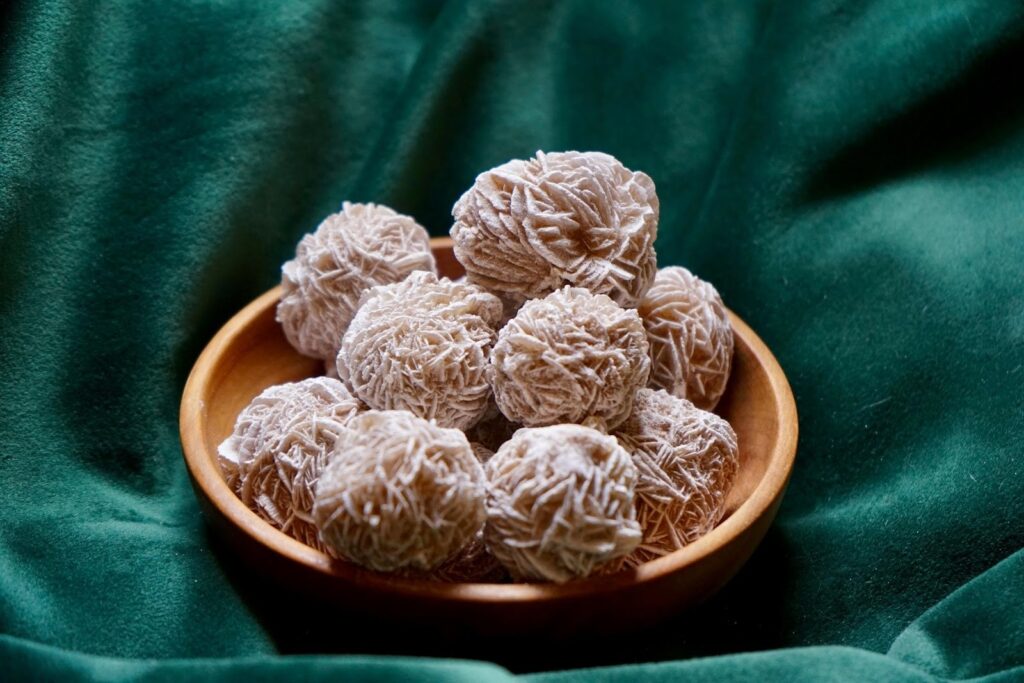
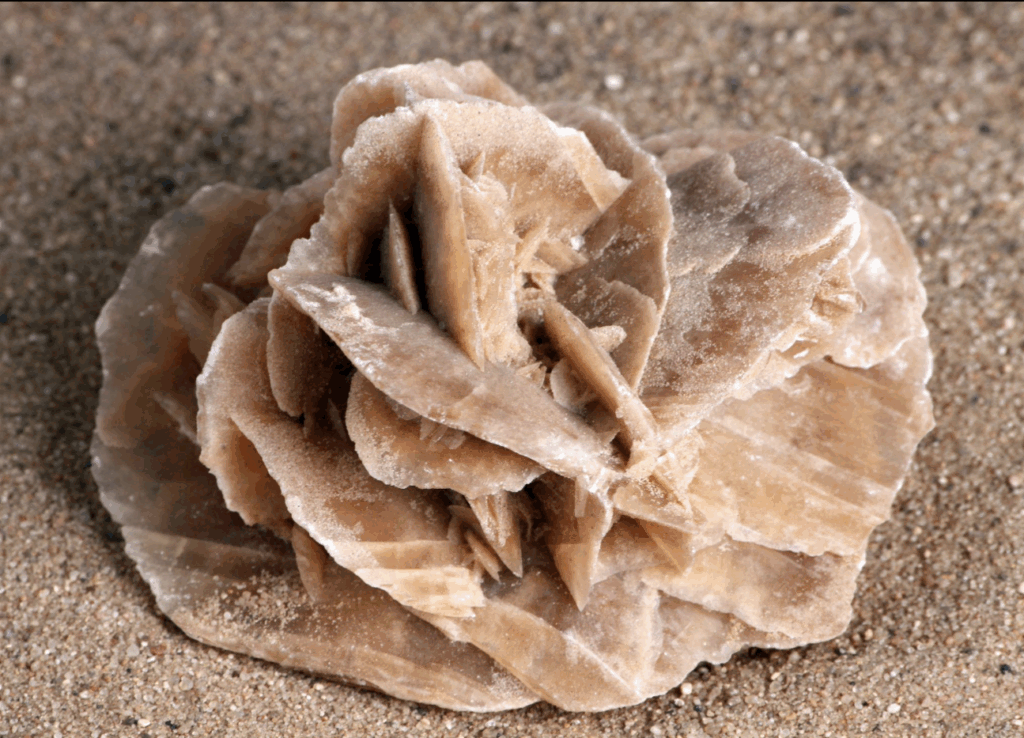
Sometimes the desert blooms not with grass, but with crystal. In salty and extremely dry soils, so-called “desert roses” can form - mineral structures made of gypsum or barite that resemble an opening flower bud. It is a rare case in which geology looks like botany: water evaporates and leaves behind delicate crystalline “petals.”
2) Ephemerals: Life Compressed into a Flash
Some desert plants live for only a few weeks. They germinate almost immediately after rainfall, bloom quickly, produce seeds — and disappear. These plants are known as ephemerals: their strategy is simple and ingenious — not to “live long,” but to “act fast.”
3) A Bloom Visible from Space
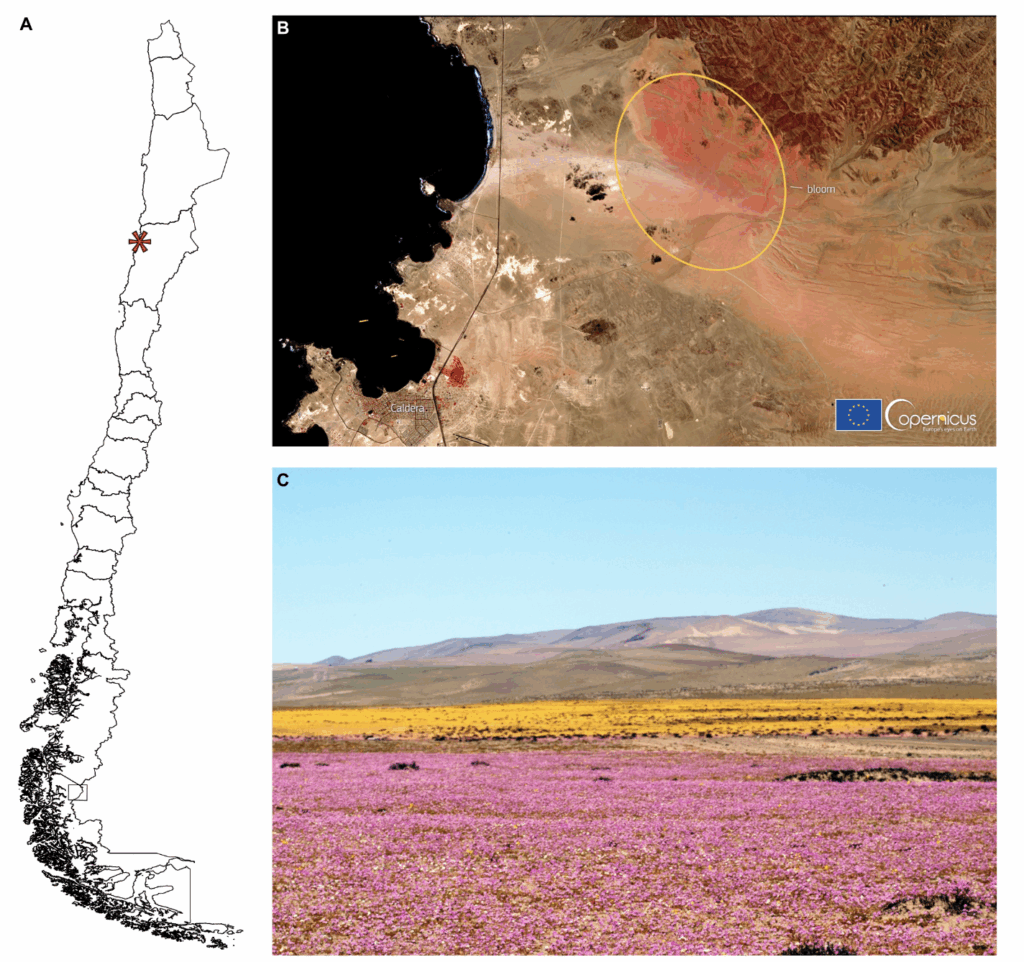
In certain years, desert flowering can be so extensive that satellites capture it from orbit. A surface that usually reflects light like dry soil suddenly changes its “optical signature,” and the desert begins to look different even from space. It is literally a moment when the landscape transforms before our eyes.
Conclusion: Life That Knows How to Wait
Blooming deserts unite fragility and strength. Their existence depends on rare rainfall, yet preparation for this event continues for years. The desert does not resist its conditions — it adapts to them. By conserving resources and responding at the right moment, it demonstrates a survival strategy grounded in patience and precision. Sometimes potential does not reveal itself immediately. It may remain hidden for a long time — until the right conditions finally emerge.
If you want to learn more
To further immerse yourself in the fascinating world of deserts and the phenomenon of Desert Blooms, I invite you to explore several documentary films that reveal the hidden life of these seemingly silent landscapes.
1. “The Green Planet — Desert Worlds”
An episode from the acclaimed documentary series on plant life featuring Sir David Attenborough. It explores deserts, remarkable plant adaptations, and survival strategies — including the ability of seeds to remain dormant in the soil for years, patiently awaiting rare rainfall. The episode helps viewers see the desert not as emptiness, but as a system governed by precise biological logic.
2. “Desert Blooms” (PBS / Outside Beyond the Lens)
A short yet visually striking documentary segment that captures real mass flowering events following rainfall. The camera documents the moment when a harsh, dusty landscape transforms within days into a vibrant expanse of color. It offers a powerful visual illustration of the phenomenon described by science.
3. “Our Planet | From Deserts to Grasslands”
An episode from the documentary series Our Planet that presents the diversity of desert ecosystems and the influence of climate on their resilience. The film situates desert blooms within a broader global environmental context, highlighting the dynamic relationship between weather patterns, soil conditions, and plant life.
4. “Deserts 101” (National Geographic)
An educational feature by National Geographic explaining different types of deserts, their biomes, and the extraordinary adaptations of living organisms. It provides a structured scientific overview while emphasizing the complexity of desert ecosystems.