
Bioethics: Necessity?
"Science does not have a moral dimension. It is like a knife. If you give it to a surgeon or a murderer, each will use it differently." This quote by German-American aerospace engineer, Wernher von Braun, holds true in the light of what science does and how we decide to apply it.
This isn't another abstract debate about bioethics. This is about a real person whose life - and death - changed the course of biotechnology forever. Many debates exist about bioethics and how much is too much. Today, I want to write about not bioethics itself but the real impact and consequences surrounding it.
Real-Life Impact of Science
When doing an experiment in the lab, reading about research, or listening to news about new discoveries, we often forget that all of this has a very real impact. We forget that it would affect real people, that it will have an impact on living, breathing human lives.
Therefore, I present a question: what is worth more, science or human life? These shouldn't be opposing forces, yet history has witnessed many moments when they've collided. One such moment was witnessed in 1999.
Who was Jesse Gelsinger?
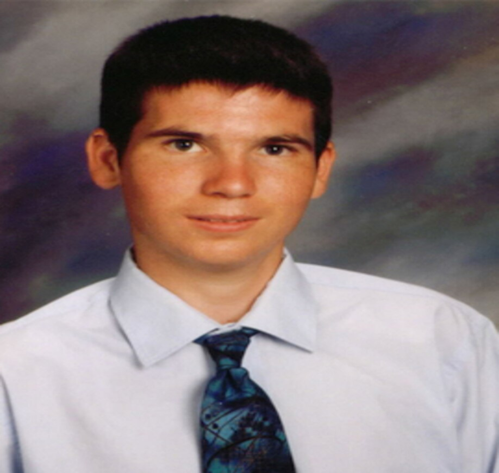
Jesse Gelsinger was an 18-year-old with a rare metabolic genetic disorder called ornithine transcarbamylase deficiency (OTC deficiency).
To understand what happened to Jesse, you need to understand what OTC deficiency does. Think of your liver as a waste treatment plant for your body - one of its critical jobs is processing ammonia, a toxic byproduct that builds up when your body breaks down protein. In OTC deficiency, the liver's ammonia processing system is broken. It's like having a treatment plant that can't neutralize toxins, so they accumulate in the bloodstream instead.
In simpler words, this is a condition when your liver cannot process ammonia , which is a toxic by-product. As a result, that toxic ammonia accumulates in your body.
Children born with severe OTC deficiency often die shortly after birth. But Jesse had a milder form - manageable with a low-protein diet and medication. He was relatively healthy, attending community college, and planning his future.
But fate and science had other plans.
Participation in Gene Trial
What Is Gene Therapy?
Before we continue with Jesse's story, you need to understand what gene therapy is and why it seemed so promising.
Remember how DNA works - it's your cellular instruction manual. (If you need a refresher, check out Episode 1: Cells as Cities where we explored how DNA and genes work.) Gene therapy is about fixing typos in that manual. If you're born with a gene that doesn't work properly (like Jesse's faulty OTC gene), gene therapy aims to deliver a working copy of that gene to your cells.
The challenge is delivery. You can't just inject DNA into someone's bloodstream and hope it gets where it needs to go. Scientists use modified viruses as delivery vehicles - called "vectors." Think of it like a molecular postal service: the virus is reprogrammed to carry the corrected gene and deliver it to specific cells. In Jesse's case, the target was his liver cells.
In theory, it's elegant. In practice, as Jesse's story shows, there were complications no one fully anticipated.
In 1999, Jesse enrolled in a gene therapy clinical trial at the University of Pennsylvania that aimed to treat OTC deficiency. Led by Dr. James Wilson, this trial used a type of virus to deliver a corrected copy of the OTC gene to liver cells. Jesse knew he wouldn't benefit directly - his condition was already managed. But he wanted to help find a cure for babies born with severe OTC deficiency who didn't have that option.
The thought process behind it was simple: fix the broken gene, fix the disease. But the consequences were catastrophic.
He was injected with this vector on September 13, 1999, and just four days later he suffered a massive immune reaction. Here's what happened: within hours of receiving the viral vector, Jesse's immune system recognized the virus as a foreign invader - even though it had been modified to be safe. His body launched an overwhelming attack, triggering a cascade of inflammation so severe that his organs began shutting down.
His body suffered an overwhelming inflammatory response leading to multi-organ failure and a coma. He was declared brain-dead and taken off life support on September 17, 1999, when he was just 18 years old.
Impact of Jesse’s Death
Jesse's death left the scientific world reeling.
Investigations broke out, Jesse’s father sued the people involved, and multiple ethical problems surfaced.
Investigations revealed that there were multiple procedural problems in that trial:
- Researchers had financial stakes in the company funding the trial that weren't fully disclosed to participants
- Jesse's ammonia levels on the day of treatment were higher than the safety protocol allowed, but he was enrolled anyway
- Other patients in earlier phases had experienced serious side effects that weren't adequately reported
- The informed consent process hadn't fully explained the risks Jesse was taking
No matter the extensive investigations or court hearings, the truth was out, a human life was lost and there was no way to reverse that.
Responsibility or Necessity?
Now if I ask you the question: who was responsible for the death of Jesse Gellsinger? You might point to science and gene therapy trials.
But to cast evil aspersions on them would be simply unfair.
The aftermath of his death led to an immediate halt in many gene therapy programs. Gene therapy was treated with deep suspicion, almost like a taboo.
For nearly a decade after that, no new gene therapy trials moved forward, while the field collected dust.
This created a painful paradox: the safety concerns that should have protected Jesse now prevented other patients from accessing potentially life-saving treatments. Children continued to die from genetic diseases that gene therapy might one day cure - but that "one day" was pushed years into the future.
Impact on Science
After nearly ten years of setbacks, this field eventually rebounded - and when it did - it had better ethics and stricter checks and balances.
What changed? Everything.
New regulatory frameworks were established:
- Independent safety monitoring boards became mandatory for all trials
- Transparent reporting of adverse events was required
- Stricter participant selection criteria were enforced
- Financial conflicts of interest had to be fully disclosed
- Vector designs were improved to trigger less severe immune responses
Today, gene therapies have successfully treated thousands of patients with conditions ranging from inherited blindness to sickle cell disease. In 2017, the FDA approved the first gene therapy for an inherited disease. More approvals have followed since.
Not only did we lose a human life, which is a big loss in itself, but we also lost ten years of research - yet we came back stronger than we were.
Humans or Science: Are they really Mutually Exclusive?
Weak frameworks in ethics made not only people suffer but also science.
Was Jesse's death preventable? Yes. Were there clear ethical violations? Absolutely. But does that mean gene therapy itself is wrong? No.
So, to answer the question that I myself posed earlier, science and human life are both equally important and very much interconnected.
By following the ethical codes of conduct that are in place, we not only save human lives but science as well.
Jesse’s death is more than a tragic, unfortunate loss. It is a stark lesson in the responsibilities that scientists and institutions owe to people. It reminds us that science should benefit humans - not harm them.
In the end, there would be no winning outcome - both for us as humans and for science, if the necessary checks are not in place.
Jesse Gelsinger wanted to help find a cure for babies with severe OTC deficiency. In a tragic way, he did - his death created the safeguards that made modern gene therapy possible. The question isn't whether we should push the boundaries of science. It's whether we're doing it responsibly enough to honor the trust that people like Jesse place in us.