Around 30 million years ago, South America became an isolated land mass as continental drift pulled it away from Antarctica and Africa. This separation allowed its endemic wildlife to evolve into forms found nowhere else in the world. There were animals that we are familiar with today, including new world marsupials such as opossums, caviomorph rodents like the capybara and chinchilla, and the peculiar xenarthrans who today are represented by armadillos, anteaters and tree sloths.
There were also many clades no longer with us. Mighty ground sloths, glyptodonts with thick, bony shells, giant carnivorous birds both flying and flightless, unique hoofed mammals and bone-crushing sparassodont predators.

Meanwhile, North America had maintained a connection to the rest of the world by way of the Bering Strait; the narrow passageway of islands and shallow waters between Alaska & Siberia. This allowed for a constant and steady influx of animals to and from Eurasia, creating a rich and diverse ecosystem. Deer, bison, horses and camels grazed on the great plains in the shadow of mammoths and mastodons. Pigs and Tapirs foraged in the undergrowth, all keeping a watchful eye out for predators like big cats, wolves and bears.

Then around 2.7 million years ago, these two distinct worlds came crashing together. The shifting of continental plates led to the formation of the Isthmus of Panama; the strip of land that connects North and South America and separates the Pacific Ocean from the Caribbean sea. This opened up these continents to a biotic interchange, as terrestrial fauna migrated between these lands.
This exchange did not happen all at once, but occurred in waves dependent on the ebb and flow of the ice age. The colossal glaciers in the far north went through cycles of expanding and receding which lasted tens of thousands of years. When the glaciers were at their peak, they held huge amounts of water within their walls. This meant that global sea levels were lower, revealing more contiguous land along the Isthmus of Panama. In addition, the reduced moisture meant that forests gave way to savannah, creating a more open landscape for animals to migrate across.

Ground sloths did very well in the northward exchange, with their fossils found across the continental United States and Caribbean islands. One species, Megalonyx jeffersonii, even made it as far north as Alaska, where it would have lived alongside woolly mammoths and caribou in the frosty tundra.
Many carnivorans made the journey southwards. There were cats such as cougars, jaguars, sabre-tooths and scimitar cats. They were joined by wolves, foxes, otters, raccoons and bears, including one of the largest bears that ever existed; the short-faced bear Arctotherium, which stood 4 metres tall and could weigh up to one and a half tons.
These placental carnivores came into conflict with the flightless terror birds, some of which could be up to three metres tall, and it seems that in time the northern predators won this ecological battle. While some terror birds managed to reach Texas and Florida, they ultimately met their end around 100,000 years ago.

During their isolation, South America’s hoofed mammals evolved into bizarre beasts colloquially known as the ‘SANUs’ (South American Native Ungulates). Only one of these oddities seems to have made the journey north; the four ton Mixotodon. With its heavy frame & ever-growing incisor teeth, Mixotoxodon resembled a strange blend of rhinoceros and rodent. It reached as far north as Texas, but went extinct around 10,000 years ago, making it one the last of the SANUs.
Meanwhile, Mixotoxodon’s cousins in South America had to contend with the arrival of North American herbivores. Gomphotheres, elephant cousins with unusual tusk arrangements, rivalled the ground sloths as the largest terrestrial animals on the continent. The ancestors of today’s llamas made their homes in the hills and valleys of the Andes, while deer, tapir and peccary populated the forests.

These exchanges continued throughout the ice age, with some animals migrating back and forth multiple times. Around 10,000 years ago as the last glacial maximum reached its end, many of the larger and more specialised species went extinct, resulting in the faunal landscapes we are familiar with today. Ultimately the species originating from North America seem to have been more successful in the interchange than those from the south. While Armadillos, Porcupines and Opossums have persisted in North America, many of South America’s most iconic extant animals including the jaguar, llama, tapir and spectacled bear are scions of the great southerly migration.
It may be that the millions of years that South America’s wildlife spent in isolation made them more susceptible to changes in habitat and ecology when compared to their North American competitors, whose collective ancestry had seen them succeed across Africa, Europe and Asia before making their way into the new world.
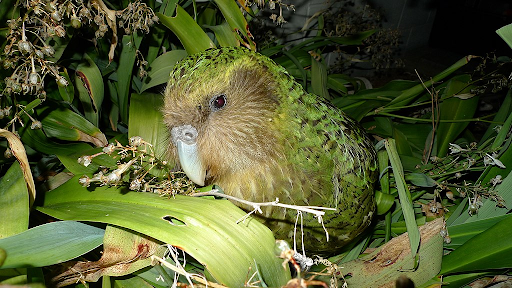
This massive biogeographical event highlights the balance required to maintain isolated ecosystems, which is mirrored in instances in recent history. The ecologies of islands and island continents have suffered as invasive species, often brought by human travellers, have forced their way into habitats that are not adapted to accommodate them. In New Zealand for example, the absence of native land mammals allowed for the evolution of many extraordinary flightless birds, but the arrival of rats, cats and weasels has spelled disaster for these birds and their nests. Fortunately there are many conservation programs in place working to remove these invasive species, and hopefully restore the natural state of these unique environments.