Do We Want Dinosaurs Back?
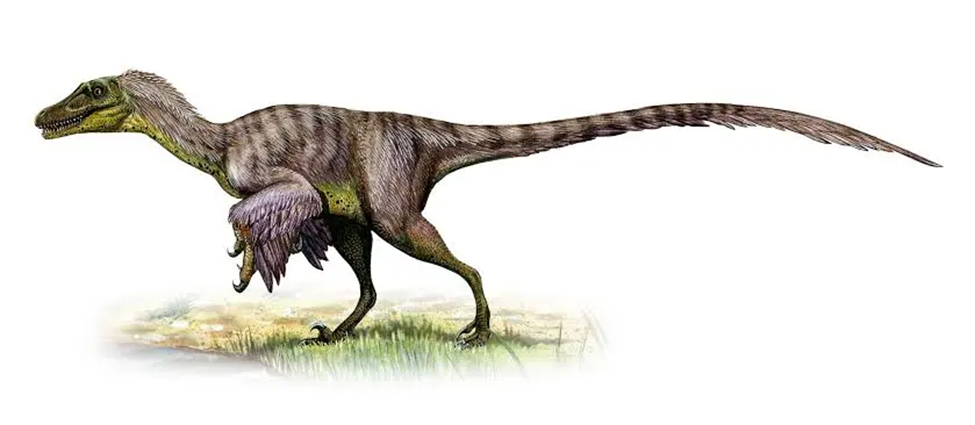
Dinosaurs are cool - and I wish they were still alive. If you feel the same way, congratulations! You’re living in an era of science and technology in which that's possible. Well, it is possible if you have a living relative of the dinosaur who is big enough to carry a dinosaur baby, and enough dinosaur DNA to remake the entire genome of dinosaurs. But if you have both of these things, then congratulations - you can make a living, very real dinosaur.
De-Extinction and What It Means:
This is not a far-off future reality of science. It is very true and possible and it's called de-extinction. You might think this sounds impossibly difficult - and it truly is - but the process is pretty straightforward, theoretically at least. In my opinion, the revival of extinct species is like cooking an exotic dish from exotic ingredients using an ordinary recipe. Let’s take a look at how.
Collection of DNA: The First Step
To cook any dish, first you need to gather your ingredients. And for an exotic dish you need some exotic ingredients - that ingredient is DNA. For the return of an extinct species, we first need its DNA. Now this is not an easy feat, especially since archeologists and geologists spend many years trying to find the remains of long-gone species. And even if they do find DNA, it is usually so scarce that it cannot remake an entire cell. But at least we have our exotic ingredients - some DNA from our extinct species. We can now move on to step 2.
Genome Sequencing: The Knowledge Step
Step two in this exotic-dish recipe is knowing what the ingredients are and what they do. After all you cannot make a dish without knowing what the purpose of each ingredient is. For an extinct species revival, it means sequencing its genome - or whatever we have of it. This means that now that we have the DNA of that extinct species, we find out what genes were present in that species and what their function was. Since we do not have the full genome of that extinct species, we use CRISPR-Cas technology to fill the gaps and sequence its entire genome. Now at this point we have the ingredients and we know what they do: we have DNA and we know the genes present. But we still can't make the dish because we don't have the exact recipe. And that brings us to step three.
Phylogenetic Studies: Where Is Its Family?
Since we do not have the recipe to make our exotic dish, we have to make do with what we have. To bridge that gap, we look up the closest-known recipe — think of it like searching for the most similar dish that’s still being made today. This, in terms of biology, is called phylogenetic studies. In simple words, phylogenetic studies explore how and from which species organisms evolved. The method is straightforward: you search the genome of your extinct species and compare it with the genomes of all organisms in a database. The computer software then tells you which species is most closely related to your extinct one. This concludes our step three.
Gene Alignment: Identifying Similarities and Differences
Now for the next step, we have our exotic ingredients and a modern recipe that’s still in use. Before we start cooking (trust me, we’ll get there), we need to compare the two. In biotechnology, this is called gene alignment. In gene alignment, you compare the genes of the extinct species to the genes of their closest living relative, using bioinformatics, (as we've covered in depth before).
Now I do know that comparison is the thief of joy, but this comparison is crucial. This step gives us real insight into what the genes of a long-dead species actually do.
At this point, we find two kinds of genes: those that we know the function of and that are present in both the extinct and living species; and those that are unique characteristics of the extinct species. We filter out both kinds and identify which ones differ. This will be key when we “cook” our extinct organism later on. At this point, we have all of the ingredients and know how they work - so let's start cooking.
Capturing Cells: Let’s Start Cooking
To actually start cooking an exotic dish, we begin with the already-available ingredients and collect them. In our extinct-species case, that means capturing and isolating the cells of the closest living relative. There is a full method to do that, but that's a deep dive for another time. These cells will serve as a framework for our editing.
Multiplex CRISPR: Edit the Genome
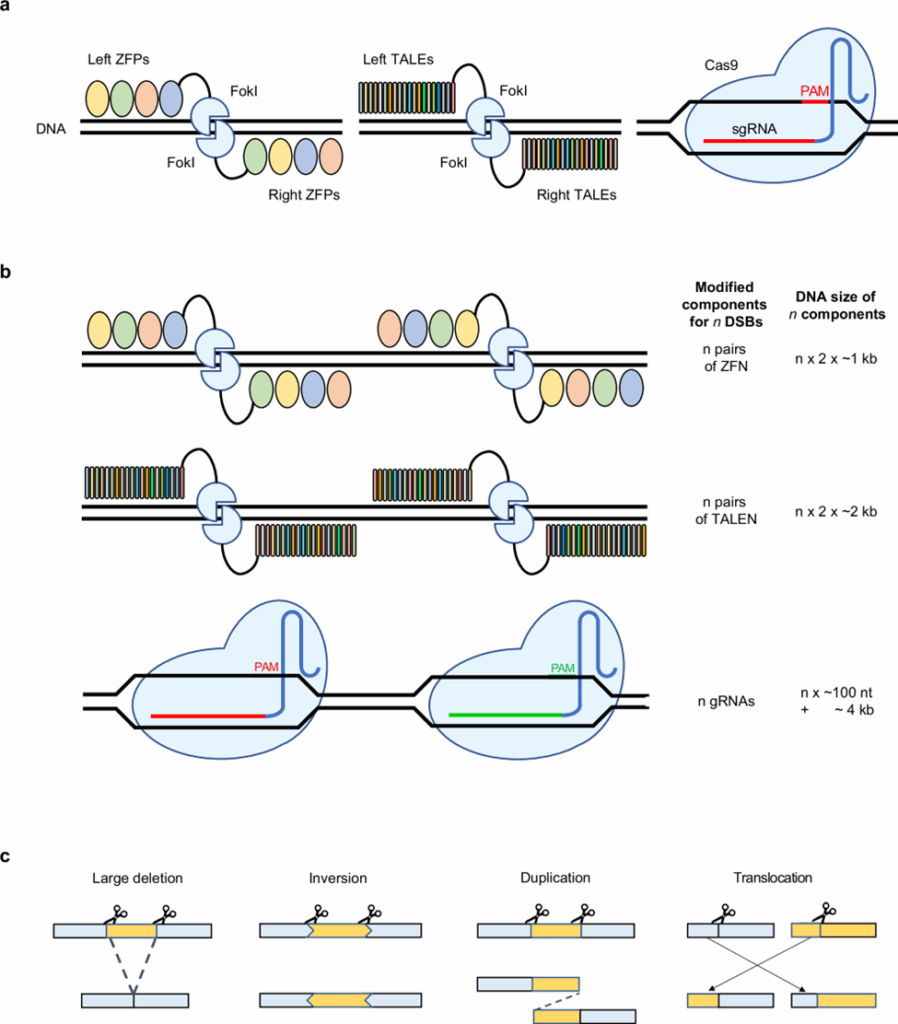
For the next step, we modify this framework as much as we can to resemble the extinct species. We will use CRISPR editing to make the cells as close as possible to the extinct species. This is where the “different” genes come in. The genes that were the same in both species, we leave as they are. But since we want our framework to resemble the extinct one, we need to change the different genes. For this we edit multiple genes at once using CRISPR - this is called multiplex CRISPR. After all the tedious editing is done, we have a framework of an extinct species cell. Now all that is left is make the extinct organism itself - our exotic dish.
SCNT: Somatic Cell Nuclear Transfer
The next step in our recipe is something that helped us make clones nearly 30 years ago - and you may already know. We all remember Dolly, the sheep. And if you don’t, let me take you on a little detour and through one of the most beautiful success stories in the history of science.
Dolly the Sheep: Birth and Effects
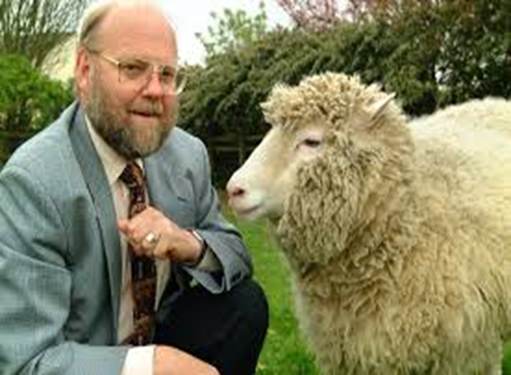
As most great stories go, it started with a myth - and a group of people passionate enough to challenge it.
Professor Sir Ian Willmut and Dr. Keith Campbell were initially working on engineering animals that could produce useful proteins in their milk for pharmaceutical purposes.
The myth at the heart of the story was this: once a cell has differentiated - that is, taken on a specialized function - its DNA is permanently locked and cannot revert to a dividing cell. Wilmut and Campbell weren't convinced. They theorised that if they could create a clone genetically identical to an already-modified animal, it would be faster and more reliable than the traditional breeding methods.
To prove it, they used SCNT - Somatic Cell Nuclear Transfer - and the result was Dolly, born in 1996.
Not only did Dolly have the same genes as her donor, but was also fertile - a fact proved by the birth of six healthy lambs when she mated with a Welsh mountain ram. She lived for six years and stands as a landmark moment of science fiction becoming scientific fact.
SCNT in Practice
Coming back to our extinct animals: we use SCNT to take things to the next level. We have a somatic cell that we’ve edited to resemble the extinct species. Meanwhile, we take an unfertilized egg cell from a female and remove its nucleus. We then introduce the edited somatic cell into this enucleated egg. An electric shock is applied to activate growth. After a few days in the lab, we implant it into a surrogate mother closely related to the extinct animal. And voilà — when that surrogate gives birth, we have a once-extinct species brought back to life.
The Dilemma
We can make an extinct species like this - and efforts like the recent dire wolf revival show it's not just theory. But there are still many limitations.
- It's not as easy as it looks theoretically. There will be many practical challenges.
- There often isn't enough extinct DNA for us to reconstruct a full genome.
- How do we even choose which extinct species to revive?
- What will be the revived species' ecological role when its original habitat no longer exists?
- And finally, what are the ethical concerns that stand in our way?
Other obstacles we can still work around - but the reality of bioethics is one we cannot avoid, especially in biotechnology. That's a discussion for next time.
So our exotic dish is theoretically achievable — but like any truly ambitious recipe, the hardest ingredients to source aren’t the biological ones. They’re the ethical ones.
For now, I would very much like to have tea with a dinosaur.
References
- Novak, B. J. (2018). De-extinction. Genes, 9(11), 548.
- Shapiro, B. (2017). Pathways to de‐extinction: how close can we get to resurrection of an extinct species?. Functional Ecology, 31(5), 996-1002.
- Kuhls, K., & Mauricio, I. (2019). Phylogenetic studies. In Leishmania: Methods and Protocols (pp. 9-68). New York, NY: Springer New York.
- McCarty, N. S., Graham, A. E., Studená, L., & Ledesma-Amaro, R. (2020). Multiplexed CRISPR technologies for gene editing and transcriptional regulation. Nature communications, 11(1), 1281.
- Matoba, S., & Zhang, Y. (2018). Somatic cell nuclear transfer reprogramming: mechanisms and applications. Cell stem cell, 23(4), 471-485.
- Wilmut, I., Schnieke, A. E., McWhir, J., Kind, A. J., & Campbell, K. H. (1997). Viable offspring derived from fetal and adult mammalian cells. Nature, 385(6619), 810-813.
- Cheng, H., Jeong, E., & Cho, S. W. (2025). Applications of multiplexed CRISPR–Cas for genome engineering. Experimental & Molecular Medicine, 57, 1373–1380. https://doi.org/10.1038/s12276-025-01500-6
- National Museums Scotland. (n.d.). The story of Dolly the sheep. https://www.nms.ac.uk/discover-catalogue/the-story-of-dolly-the-sheep
Image Credits (In Order of Appearance)
- Stocktrek Images. (2020). Velociraptor mongoliensis illustration [Illustration]. National Geographic. https://www.nationalgeographic.com/science/article/velociraptor
- Cheng, H., Jeong, E., & Cho, S. W. (2025). Applications of multiplexed CRISPR–Cas for genome engineering. Experimental & Molecular Medicine, 57, 1373–1380. https://doi.org/10.1038/s12276-025-01500-6
- National Museums Scotland. (n.d.). The story of Dolly the sheep. https://www.nms.ac.uk/discover-catalogue/the-story-of-dolly-the-sheep