
- Body size determines pitch: Larger animals like wolves have deeper voices due to longer vocal tracts, while smaller animals like foxes produce higher-pitched sounds.
- Social structure affects calls: Social wolves use long-distance howls to communicate with their pack, while solitary foxes use short-range yaps for territorial defense.
- Habitat shapes sound: Wolves' deep howls travel well across open terrain, while foxes' high-pitched calls work better in dense forests where they live.
Everyone knows the distinctive sounds that animals make. Birds chirp. Wolves howl. Foxes bark and yap. What they probably don't know is how much these sounds can tell us about the animals themselves.
These sounds are more than just messages from one friend to another saying, "Help me!" or from one enemy to another saying, "Get away from my territory!" If we dive a little deeper, it becomes apparent how sounds can tell us a lot about the animal's size, habitats, and even how they socialize.
The Role of the Body
Body size is one of the main things that affect an animal's voice. For example, gray wolves are much larger than red foxes, so it makes sense that gray wolves have deeper howls than the high-pitched yaps and barks of red foxes. In fact, when comparing the pitch - that is, how high or loud a sound is - of numerous audio recordings of gray wolves and red foxes, a clear pattern emerges: gray wolves have consistently lower-pitched calls than red foxes. In simple terms, wolves have deeper voices than red foxes.
A quick anatomy lesson would explain this pattern. Being the smaller species, red foxes have shorter vocal tracts that vibrate fast, causing sound waves to have a higher frequency and thus, a higher pitch. On the other hand, wolves have longer vocal tracts, so sound waves vibrate slower, causing their distinctive deep voice and howls.
Behavior and Social Structure
Another thing animal sounds tell us is how social they are.
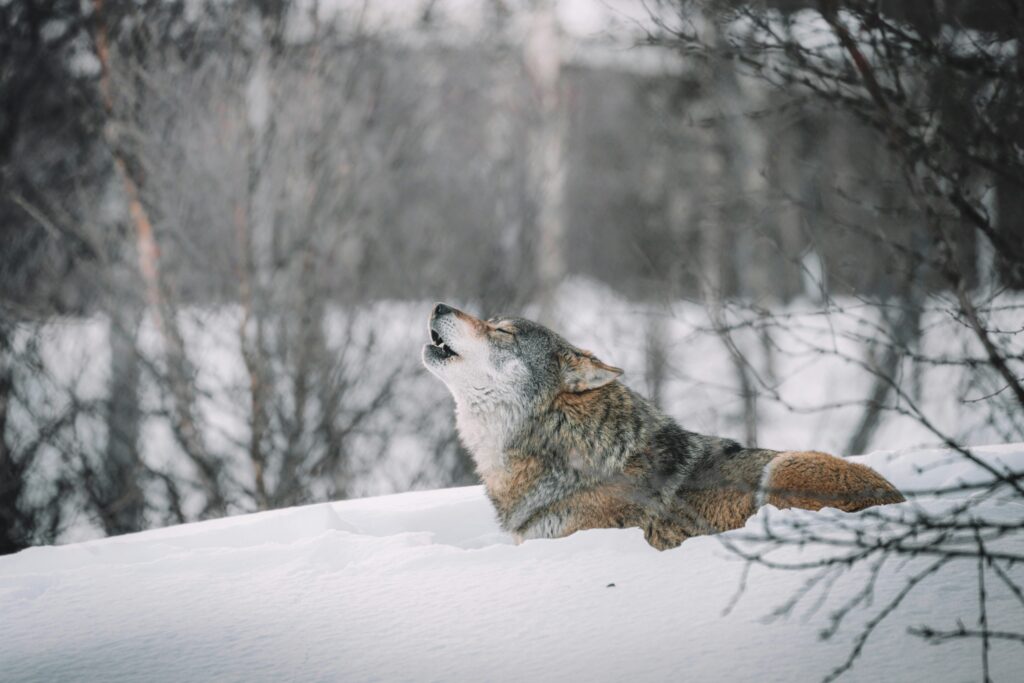
Contrary to what the phrase "lone wolf" suggests, gray wolves actually are highly social and live in large packs. To communicate with other members of their pack across long distances while hunting, it's important that their calls can be heard clearly. This is why wolves are known for their distinctive deep howls.
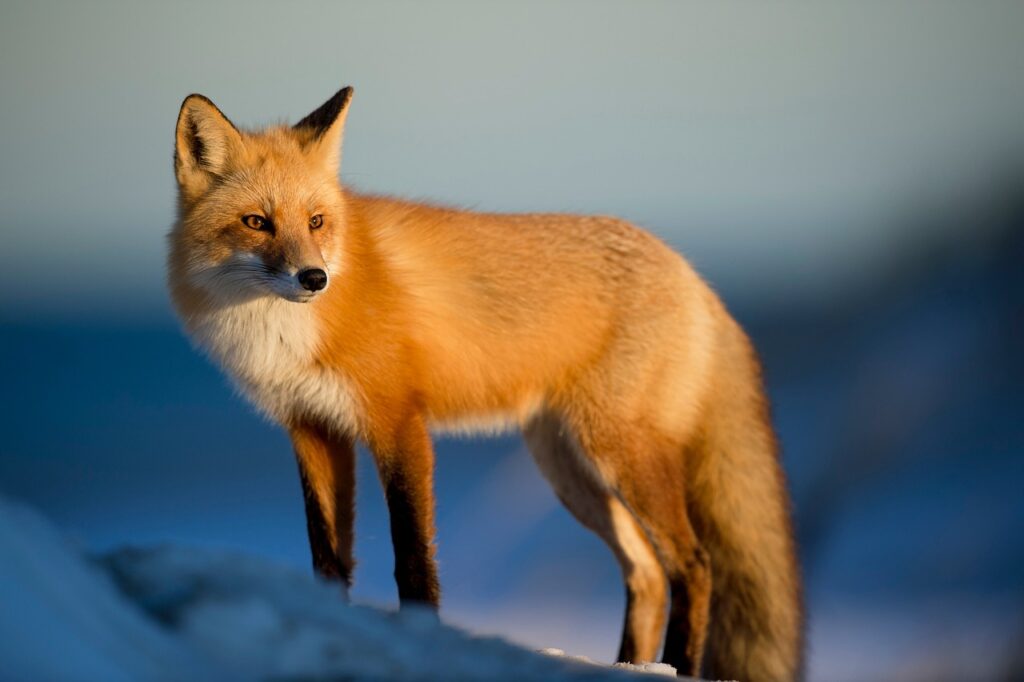
In contrast, red foxes are mostly solitary. Their high-pitched yaps are well-suited for short-range communication. Wolves want to talk with their pack over distances, especially in open forest, whereas foxes mainly want to scare away predators and competitors without revealing their location.
Environment Shapes the Sound
Just as we change the tone and volume of our voice depending on where we are - a library or a party - animals do the same depending on their habitats, too.
Gray wolves tend to inhabit open terrains where they must be heard by the rest of their pack from long distances away. Hence, their deep howls can easily be heard from miles away. Red foxes, on the other hand, often live in dense forests, where their higher-pitched calls work better.
Listening as a Window into Life
So, the next time you hear a wolf howl or a fox yap, listen closely, and you can gather so much information about their lives. Their sounds are not just surface-level messages for friends or enemies; the meaning underneath can tell us how big the animal is, where it lives, and whether it hunts by itself or with a pack. In fact, there's an entire field of biology that studies animal sounds, called bioacoustics. The more we pay attention to the sounds of nature, the more those sounds reveal about the animals around us -from their daily communications to their remarkable ability to sense impending disasters.