Dry Labs, Bioinformatics, and Dr. OP's Digital Discovery Journey
The Concept of Dry Lab
Morality has no single opinion - some would argue it's entirely subjective, while Dr. Overworked Pastry (OP) would say it stops him from doing science. Who's to say what's right and wrong? When science gave us ethical concerns, it also gave us ways to work around them. For years, biotechnologists were trapped in circles of right and wrong until one day, an innovative solution emerged: the dry lab.
What does "dry lab" even mean? My 19-year-old self thought it was a lab where work gets done without liquid solutions. The truth was much more interesting.
Dry lab refers to work done not in physical labs, but via computers and the internet. While computers may be scary for some people (like me), here's the exciting part: we can use computers and previously available data to create models of activities in living organisms, map entire biological pathways and structures, predict how enzymes and proteins look, and even discover new biomolecules. Sounds pretty cool, right?
Genome Analysis: Not a Myth After All
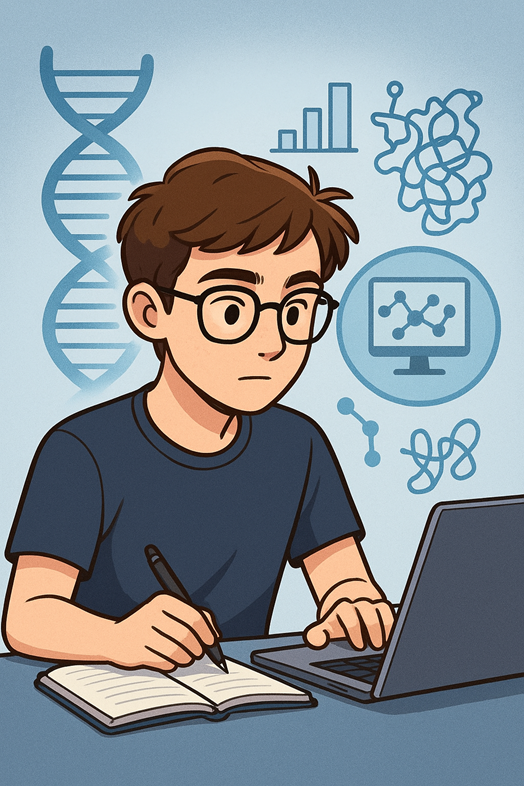
Excited about his digital future, OP immediately volunteered for a genomics project. Big mistake. The next morning, he received massive DNA and RNA sequencing files that made his computer wheeze just opening them. He stared at the screen for a full minute. Why? It was one enormous file of incomprehensible letters, and somehow, he was supposed to find irregularities in this genetic alphabet soup.
He called his chill friend and ranted about his predicament. After his tirade ended, his friend laughed and told OP something life-changing: tools called BLAST, GATK, Cufflinks, and Canu existed. These tools made it easy for OP to analyze all the data and draw valuable conclusions. And they did! These magical programs transformed OP's incomprehensible files into actual insights. He could identify genes, find mutations, and analyze RNA expression patterns. It was like having a universal translator for genetic gibberish.
Building Blocks of Cells: When Shape Matters
Feeling confident after his genomics victory, OP tackled his next challenge: proteins. As we learned in Chapter 1, proteins are the divas of biochemistry - they only work in specific shapes and orientations. But how do you figure out what a protein looks like without expensive lab equipment?
OP stared at a protein sequence that looked like random letters: MKTVRQERLKSIVRILERSKEPVSGAQLAEELSVSRQVIVQDIAYLRSLGYNIVATPRGYVLAGG...
"This tells me absolutely nothing," he muttered.
Enter AlphaFold, the protein structure prediction tool that became OP's new obsession. Simply paste in your protein sequence, and boom—it shows you exactly how that protein folds in 3D space. OP spent an embarrassing amount of time rotating protein models on his screen like a kid with a new toy.
Now OP had conquered genomes and proteins, but why stop there? Remember systems biology from Chapter 1? It's the study of how all cellular components work together instead of flying solo. Creating these pathway maps by hand would take decades and probably drive someone to madness.
But we're scientists—we know how to use computers (hopefully) to make complex charts and pathway models.
OP discovered software that could map entire metabolic pathways, showing him how his theoretical super-tomato would process nutrients, respond to cold, and maybe even glow in the dark (he got carried away). These digital models helped him visualize how changing one gene might affect the entire plant system.
Phylogenetics and Bioinformatics: Tracing Our Origins
It's human nature to make sense of everything. When I say everything, I mean we have inherent curiosity about what we're composed of, where we came from, and how we're built. This intellectual curiosity about "where we came from" gave rise to phylogenetics, the study of how humans and other organisms evolved in the great tree of life.
Back in the day, scientists had to compare physical traits and behaviors to guess evolutionary relationships. Imagine trying to figure out if two animals were related just by looking at them. Exhausting and often wrong.
Once again, programmers saved our lives by developing software that easily maps evolutionary relationships. Modern phylogenetics software like Omega, PhyML, and PAML can analyze genetic sequences and build evolutionary family trees automatically.
Clinical and Medical Settings: Making Precision Medicine Reality
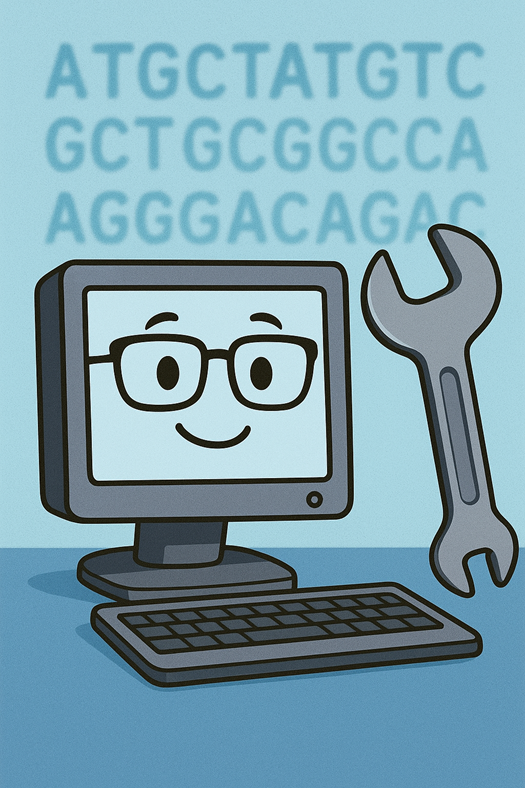
During his bioinformatics discovery journey, Dr. OP was amazed by its clinical and medical applications. He learned that doctors and researchers use tools like SIFT and PolyPhen-2 to check if DNA sequence changes in diseased patients (called mutations) also appear in healthy patients, and whether these changes are harmful.
Beyond this, instead of giving everyone the same drug, doctors can examine a person's DNA using bioinformatics tools and suggest the best medicine with fewer side effects. This is called precision medicine.
Food and Science: Agricultural Applications
Since Dr. OP is a foodie, he wanted to know if bioinformatics could help the agriculture industry. It can! Like humans and animals, plants have genetic material - DNA. Scientists can study plant DNA to find genes that confer drought resistance, disease resistance, and higher yields.
This way, specific plant genes controlling growth, height, yield, size, and taste can be located through bioinformatics. Once identified, we can use technologies like CRISPR (recall from Chapter 3) to modify crops as desired.
The Next Big Challenge: When Reality Hits
In a bittersweet nutshell, bioinformatics helps us discover things before we even start our studies. It's a terrific way to get potential insights into processes' inner workings. It's also fantastic for finding specific genes within complex genomes.
Ever since Dr. OP discovered bioinformatics, he's been extremely excited. He even started his own bioinformatics analysis to see which organisms share the most similar DNA with him. But he stopped after a while because this time, there's no fairytale ending. Reality is brutal: bioethics stands in the way of creating anything we want in biotechnology.
Is this right? Perhaps yes, perhaps no. But that's our discussion for next time.
Until then, what would you do if nothing were out of bounds for you?
References
- Flanagan, S. E., Patch, A.-M., & Ellard, S. (2010). Using SIFT and PolyPhen to predict loss-of-function and gain-of-function mutations. Genetic Testing and Molecular Biomarkers, 14(4), 533-537. https://doi.org/10.1089/gtmb.2010.0036
- Elrashedy, A., et al. (2025). Advances in bioinformatics and multi-omics integration. PMC. https://www.ncbi.nlm.nih.gov/pmc/articles/PMC11783962/
- Pathak, R. K., et al. (2022). Vetinformatics from functional genomics to drug discovery. PMC. https://www.ncbi.nlm.nih.gov/pmc/articles/PMC9691653/
- Scheinfeldt, L. B., et al. (2021). Evolutionary prediction of functional pharmacogenomic variants using in silico methods across global populations. Pharmacogenomics, 11(2), 131. https://doi.org/10.3390/2075-4426/11/2/131
- Fasano, C., et al. (2024). In silico deciphering of the potential impact of variants of uncertain significance in hereditary cancer: integrating SIFT, PolyPhen-2 and additional tools. Cells, 13(16), 1314. https://doi.org/10.3390/cells13161314
- Said, K. B., et al. (2023). Molecular evolutionary model based on phylogenetic and mutation analysis of SARS-CoV-2 spike protein sequences from Asian countries: A phylogenomic approach. PMC. https://www.ncbi.nlm.nih.gov/pmc/articles/PMC10030443/
- Ochieng, M., et al. (2025). Phylogenetic analysis of the Mpox virus in sub-Saharan Africa reveals clade-specific adaptation and divergence. Biology, 14(7), 773. https://doi.org/10.3390/biology14070773
All images are AI-generated.