






Rough Guide to Biology and Biotechnology: Chapter 8 – What We Choose to Do With It

Understanding and reshaping life have been a long journey for humans. We started from a cell and ended with the knowledge that life can end swiftly if we push too hard, move too fast, without enough care. Now that we have a basic understanding of life, of biotechnology, the question arises. Where do we go from all this? Where will we end up? And to what point can we keep going?
I wonder if this was never really about science…
Reading Time – 4 minutes
Difficulty Level – 2/5

Rough Guide to Biology and Biotechnology: Chapter 7 – Bacteria in Space
Imagine you are in space. You’re floating at the observation window and you can see vast galaxies, stars, asteroids, everything swallowed by black and studded with light.
You see the beauty of the world, how small you are compared to the vast entirety . . . when you sneeze.
Stiffening, you float to your medical emergency kit and take out the antibiotics that were given to you. The ship’s diagnostic flags an infection -…
Reading Time – 6 minutes
Difficulty Level – 2/5
How Do Seeds Survive for So Long?
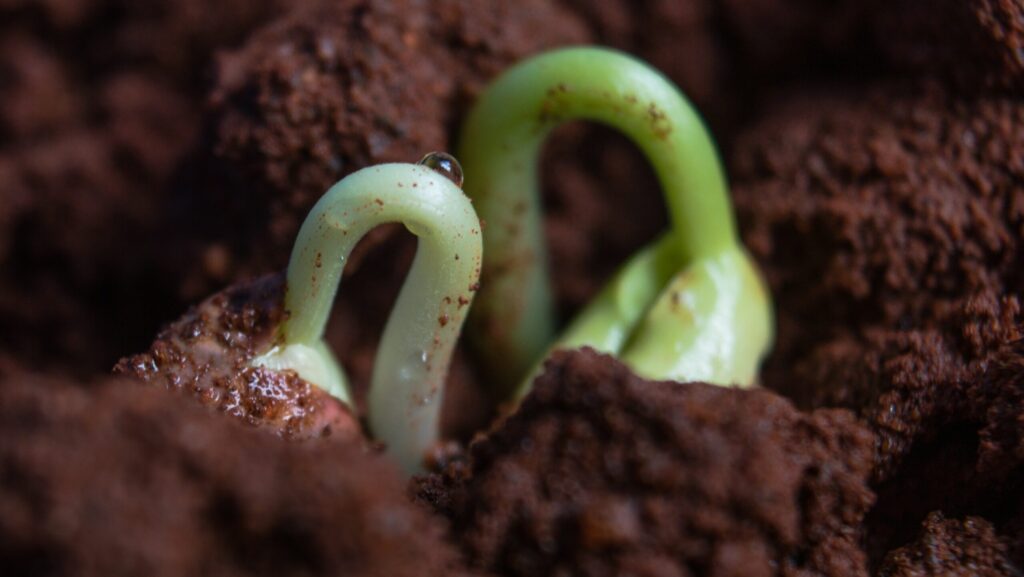
Have you ever noticed plants all of a sudden sprouting in soil that had been barren and dry for a long time?
While their sudden growth may seem a complete surprise, it is actually the result of dormant seeds waiting until the moment is right.
How exactly do these teeny-tiny structures survive for so long with the smallest amounts of water, sunlight, and nutrients in their environment?
What Is a Seed?
To understand how seeds survive the worst conditions for so long,…
Reading Time – 4 minutes
Difficulty Level – 1/5
The Quantum Secret Hidden in Every Leaf
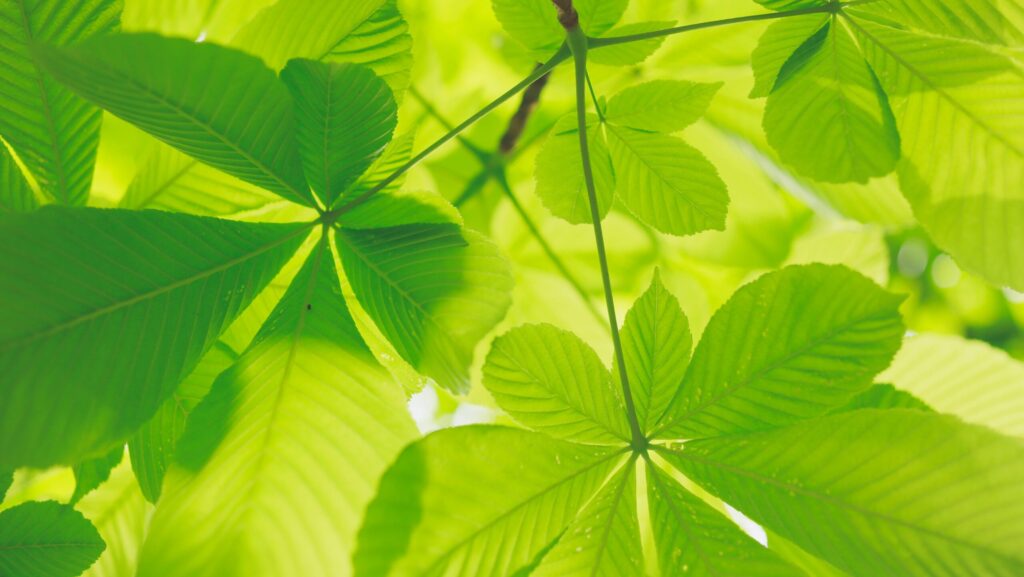
Next time you walk past a tree, take a moment to think about what’s actually happening inside those leaves. Because it turns out, plants aren’t just doing chemistry – they’re doing quantum physics. And they’re doing it better than our best engineers can.
It Starts With a Photon
Every leaf you’ve ever seen has been quietly catching light from the sun. But the journey that light takes to get there is extraordinary. Photons – tiny packets of light energy – leave the sun and travel roughly 150…
Reading Time – 3 minutes
Difficulty Level – 3/5
Rough Guide to Biology and Biotechnology: Chapter 6 – The Death of Jesse Gelsinger

“Science does not have a moral dimension. It is like a knife. If you give it to a surgeon or a murderer, each will use it differently.” This quote by German-American aerospace engineer, Wernher von Braun, holds true in the light of what science does and how we decide to apply it.
This isn’t another abstract debate about bioethics. This is about a real person whose life – and death – changed the course of…
Reading Time – 9 minutes
Difficulty Level – 2/5
Why Humans Find Flickering Flames Comforting

You light a candle. Almost immediately, your shoulders drop. Your breathing slows. Something quietly signals: everything is okay. But why does a tiny flame have this effect? The answer goes back 400,000 years – to when your ancestors’ survival depended on never letting the fire go out.
Your Brain on Fire
When researchers sat people down and made them watch a flickering fire, something measurable happened.
Blood pressure dropped significantly…
Reading Time – 5 minutes
Difficulty Level – 1/5
Why Do Mushrooms Grow in Circles?
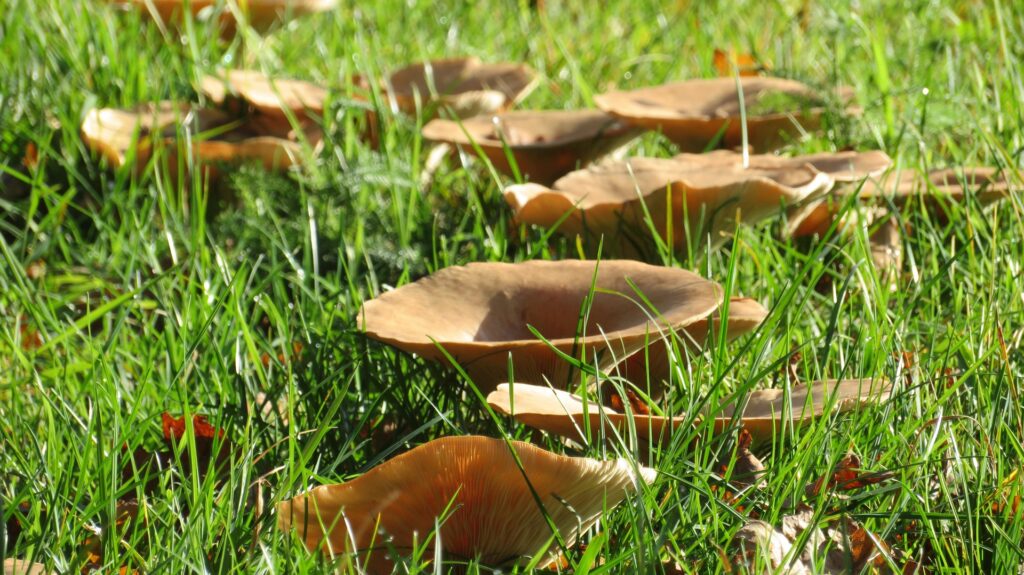
After several days of rain, have you ever noticed perfect circles of mushrooms sprouting in parks and forests? They’re really impressive, aren’t they? These circular patterns of mushrooms are so aptly called “fairy rings.” According to old European myths, they are caused by dancing fairies and elves and are supposed to represent good luck or a place of danger and witches.
While fairy rings are certainly a unique sight that looks like a magical portal straight out of a storybook ….
Reading Time – 4 minutes
Difficulty Level – 1/5
When Deserts Bloom: Life Waiting Under the Sand

A desert appears to embody emptiness: sun-scorched soil, sand, stones, and an almost complete absence of visible life. At first glance, such landscapes seem lifeless – as if nature has come to a halt here. For this reason, deserts are often perceived as barren territories, incapable of sustaining complex forms of life.
Yet this impression is deceptive. After a rare rainfall, some deserts become covered with flowers, grasses, and insects within just a few days. Where a…
Reading Time – 14 minutes
Difficulty Level – 3/5
Rough Guide to Biology and Biotechnology: Chapter 5 – De-Extinction, or How to Cook Up a Dinosaur
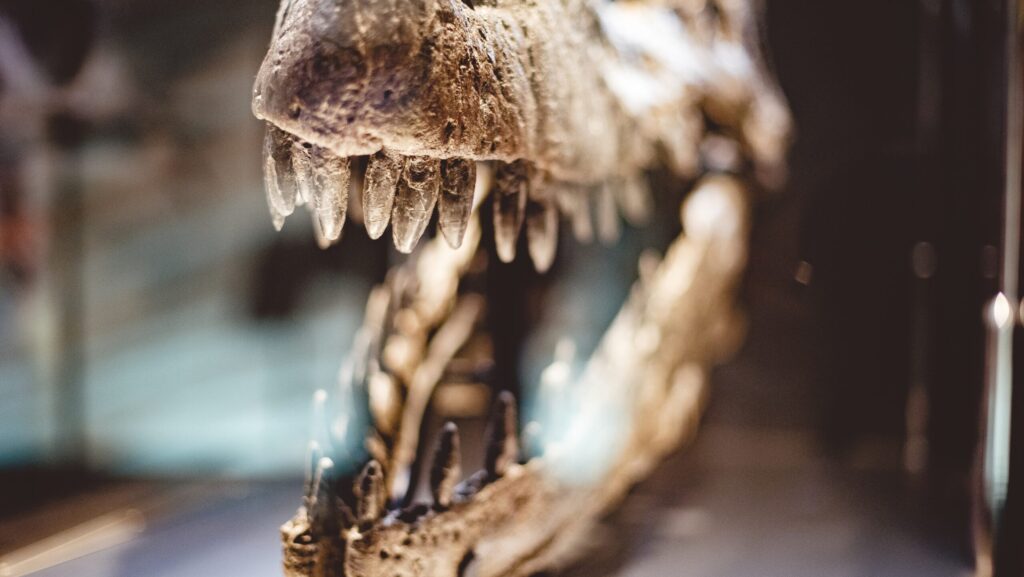
Do We Want Dinosaurs Back?
Dinosaurs are cool – and I wish they were still alive. If you feel the same way, congratulations! You’re living in an era of science and technology in which that’s possible. Well, it is possible if you have a living relative of the dinosaur who is big enough to carry a dinosaur baby, and enough dinosaur DNA to remake the entire genome of dinosaurs. But if you have both of these,…
Reading Time – 10 minutes
Difficulty Level – 2/5
How Do Dandelions Break Through Asphalt?
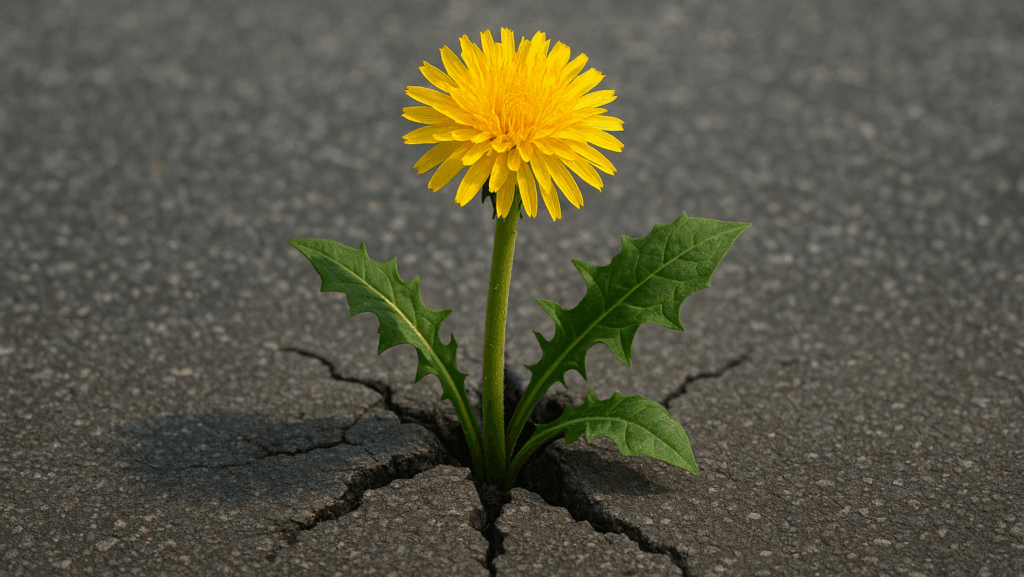
From a crack in the gray, dry asphalt, a tiny green sprout suddenly emerges. At first, it is barely visible, like a timid attempt of nature to assert itself in the kingdom of concrete. But after a few days, against the backdrop of cold grayness, a bright yellow dandelion blooms. Its flower shines like a small sun, breaking the monotony of the human-made world.
This image is familiar to all of us. We see it, walk past it, sometimes without even thinking: how can such a fragile plant…
Reading Time – 15 minutes
Difficulty Level – 3/5