






Why Do Mushrooms Grow in Circles?
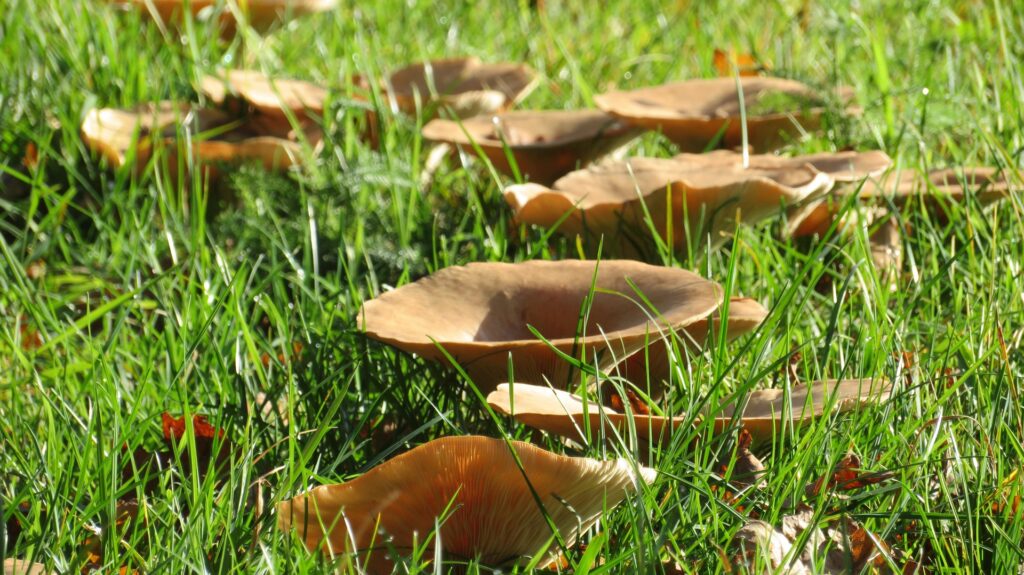
After several days of rain, have you ever noticed perfect circles of mushrooms sprouting in parks and forests? They’re really impressive, aren’t they? These circular patterns of mushrooms are so aptly called “fairy rings.” According to old European myths, they are caused by dancing fairies and elves and are supposed to represent good luck or a place of danger and witches.
While fairy rings are certainly a unique sight that looks like a magical portal straight out of a storybook ….
Reading Time – 4 minutes
Difficulty Level – 1/5

When Deserts Bloom: Life Waiting Under the Sand

A desert appears to embody emptiness: sun-scorched soil, sand, stones, and an almost complete absence of visible life. At first glance, such landscapes seem lifeless – as if nature has come to a halt here. For this reason, deserts are often perceived as barren territories, incapable of sustaining complex forms of life.
Yet this impression is deceptive. After a rare rainfall, some deserts become covered with flowers, grasses, and insects within just a few days. Where a…
Reading Time – 14 minutes
Difficulty Level – 3/5
Rough Guide to Biology and Biotechnology: Chapter 5 – De-Extinction, or How to Cook Up a Dinosaur

Do We Want Dinosaurs Back?
Dinosaurs are cool – and I wish they were still alive. If you feel the same way, congratulations! You’re living in an era of science and technology in which that’s possible. Well, it is possible if you have a living relative of the dinosaur who is big enough to carry a dinosaur baby, and enough dinosaur DNA to remake the entire genome of dinosaurs. But if you have both of these,…
Reading Time – 10 minutes
Difficulty Level – 2/5
What Can an Animal’s Voice Tell Us about Them?

Everyone knows the distinctive sounds that animals make. Birds chirp. Wolves howl. Foxes bark and yap. What they probably don’t know is how much these sounds can tell us about the animals themselves.
These sounds are more than just messages from one friend to another saying, “Help me!” or from one enemy to another saying, “Get away from my territory!” If we dive a little deeper, it becomes apparent how sounds can tell us a lot about the animal’s size, habitats….
Reading Time – 4 minutes
Difficulty Level – 1/5
Your Ancestors Want You to Sleep In This Winter

Every winter, the same pattern emerges: alarm clocks become our enemies, productivity tanks, and the couch develops an almost magnetic pull. We laugh about “winter hibernation mode,” but what if this isn’t just laziness? What if your body is following ancient instructions written into your DNA thousands of years ago?
You’re Not Lazy – You’re Listening to Your Biology
Here’s what actually happens to humans in winter:
We sleep longer. Studies show humans naturally sleep 1.5-2…
Reading Time – 7 minutes
Difficulty Level – 2/5
Monitoring Deforestation with Satellite Technology: A Data-Driven Approach to Environmental Protection

Forest destruction goes far beyond losing trees. It is about the collapse of water cycles, the death of biodiversity, and the ruin of local communities. Attempting to stop this with sporadic ground reports is like fighting a modern war with outdated maps. It fails.
Our best hope lies in absolute visibility. This is why governments must rely on Sentinel satellite imagery to view and download, moving us from guessing where the damage is…
Reading Time – 6 minutes
Difficulty Level – 3/5
Brain-Computer Interfaces Made Simple

A brain–computer interface, or BCI, is a tool that helps the brain send a message to a computer. It listens to tiny electrical signals produced when a person thinks about moving, speaking, or focusing on a task. These signals continue even when the body cannot respond. A BCI picks up the signal, interprets it, and turns it into an action on a screen or device.
Researchers first explored BCIs to help people who had lost movement or speech. Early experiments in the 1970s showed …
Reading Time – 5 minutes
Difficulty Level – 2/5
Thriving at -40 Degrees: Arctic Survival Techniques

When temperatures plummet to -40°C (-49°F) and darkness stretches across months, survival requires more than luck – it demands ingenuity, accumulated knowledge, and remarkable adaptability.
For thousands of years, Arctic peoples like the Inuit and Sami have thrived in Earth’s most inhospitable environments, developing technologies that show incredible human creativity, and thus turning these environments into home.
The Engineering of Igloos
Perhaps no …
Reading Time – 8 minutes
Difficulty Level – 2/5
How Do Dandelions Break Through Asphalt?

From a crack in the gray, dry asphalt, a tiny green sprout suddenly emerges. At first, it is barely visible, like a timid attempt of nature to assert itself in the kingdom of concrete. But after a few days, against the backdrop of cold grayness, a bright yellow dandelion blooms. Its flower shines like a small sun, breaking the monotony of the human-made world.
This image is familiar to all of us. We see it, walk past it, sometimes without even thinking: how can such a fragile plant…
Reading Time – 15 minutes
Difficulty Level – 3/5
Homo Juluensis: The Big-Headed Humans Scientists Can’t Agree On
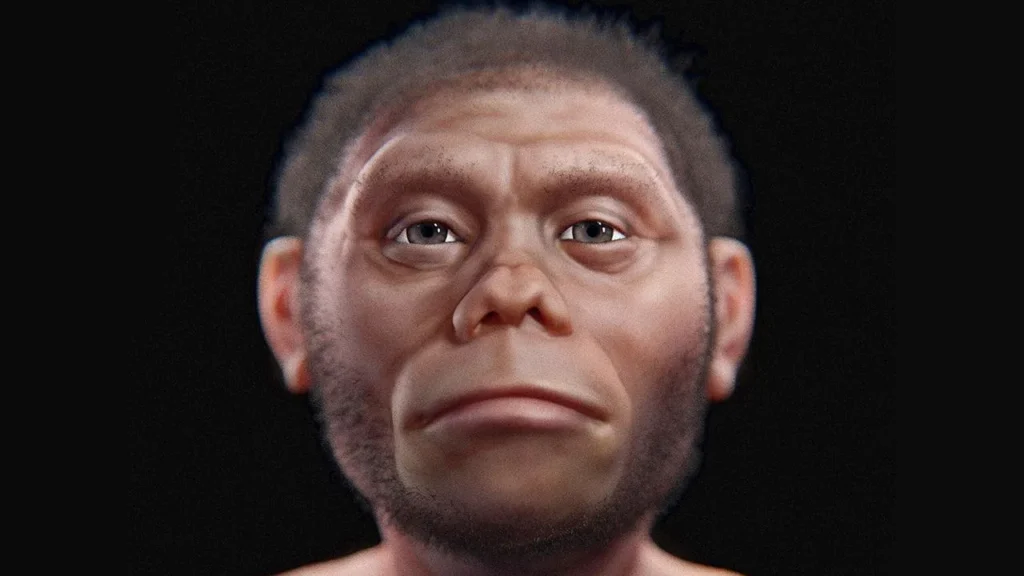
Turns out, Lord of the Rings wasn’t entirely fantasy. For hundreds of thousands of years, Earth really did host multiple human species living side by side. There were Neanderthals, Denisovans, Homo floresiensis (yes, actual “hobbits”), and modern humans. Now, scientists propose adding another to the list: Homo juluensis, meaning “big head people” in Chinese—with brains possibly larger than ours.
But here’s the twist: half the scientific community …
Reading Time – 9 minutes
Difficulty Level – 3/5